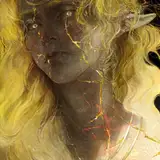
commission: Ganymede and the triple H alliance chapter 2-2
Added 2026-01-29 04:23:03 +0000 UTCHe found her dancing under moonlight.
She danced alone, beautifully, madly, with no propriety whatsoever, dancing and laughing altogether, the world her partner, the night sky above stretching infinite and attentive. The moon shone brighter than it had any right to, its pale luminescence intensifying with each pirouette, each graceful extension of limb, as though the celestial body itself strained forward to better observe. The stars seemingly smiled and converged above her, their usual scattered arrangements drawing together into patterns that hurt to perceive directly, geometries that whispered of things older than names, older than the Titans themselves.
Darkness followed like a dark veil, like blotched ink painting on the world with each movement she made. Where her feet touched the earth, shadows bloomed and spread, not the absence of light but something with substance and weight, flowing outward in lazy rivulets that stained the grass black, that turned stone to obsidian, that swallowed the natural gloom of evening and replaced it with something deeper, something hungry. The ink, blots spread and merged and reformed with each step, each turn, each throw of her head in wild laughter, until Ares could no longer tell where the natural night ended and his mother's presence began.
He'd been watching for some time, truth be told.
Hadn't quite worked up the courage to announce himself, which was, in itself, remarkable. Him. Ares. God of War, Terror on the Battlefield, He Who Delights in the Clash of Bronze and the Screams of the Dying. Hesitating. Lurking in the treeline like some mortal youth working himself up to speak to a girl at festival.
The comparison was apt, if profoundly uncomfortable.
The only thing sure about the woman was her beauty.
Impossibly more beautiful than before, and before she could have been rightfully called the equal of Aphrodite herself in appearance, a statement that would have had the Golden One spitting venom and plotting elaborate revenges had she ever heard it spoken aloud. Her hair shifted, changing colors like an inverted rainbow of silver, gold, and black, each strand flickering between hues with no discernible pattern, liquid metal one moment, shadow the next, then pale as moonlight on water. A face, a shape, flickering every instant between childhood, maidenhood, and cronehood, each still more beautiful, more striking than Aphrodite herself, no, not that he would admit it out loud, not if he valued his hide, but different, each.
The child-face held an innocence so profound it seemed a mockery, eyes wide and wondering, cheeks plump with youth, lips curved in delight at the simple act of movement. The maiden bore the terrible, heart-stopping beauty of a woman in full bloom, sensual and knowing and utterly confident in her power, the sort of beauty that launched ships and toppled kingdoms and made fools of gods and men alike. The crone, and here was where it became truly unsettling, possessed a stark, architectural elegance, beauty refined and distilled by ages beyond counting, terrible in its perfection, alien in its coldness.
And they all existed simultaneously, or in such rapid succession that his divine perception couldn't quite pin down which was real, which was illusion, whether any of them were illusion at all.
It made his head ache.
More than that, it made something deep in his divine essence, that core of self that made him Ares and not some other god, recoil in instinctive unease.
"Mother," he finally spoke, after his father knew how long.
The words came out rougher than intended, catching in his throat, and he had to suppress the irritation at himself for the weakness. He was a god. Olympian. Son of Zeus. He did not waver. Did not hesitate. Did not feel this creeping anxiety that clawed at his ribs and made his palms itch for the comfort of weapon-grips.
She stopped.
Stopped mid-turn, one foot still lifted, arms extended, head thrown back toward the moon. Simply froze, as though she'd been a moving sculpture and someone had willed her into stillness.
The world followed suit, almost as if holding its breath, scared.
The wind died. Not gradually, not a natural fading, but instant cessation, every breeze and zephyr cut off mid-motion. The leaves stopped their rustling. The distant night-sounds of animals and insects choked into silence. Even the stars seemed to dim, their light guttering like candles in a draft, while the moon, that overlarge moon, maintained its uncomfortable brightness, now the only source of illumination aside from the spreading darkness at his mother's feet.
Ares felt the absence of sound like a physical pressure against his eardrums.
When his mother looked at him, him, Ares, God of War, Olympian, felt fear.
Real fear. Not the excitement of battle, not the anticipation of violence, not even the concern a warrior feels facing a worthy opponent. This was primal, base, the fear a rabbit knows when the hawk's shadow crosses over it, the fear of the mouse in the serpent's coils. Prey-fear. Helpless-fear. The sort of fear he inflicted on mortals, that he drank like wine, that sustained and strengthened him, now turned inward, turned on him, and it was wretched, gods, it was wretched.
Her eyes, all three versions, all simultaneously or rapidly cycling, he still couldn't tell, fixed on him with an intensity that felt like being flayed.
His mother had never been the warmest parent.
Hephaestus was proof enough of that, cast down from Olympus for the crime of being born ugly, or lame, or whatever excuse she'd given that day for such casual cruelty. Thrown away like refuse, like something broken and unworthy of repair. The Smith bore those scars still, physical and otherwise, and while Ares and his brother weren't close, weren't friendly even, he understood on some level what it meant to be found wanting by Hera.
His father Zeus was a better parent than his mother Hera, and Zeus was far from being the best parent.
That was, in itself, damning. Zeus, who couldn't keep his cock in his chiton, who spawned bastards across the world with the enthusiasm of a sailor in port, who paid attention to his children only when it suited his whims or political necessities. Zeus, who used his offspring as tools, as weapons, as bargaining chips in the endless games the Olympians played among themselves. That Zeus, that careless, capricious, self-absorbed king, was nonetheless more nurturing, more present, more engaged than the Queen of Heaven herself.
If Ares was being sentimental, and he generally wasn't, made a point of not being, cultivated a reputation for bloodlust and simplicity because it kept others from looking too closely, but if he was being sentimental, he would call his only true parent the nymph Hera and Zeus had made raise him.
Enyo, her name was, though whether that was her birth-name or a title he'd never quite known.
She'd been conscripted for the task, compensated handsomely to be sure, given honors and privileges beyond her station, but conscripted nonetheless. The Queen of Heaven didn't nurse her own children, didn't coddle or comfort or raise. That was work for lessers, for servants, for those without the dignity of true divinity. Enyo had fed him, taught him his first words, tended his scraped knees when he was young enough to still take such minor injuries, told him stories, held him when the nightmares came, those terrible dreams of war and slaughter that plagued him even as a child, foreshadowing of what he'd become.
She'd been kind. Patient. Loving, even, in her way.
More than either of his actual parents had ever been.
Still, while cold, haughty, and cruel, the goddess Hera had never looked at him as if restraining herself to hurt him, as if he was prey, a thing to be toyed with at best and discarded at worst.
Until now.
Now, pinned beneath that tripartite gaze, those flickering faces cycling through ages, through aspects, he felt distinctly like a mouse that had accidentally stumbled into a viper's den. The look she gave him held no recognition of kinship, no acknowledgment of shared blood, nothing but a kind of distant, clinical interest, the way a natural philosopher might examine an insect before pinning it to a board.
His mother had changed, and he was doing his best to not show he was scared, though whether he was succeeding he couldn't say, and he didn't know why she had changed, why she would be this different.
The question had eaten at him for weeks now, ever since the change became apparent, became impossible to ignore or dismiss as rumor or exaggeration. He'd thought, perhaps foolishly, that seeing her directly would provide answers, would clarify the situation, would let him understand what had happened to the goddess who'd birthed him.
Instead, it only deepened the mystery, sharpened the fear.
Everyone on Olympus could feel how different she was, how her divinity reeked now of the moon, the arcane, the stars and darkness, scents and sensations that had never been associated with Hera, Queen of Heaven, Goddess of Marriage and Sovereignty.
It felt like being present around a sleeping Protogenoi instead of the goddess she was, like being around a monster with them being the sheep, which should not have been possible.
The Protogenoi were the primordial deities, the first gods, beings of such fundamental power that they didn't rule over concepts so much as embody them. Gaia. Ouranos. Nyx. Erebus. Tartarus. They were the building blocks of reality itself, and being in their presence, those rare times when one actually manifested rather than simply existing as a diffuse force, was overwhelming in a way that regular divine encounters weren't.
Hera now felt like that.
Not quite as intense, perhaps, not quite as all-encompassing, but close enough that the resemblance was unmistakable, uncomfortable, wrong. She felt too large for her form, as though her body was merely a shell containing something vast, something that pressed against the boundaries of physical reality and threatened to tear through if she lost focus for even a moment.
From the gossip he'd heard from Aphrodite and her servants, and the Golden One's household was the beating heart of Olympus's rumor mill, nothing escaped their notice or their wagging tongues, the relationship between his mother and his father, between his mother and her siblings on Olympus, had changed, was different, and not because they had wanted it.
Apparently, and Ares had this from one of Aphrodite's handmaidens who'd gotten it from one of Zeus's cupbearers who'd been present during the last major gathering, Hera no longer attended Zeus's summons unless it pleased her. Simply ignored them. Didn't refuse, didn't argue, didn't engage in the usual subtle power plays and negotiations that characterized their marriage. Just didn't show up, as though the King of the Gods was beneath her notice, and when Zeus had raged about it, as he inevitably did, the mountain had shaken and the sky had darkened but Hera hadn't cared, hadn't even seemed to register his anger.
The Olympians were used to their queen being proud, stubborn, vindictive even. They were not used to her being indifferent.
Indifference implied an equality of power, or worse, a disparity in her favor, and that was not how Olympus was supposed to work.
Ares was sure that they all wanted to know how Hera had gotten stronger, why she felt so different, if this was truly Hera and what it would mean for them all, for Olympus.
The questions rippled through the divine community like poison in a well, whispered in corners, discussed in careful euphemism, never quite asked directly because asking meant acknowledging the problem, meant admitting there was something to fear, and gods were not supposed to fear other gods, at least not in this manner, not this prey-fear that made his hands shake and his mouth dry.
There was something missing, something brewing, they all could feel it, they just didn't know what.
An anticipation hung over Olympus like a storm-front, pressure building, waiting for release. Conversations trailed off mid-sentence. Laughter sounded forced. Even the most frivolous gods, the ones who usually concerned themselves only with their next pleasure or entertainment, moved with caution, glanced over their shoulders, startled at shadows.
Something was coming.
Something was changing.
They just didn't know what, or when, or how to stop it.
Those days, catching the whereabouts of his mother, but also talking to her, was an exercise in difficulty and risk, like Hermes had learned when the messenger had tried to brute-force Hera's coming back earlier than she'd wanted at the command of Zeus.
In return, she had not only cut Hermes but cut him in such a way that even though he was an immortal, a god and thus should have been able to naturally heal from anything, even more so a cut, that their brother Apollo and their nephew Asclepius had tried to heal it, it hadn't healed, it hadn't closed, hadn't even scabbed, remaining raw and seeping despite every medicine, every spell, every application of divine will they could muster.
Hermes, a god, would have the scar forever as if he was a mortal, and they all knew what it meant, that she could have done worse, would do worse if they gave her reason to.
The messenger hadn't even seen her draw. One moment he was speaking, delivering Zeus's summons with his usual cheerful efficiency, the next he was on the ground, clutching his side, golden ichor pouring between his fingers while Hera watched with that same distant, clinical interest she now turned on Ares. She'd said nothing. Offered no explanation, no justification, no threat or warning. Simply walked away, leaving Hermes bleeding on the floor, and that silence, that casual dismissal, had been more terrifying than any threat could have been.
This was why Ares was here at the behest, well, more ordered and bribed, by his father, who felt confident that Ares, being Hera's son, would be able to interact with her and discover what the Erebus was happening without harsh and great consequence.
It had sounded good and all, especially with everything his father had promised him, favor and weapons and territory and honors, all the things Zeus usually dangled when he wanted someone to take a risk he wouldn't take himself. Before Ares was in front of his mother, actually standing here, feeling the weight of that alien gaze, he was realizing that him being her son might not save him. Maybe the contrary. Maybe she'd take some special pleasure in it, in demonstrating her newfound power on her own offspring, the way she'd once cast down Hephaestus, another casual cruelty, another reminder that godhood did not guarantee love or protection or even basic care.
"Ares," she said back.
When she spoke, it was like three voices speaking at the same time, the one of a child, high and bright and innocent, the one of a maiden, rich and sensual and knowing, and the one of a crone, dry and ancient and cold. They didn't overlap or harmonize, didn't create some pleasing chord. They simply existed simultaneously, each distinct, each clear, each wrong in its own way, and the combined effect made his head throb, made his divine senses rebel at the impossibility of it.
The name didn't sound affectionate. Didn't sound angry either, or disappointed, or any of the emotions he'd learned to recognize in his mother's voice over the millennia. It sounded observational. Clinical. Like she was identifying a species of tree, or a type of stone.
He swallowed, throat dry despite divinity not requiring moisture, not requiring breath, his body following mortal patterns out of habit more than necessity.
"You are different, Mother," he said, forcing the words out, trying to keep his voice level, trying to sound reasonable, calm, unthreatening. "We don't understand. I don't understand. We want to change that. I want to change that. I am just here to talk."
Hera laughed.
She laughed, three voices in one, child-mirth and maiden-mirth and crone-mirth blending into something that was not quite laughter, not quite sound, something that resonated in his bones and his teeth and made the air itself vibrate with sympathetic tremors. She laughed until she bent, holding her stomach as if she had heard the greatest jest ever, as if he'd told the funniest joke in creation, as if his words were so absurd, so fundamentally ridiculous, that she couldn't contain her amusement.
It sent cold shivers down Ares' spine, made his hands clench into fists, made that prey-fear spike higher, sharper, more insistent.
"Talk?!" she said between laughs, between gasps that might have been amusement or might have been something else entirely. "Talk?! Since when does War try to understand with words?!"
She straightened slightly, though still trembling with that terrible laughter, those three faces cycling faster now, almost blurring together, almost becoming one and then snapping back into discrete aspects.
"Since when does war, bloody war, the one where men kill and are killed, bleed and are bled, turned into carrion, monsters with broken gazes, carrions, trash, the worst of the worst, since when do you, Ares, talk?!"
Each word hit like a blow, like an accusation, like a judgment, and the worst part was that she wasn't wrong, not entirely, he was War, he was slaughter and bloodshed and all the worst impulses of mortality given divine form, and talking, diplomacy, understanding, those were not his tools, not his methods, not his nature.
But he was trying, Erebus take it, he was trying, and she was mocking him for it.
She stood up, straightening fully, laughter fading into something that might have been a smile, though which face wore it he couldn't tell, they were moving too fast now, child-maiden-crone-child-maiden-crone in rapid succession, dizzying, disorienting.
She opened a palm.
In her hand, from nowhere, from nothing, or perhaps from everywhere, from the darkness that pooled at her feet and spread across the ground like ink, a weapon appeared.
It was a sword, though calling it merely a sword felt inadequate, reductive, like calling the sea merely water or the sun merely fire. The blade was long, longer than any sword Ares had seen mortals or gods wield, easily the height of a tall man if not taller, slightly curved, elegant despite its size, contained within a scabbard of darkest night, black lacquered wood, or what looked like wood but felt like condensed shadow, wrapped in pale silk cords that seemed to glow with their own internal luminescence.
The whole thing hummed with power, not the bright, sharp power of his own weapons, which sang of blood and battle and glory, but something deeper, colder, more fundamental. The sort of power that didn't announce itself, didn't boast or threaten, simply was, immutable and absolute.
The hilt, what little he could see of it, was long, meant for two hands, wrapped in the same pale silk, with a guard that curved elegantly, protecting the wielder's hands while maintaining the weapon's overall aesthetic of lethal grace. The pommel held a tassel, or what might have been a tassel, pale threads that moved with no breeze, that seemed to reach toward things, questing, seeking, hungry.
It looked ceremonial and practical in equal measure, beautiful and terrible, the sort of weapon that belonged in a treasury and on a battlefield simultaneously.
With one swipe, the blade still in its scabbard, still sheathed, just the motion of the blade through air, their surroundings changed.
Changed wasn't quite the right word, implying transformation, implying that one thing became another. This was more fundamental than that. This was replacement. Substitution. One reality traded for another with such casual ease that Ares barely registered the transition, just suddenly he wasn't standing in a moonlit clearing anymore, wasn't in the mortal world at all.
He stood now on a battlefield.
Not a battlefield. The battlefield.
Corpses stretched to the horizon in every direction, piled atop each other, layered so deep that he couldn't see the ground beneath, couldn't tell what color the earth might have been before it was buried under flesh and bone and armor. Men and beasts alike, horses and hounds and oxen, everything that had ever been brought to war and slaughtered for it, they were all here, all stacked and rotting and bleeding even in death, their wounds still fresh, still weeping, still terrible.
The sky was the color of blood, not metaphorically, not poetically, but literally, a deep red dome overhead like the inside of some vast creature's body, pulsing slowly, rhythmically, alive in a way that skies shouldn't be. The moon, that same overlarge moon that had shone above his mother's dance, hung swollen and crimson, a blood moon of such intensity that looking at it directly made his eyes water, made his vision blur, made something in his head scream.
Rivers of blood flowed around his feet, between the corpses, cascading from the mounds of dead, actual rivers, as wide as the mortal Styx, as the Lethe, deep enough to drown in, flowing with purpose toward some destination he couldn't see, pooling in lakes and seas of gore that reflected the red sky in their still surfaces.
This was a battlefield with no winners, a battlefield with only death, a battlefield that had been embraced by war and consumed by it, and this, Ares himself being War, being the living embodiment of combat and slaughter and martial fury, this was why he knew that all of this was real, that none of this was illusion, that his mother, from his senses told him, had literally created a world, a realm, just like his father ruled the sky and his uncles the Underworld and the oceans, with a lazy swipe of a sword.
This should not be possible.
This should not be possible.
He took one step back, then another, then a third, feet slipping in the blood, splashing it up onto his greaves, soaking into his chiton, warm and viscous and reeking of iron and death. His heel caught on something, a corpse's arm or leg or torso, he didn't look down to check, and he fell, fell backward into the pile of bodies, into the blood, landing hard enough that several corpses shifted beneath him, their dead flesh yielding, squelching, releasing more blood, more fluids, soaking him completely.
He tried to rise, scrabbling at the bodies, hands slipping on skin and armor and exposed bone, panic rising in his throat like bile.
The lazy, contemplative, almost serene voice of his mother spoke, drifting across the battlefield, coming from everywhere and nowhere, as it came closer and closer while Ares tried to rise from his undignified position.
"I have been thinking a lot these past weeks. You could say I was able to see things through a different perspective."
Her voice echoed off nothing, the words hanging in the red air, patient, unhurried.
"I have thought about my life, about my regrets, my hopes, my disastrous love life."
She chuckled at that, all three voices finding something amusing in the statement, a sound that would have been pleasant if it weren't so deeply unsettling coming from his current position, drowning in blood and corpses while his mother monologued.
"My actions, my errors."
Ares rose, finally, managed to get his feet under him, to stand, blood streaming from his hair and clothes and skin, and he turned, looking for her, looking for the source of the voice.
She was there, suddenly, right there, close enough to touch, how had she gotten so close, when had she moved, he hadn't heard, hadn't sensed, and then there was a flash of pain.
Pain.
Real pain, not the pleasant ache of exertion or the thrill of injury taken in glorious combat, but pain, sharp and bright and shocking, cutting through his divine resilience like it was nothing, like he was mortal flesh instead of immortal god.
Hera's sword, pushed, carved under his right eye faster than he could react, faster than he could perceive, the blade not even drawn, just the scabbard's edge used like a knife, and it cut, gods it cut, slicing through divine flesh and drawing a line of gold from eye socket to jaw.
He screamed.
Couldn't help it, the sound ripping from his throat unbidden, raw and primal, the scream of an animal in agony, and he lashed back instinctively, no thought, just reaction, drawing his own blade, his faithful companion through a thousand battles, and swinging for his mother's neck, aiming to take her head, to end this, to stop the pain, to survive.
Steel met scabbard with a sound like mountains colliding, like continents grinding together, like reality itself protesting the impact. The force of it, the sheer pressure generated by divine strength meeting divine strength, rippled outward in a wave that shattered the ground beneath their feet, that pulverized corpses into mist, that sent blood geysering into the air in towering plumes that reached toward the red sky, that flattened everything within sight in an expanding circle of devastation that would have leveled mortal cities, that would have reshaped coastlines, that would have been felt across an entire continent if this realm had continents, if this realm followed the normal rules of geography and physics.
His mother had blocked him, blocked his full-strength swing, his desperate, survival-driven attack, with her sword still in its scabbard, not even bothering to draw the blade, just casually interposing the sheathed weapon between his steel and her neck.
For a moment, so brief that it might have been illusion, might have been his pain-addled mind playing tricks, he would have sworn he saw green shining lines running through his mother's arm, beneath the skin, like veins but not veins, like cracks in porcelain glowing from internal fire, a network of luminescence that pulsed once, twice, and then faded back into invisibility before he could focus on it properly.
Then she moved, swinging faster than he could react, faster than he could defend, the hilt of her blade, that long wrapped hilt, striking the back of his head with the force of a meteor strike.
His vision whited out, ears ringing, and then he was falling, no, not falling, flying, launched by the blow, hurtling toward the ground which rushed up to meet him with terrible speed.
Impact.
He cratered the bloodstained ground, body smashing through layers of corpses, through the blood-soaked earth beneath, breaking said ground like it was sun-dried clay instead of divine reality, carving a trench, a chasm, a scar in the realm's surface that filled immediately with blood, blood that covered him, that submerged him, that filled his mouth and nose and eyes.
Everywhere there was only blood, warm and thick and choking, and he was drowning in it, in blood, in death, in his own domain turned against him, his mother's casual violence making a mockery of everything he represented.
Pain and rage and anger flared in Ares, burning through the shock, the fear, the disorientation, crystallizing into something hard and sharp and familiar.
Enough.
Enough is enough.
He was the God of War, Olympian, son of Zeus, and he would not take such disrespect, such humiliation, even from his mother, especially not from his mother, this was beyond bounds, beyond acceptable, beyond anything that could be tolerated.
With a push of his heel, legs extending, divine strength channeled through muscle and bone and will, he broke through the bloody ground above him, erupting from the crater in a geyser of gore and pulverized earth and shattered corpses, creating his own devastation, his own scar on the realm, a cavity in the ground that spread and spread, concentric circles of destruction radiating outward, flattening the already-flat battlefield further, the depression wide enough that mortal cities could have nested in it, that armies could have maneuvered within its boundaries, that it represented a geographic feature rather than just damage.
In a flash, between one instant and the next, Ares was covered in his divine armor, his true armor, not the ceremonial pieces he wore to impress mortals or the functional gear he used for minor skirmishes, but his real panoply, his power made manifest in bronze and gold and magic.
The breastplate covered him from neck to waist, molded to his form, emblazoned with scenes of slaughter rendered in relief, warriors dying in a thousand different ways, their agony captured in metal and preserved for eternity. Greaves protected his legs, shining and terrible, embossed with more carnage, more death. His helm settled onto his head, heavy and reassuring, the cheek-guards framing his face, the crest rising high, horsehair dyed red with actual blood, the blood of the fallen, of the sacrificed, of those who'd called his name in their final moments. His shield appeared on his arm, massive and round, bronze-faced, its surface showing not artistic renderings but actual battles, the images moving, playing out their violence in miniature, screams and clashes and death in constant motion. His spear, his beloved spear, taller than a man, heavy enough to crack stone, balanced perfectly for throwing or thrusting, appeared in his hand, its point gleaming, eager for blood, for divine blood if necessary.
He was War incarnate now, not just Ares the god but the concept itself given form, terrible and beautiful and unstoppable, or so he'd always believed.
He looked at Hera with anger and rage, with fury barely contained, with the full weight of his divine wrath focused on her like a weapon itself, willing her to feel it, to recognize what she'd provoked, to understand that she'd pushed too far.
She looked bored.
Not afraid, not concerned, not even particularly interested. Just bored, maybe annoyed, like a parent dealing with a child's tantrum, like someone performing a task she couldn't help but wish to finish as quickly as possible, something tedious and necessary but ultimately beneath her attention.
That look hurt worse than the cut, worse than the blow, worse than the humiliation, because it meant she didn't see him as a threat, didn't see him as worthy of her full attention, didn't see him at all really, just an obstacle, an irritation, something to be dealt with and dismissed.
"You say you want to understand," Hera spoke, her triple voice calm, measured, conversational, like they were discussing philosophy over wine instead of standing in a realm of blood while she casually demonstrated her ability to murder him, "but the only thing understood in war is violence, blood, and weapons."
She took a step toward him, unhurried, the bloodstained ground firm beneath her feet where it had been treacherous beneath his.
"You are War. You are every slaughter, you are every bloodshed. Hundreds, thousands, hundreds of thousands, more, they suffer because of you."
"Is that it?!" Ares shouted back, voice cracking slightly, rage and confusion and fear all mixing together into something incoherent. "You're doing this because of mortals?!"
Because if so, that was, that was just, gods, that was hypocritical beyond belief, she'd never cared about mortals before, had inflicted her own share of suffering on them, punishing Zeus's paramours and their children with creative cruelty, visiting plagues and madness and worse on those who'd only had the misfortune to catch the King's wandering eye.
"No," Hera said, and her voice held something that might have been amusement, might have been contempt. "I won't say that. I am not as hypocritical as your father or your half-sister yet."
Her half-sister, she meant Athena presumably, goddess of wisdom and strategy, who claimed to value civilization and justice while presiding over plenty of bloodshed herself, who wept prettily over mortal suffering while encouraging wars that suited her purposes.
"I am doing it because I can. Because I want to. If you die here, it's war, isn't it? If you suffer, it's because it's war, isn't it? It's because you are what you are, isn't it? You are my son and children are their parent’s’ property. Doesn’t that mean you are mine to do with as I wish?"
Ares' mind, gripped by fear at her words, by the casual way she discussed his potential death, like it was inevitable, like it was already decided, thought of Hermes.
Hermes with his permanent scar, a god scarred forever, the impossibility made real. The cut Ares had received when she'd carved under his eye, it still bled golden ichor instead of stopping like it should have, trickling down his face, dripping onto his armor, refusing to clot, refusing to heal.
Could she kill a god when gods should be unkillable?
They were immortal, that was the whole point, the fundamental defining characteristic, they couldn't die, couldn't truly be harmed beyond temporary inconvenience, death was for mortals, for lesser beings, not for Olympians, not for them.
But Hermes had a scar. Ares was bleeding. The rules, those fundamental rules that governed divine existence, seemed not to apply to his mother anymore, seemed to have been discarded or overwritten or simply ignored, and if those rules didn't apply, if the basic assumptions of godhood were void in her presence, then.
Then.
Would his mother truly try to kill him?
Would he be killed by his mother, a god dying, an Olympian dying, not in some cosmic war against Titans or Gigantes but just because she had gone mad, just because she could, just because she felt like it?
Was this the day he would perish?
His hands tightened on his weapons, knuckles white beneath his gauntlets, breathing coming faster even though he didn't need to breathe, heart pounding even though divine hearts didn't truly beat the way mortal ones did, just following the pattern, the memory of mortality.
No.
No, no, no.
He couldn't accept that, he would not accept that, he had to survive, had to live, had to get away from here, from her, from this nightmare realm of blood and death turned back on its progenitor.
He had to survive.
Was this what mortals felt each time they went to war, this cold terror, this certainty of death, this desperate clawing need to live even as they marched toward violence and slaughter? He thought it with a grimace, with something that might have been understanding or might have been despair. How wretched. How utterly wretched, and he'd spent millennia feeding on this feeling, drinking it like wine, sustaining himself on this exact emotion now turned inward, now consuming him instead of empowering him, and the irony would have been funny if it wasn't so terrifying.
Hera took another step forward, her sword, still sheathed, resting casually over her shoulder.
"Once," she said, and her voice was soft now, contemplative, almost sad, the child-voice and maiden-voice and crone-voice blending into something that sounded nearly human, nearly sympathetic, "I wondered how our father, Kronos, could have swallowed us, tried to end us when he was our father, our parent."
She stopped, standing just outside his weapon's reach, looking at him with those flickering faces, those cycling aspects, child-maiden-crone-child-maiden-crone.
"I think I understand now."
A pause, heavy and terrible, while the blood-rivers flowed and the red sky pulsed and the corpses rotted beneath their feet.
"It seems I am indeed my father's daughter."