
At this time of writing, I just finished Shadow of the Tomb Raider, but this post isn't about my opinion of the game. Instead, it's about that god damn set-piece. You know the kind...
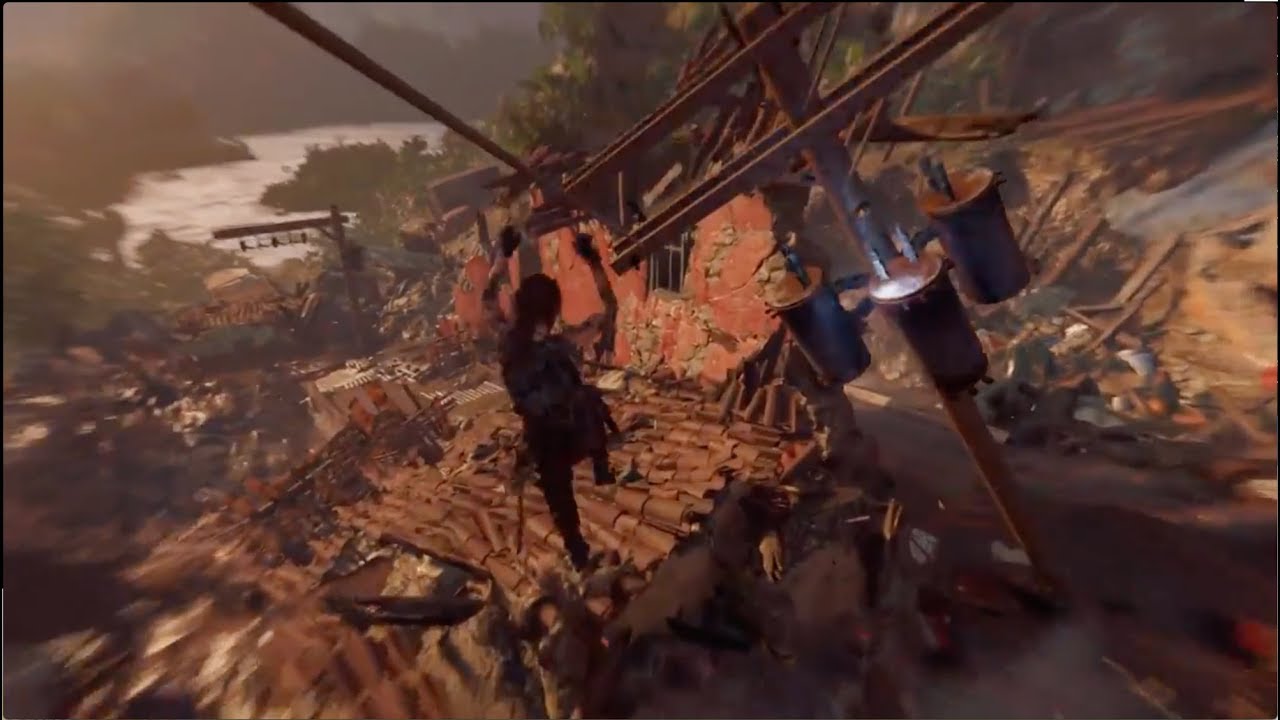
Running, swimming, or sliding down a hill as a cataclysm takes place right up to your backside before barely escaping. Naughty Dog love these, but they've appeared in practically everything including Need for Speed Games, and even Thief.
It doesn't truly matter what type of game though, as I look upon all of them with a glaze expression.
These sequences have an innate contradiction in design. They must convey to players immense danger, but never put them in it, for they'll be stuck in the set-piece long enough for the visual and audio stimulus to wear off. It's why when a building's falling to pieces, there's always one falling platform at the exact height for characters to leap from.
Shadow of the Tomb Raider turns this gameplay necessity into a goddamn art form. Putting together easily the most idiotically insane set-pieces I've witnessed since the Train Crash in COD WWII. It destroys so much shit while giving Lara so many convenient pieces in rapid succession, it's more like moving through the world's most convoluted Mouse Trap.
Thing is, I beat the game... so why has this particular event stuck in my mind?
Because I played the sequence three times.
While there's always times to fault the player and not the game, I believe having a flying car block jumps, phasing through rocks, and animation glitches locking character inputs, don't fall onto my list of errors.
That's really the ultimate issue I take with Shadow's Sliding Setpieces. It exerts so much on screen that the game's own t-square linear pathing can't save players from tiring of all that work. More recent games I've played seem to be moving away from these types of events. Perhaps that's due to people having caught onto them since the 7th generation used a building collapse in seemingly every game trailer known to man.
But I'm sure the cost to content ratio doesn't encourage developers to bring them back.