Commentary: Pages 46-47
Added 2025-04-21 22:37:11 +0000 UTCPage 046 - Side Gig
The title here is a reference to what happens at the end of the page here, which is something I usually try to avoid. I don’t want the reader to get spoiled by the title! In this case, though, I think the setting of Sunny’s place of work here is enough of a misdirection to keep you from sniffing out the true meaning. Better safe than sorry.
Here we’re introduced to Headless Ed.

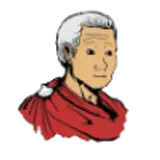
Headless Ed was designed outright by Rhys. He’s actually the only character who was designed before the transition Home Bound had from human characters to furries that did not undergo a major redesign or get cut out entirely. Not having a head in the first place means there’s no non-animal features to replace, yanno. It’s a good thing too, cause the design Rhys did was sick:

Actually while digging around for that concept I found a second one Rhys did that we’d forgotten about:

And, like, fuuuuuck that looks way cooler, with the huge cuffs and the waistcoat! I can’t believe I forgot about this! Expect him to look more like this next time he shows up.
Anyway. Ed. Lemme see if I can get some design notes from Rhys.
Rhys notes: He was originally designed as a Dullahan for when the ghosts were going to be fairies. He had two horse skulls on his shoulders because a modern carriage wouldn't need to be horse drawn, though these would later be nixed from the design because redrawing horse skulls every time would suck. I think the torrent of flame may have been inspired by the dullahans from Disgaea.
Also he was called the Headless Hearseman initially, because he drove a funeral hearse but like realistically how often was he going to do that. The name Headless Ed was to give him more of a cryptid/boogeyman vibe
It’s a shame he did lose those horse skulls, they would have worked great with the new furry style of Home Bound, but… Rhys is right. I would not look forward to drawing those every panel he appears.
Peri pops in:
A quick note on Ed’s colors–I’m not actually sure blue was picked for him, but it’s been that way a good long time. (Quite possibly it was inherited from Rhys’ original full color designs?) The color itself works great, but there’s been some secondary effects that, while they’re not exactly problems, do have a lower level of clarity than we usually shoot for in the comic. One of them is that Rhys is the same shade of blue. Since we’re introduced to Headless Ed while he’s possessing Rhys, there’s some ambiguity introduced by that. I remember seeing some readers think that the two were more deeply connected, or even that Rhys was dead after Ed left his body! The second issue comes back to the always-include-green coloring scheme we settled on for the Home Bound ghosts–I regularly see fans discussing the comic forget that Ed’s color is blue (usually in discussions of variously character color theme theories) because the green is so much more dominant in his design than the blue outlines. Ah well. You win some, you learn some.
Headless Ed has a role he’s meant to fulfil: He’s the main antagonist of Home Bound. He’s the biggest bad of this story. He’s the greatest adversary Jasper will have to face. He’s the guy you have to go head-to-head against in the ultimate debate at the end of the game, in a battle for the fate of Fairwell.
Or, he would be. Unfortunately for him we’re not playing Home Bound, we’re reading Foreach, and he is distinctly not the biggest bad of Foreach.
Narrative disruption is a recurring theme in Foreach. Characters believe that they know the genre of the story that they’re in, they believe they know what role they’re meant to play and what challenges they’ll face, but their assumptions are voided when an external element intrudes upon their story that totally obliterates the fabric of the story they’re in. It’s a fun bit of metafiction, characters being caught off guard by genre intruders, but it’s also reflective of the real nonfictional world as well, isn’t it? It’s a thing we all do, we tell ourselves a story about the situation we’re in and we march onward confident we know how that story ends, only to be completely blindsided when reality comes crashing in with events that do not align with our personal narratives.
Ed is the villain of Home Bound, and in a sense he knows it. He knows that he’s the most dangerous guy in this town, and he knows that he’s the biggest problem in Jasper’s life. But he doesn’t know shit about Foreach. A new variable from just outside his peripheral vision waltzes into frame, and then…

Suddenly he’s not the biggest prick in town.
We’ve seen intrusive elements bend the narratives of each setting, but each time they were able to reassert themselves quickly enough and get things back on track. Not this time. Headless Ed has just been completely removed from his own story and there’s a complete void now where the central conflict is meant to be. The game has lost its final boss.
But for the reader to grasp the significance of this, we need to actually communicate not just who Ed is, but who he is meant to be in the context of this narrative, and we need to do it in a very short time. I would have liked to spend more time establishing this dude as a bigger deal, but the way things shook out we had to get the thrust of it across with very little page space.

A big villain speech was the best way to pull this off. It’s another case of “writing in-character”, I consider this scene from the perspective of someone who really, really wants a big splashy entrance for their main villain, and I try to make the choices that writer would make. And then I perhaps amp it up a notch or two more because I only have half a page to get this concept across.
So this is written as though it was the big bad’s splashy introduction, the bit where he reveals himself to the hero and sets up the stakes. Similar thing to what we got from Proteus earlier this chapter. Ed speaks with utmost confidence, he strikes fear into the heart of the otherwise always in control Rex, and he establishes a clear personal link to the hero that would no doubt be milked for all sorts of drama. And at the end of it all… I’m not actually sure I pulled it off as well as I could have?
Rereading the page it works well enough, but I’m not sure if he’s quite giving final boss energy. He could easily have been a particularly important monster of the week here. I’m not sure how much of this could have been remedied in the page itself– I think it would have been wise of me to plant more references to him earlier in the chapter. A terrible omen that his return is imminent, a grave message from an underling, that sort of thing. Right now he’s mentioned, but it’s an offhand thing, and the reader has likely forgotten it by the time this page arrives. I’m sure a bunch of readers picked up on the intent here, but I suspect some number had different reads of what’s happened here, and I would have preferred to avoid that.
Peri ponders:
Now that you mention it, an easy way to tie that in would have been to make Rodney (the car factory ghost from Chapter 1) have some connection to Ed. It’s always pleasing when you can take existing elements of the story and make them pull double duty. Huh! It didn’t even occur to me at the time, but that’s one of the fun things about getting to go back over the story in these commentaries.
Metafiction can be tricky like that. I’m trying to write two stories at once here: the one that was meant to be, and the one that actually is. Here I want the reader to extrapolate details about a story they have not and will not read from some narrative cues I’ve slipped into this guy’s dramatic speech. Nobody in this scene can actually explicitly deliver the information that Headless Ed is the final boss here, because nobody is operating on that level of awareness, so it falls entirely on the audience to infer it themselves. But that’s a pretty abstract thing to get across! The audience is already spending brainpower attempting to decipher the narrative of Foreach proper, and now I’m asking them to pick up on the narrative structure of one of the recursive substories that they don’t actually get to read all of.
Ah well. It’s fine at the end of the day. Even if the reader doesn’t pick up on the particular detail that this guy was meant to be the main baddie, I think they’re still going to pick up on that he prooobably wasn’t meant to be quite this easy to deal with.

I’ve already talked a lot on this page, so I won’t get into it too much, but this is also the location of our first secret page. Click the word “work” and you’re taken to a cute little joke from Rhys (the character, not the real guy). I’ve got stuff to say about these but… I’ll save that for another time.
Peri pads:
I think this is our first use of slanty text in the comic! And to what great effect! I love the moment when Ed gets sucked into the orb and his monologuing devolves into shocked noises that are tilted so far that they’re practically falling out of his text box. It works on so many levels. First, the interruption to his speech is a surprise to everyone–him, Coral, and especially the reader! The disruption to the neat, parallel text lines serve as an instant visual indicator to the reader that SOMETHING WEIRD IS UP! Then in addition to that, Lum talked earlier about Casandra being a narrative intrusion. Her presence is knocking everything out of alignment–even the text! Just as the rules of reality seem to be falling apart around Coral, our visual rules that govern the layout of the comic are breaking down too. Perfect visual and thematic harmony!
Page 047 - Two For One

Elves.
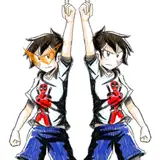
In an earlier version of Foreach, Home Bound was populated by humans instead of animal folk. We even got as far as doing designs for everyone!!
We got Jasper, Sunny, Moon-Soo and Sitara…

Peri praises:
OMG I love how Sitara’s hair even still has a bird beak look to it! I’ll still never wrap my head around short Moon-soo though. He’s just a big quiet dude in my heart and he always will be.
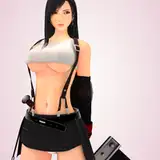
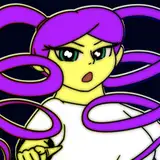
Rex…

Alma…

Even Clip!

There’s some damn good designs in there! So why make the change?
The biggest reason, really, was genre. Home Bound is already the least archetypical of the four games in terms of the genre it’s meant to be riffing on. It’s meant to be some kind of indie talking-based game, but it lacks a lot of signifiers that would be common in that sphere, and it has a lot of really oddball features that you don’t really find in a lot of games indie or otherwise. Over the course of figuring out Foreach’s story, Home Bound had lost a lot of the markers of the “quirky earthbound style RPG” is was meant to be, and that lack of genre alignment was not sitting well with me. It felt out of place in the lineup, feeling too much like the “most real” story, the “top layer” when the whole point was meant to be that the games form an infinite spiral with no end in either direction.
Games with furries, on the other hand, are kind of a prototypical indie game thing. I guess because they tend toward more stylised visual styles than AAA fare, because the furry scene tends toward more personal smaller scale work, and probably just some amount of unfair stereotyping, making Home Bound more of a furry game made it click a lot better as part of this setting. My approach to the style was that it was designed by an artist who may not have been that into the scene as a whole, someone who thought of them as “funny animals” rather than “furries” per se, and so the style is a lot more graphical and less attractive than your standard furry artwork. Night in the Woods was a point of reference, I recall.
That inevitably had a knock on effect onto Love Bomb, though, because at this point Love Bomb was also inhabited by humans. This threatened to raise uncomfortable questions about what exactly a human was to these animal people. Home Bound is meant to be one of those settings where the furry aspect goes completely unremarked upon: there’s no special worldbuilding here, it’s just our world with animal people. Having a Love Bomb videogame inhabited by humans complicated that, because it implies humans are a cultural thing in this setting that is distinct from regular people. Do animals know what a human is? If they do, that creates a kind of cultural division from our world that was simply just not in keeping with the setting I wanted to be presenting here.
Peri professes:
I feel like we could fill an entire update’s worth of commentary just talking about all the furry world building related questions Lum’s worked pretty hard not to raise in the comic. It can be a real rabbit hole, especially when you start asking questions about genetics and interspecies compatibility and what are animals in a world with animal people? Those questions can be fun to banter about, but they can get really weird really fast, and Foreach is better served by a loose approach to world building where those thorny questions are never forced into focus.
Rhys suggested making them kenomomimi, giving them animal ears and tails to bridge the gap, but that didn’t sit right with me. It would have meant half of the settings in Foreach would have starred some kind of animal people. That felt disproportionate! It’s too great a domination of a single aesthetic region when I want to be giving a sense that we’re looking at a wide variety of lineages here.
The solution was found in Legend of Zelda. There’s no humans in Zelda, either: everyone has the pointed ears of a fantasy elf. This was the way: it was an idiotically simple solution to all the weird worldbuilding questions raised by having humans in the furry world. Why are the anime characters humans? They aren’t, silly, they’re elves. Totally different thing.
This is barely an explanation, but it’s just enough of one to serve its purpose. Sure, it raises further questions, but have you even tried actually asking those questions out loud? By the time you’re saying shit like “why do elves look like humans with pointy ears if there’s no humans in this world” you’ve entered into a realm abstract enough that it doesn’t intrude directly on your suspension of disbelief. It’s a distraction play on my part, putting up just enough of an obstacle in the way of your perception.
And it’s in keeping with the vibe of Home Bound as a setting with very little worldbuilding to justify its furry nature. Everything is as it is in our world, to the extent that characters never acknowledge each others’ animal species unless forced to by external world elements. So the inexplicable weirdness of elves still looking basically human fits in with that.
Peri protests:
Lum! We’re nearly at the end of this commentary and we’ve barely even talked about the page itself! Allow me to remedy that.
There are a couple of interesting language choices on this page. First, we have Headless Ed himself. Ed introduces himself by his full name here: “Lord Montgomery Edmont!” and on the first draft of this page, Jasper responded with a shocked “No!” Which meant… that nobody actually ever said the words “Headless Ed” on this page. Would readers still have managed to connect him to the previously-mentioned nickname from 15 pages ago? Maybe, but it’s better not to put it to the test. Changing Jasper’s exclamation to “Headless Ed!” was a simple fix that cost nothing and provided plenty of clarity–that’s a deal even Casandra would appreciate!
Finding the voice of a new character during their first appearance always takes some back and forth in the edits. For Ed, one key issue was adequately distinguishing him from Proteus. Both are Big Boss Men who like to monologue and have a flair for the dramatic. So how to make them stand apart? For Ed, we decided to lean into making him, and I quote, “Overwhelmingly British.” It was a fun choice–who doesn’t love a posh British villain accent-ing all over their villainous British monologues? It also let us lean into making him sound a bit old-timey. Ed himself mentions that he has haunted the Mundy line for “generations”, so giving him a colonial brogue reinforces that he’s a bit of a relic.
Lum expands: On the subject of Ed’s britishness: I might add a note that it fits in with Australia’s history as a settled nation, where a rich baron type like him in the 1800’s would be much more likely to have immigrated in from Britain with all his wealth in tow. At that time Australia did not have a strong identity distinct from its status as a british colony– federation did not even occur until 1900! Even up through the midcentury many Australians still considered themselves to be British subjects; it took a long time for that to cease being a common perspective.
Comments
Oh my god...
Lum
2025-04-24 13:40:06 +0000 UTCOh don't worry, I absolutely overthought that. Expect some insight into that once we get to page 100
Lum
2025-04-24 13:36:18 +0000 UTChttps://zeldawiki.wiki/wiki/Human
Stephen von Schulmann
2025-04-22 21:10:51 +0000 UTCI love that you put all this thought into how humans can't exist in ForEach because of the questions it raises and then there's, like, Cliff. I suppose by that point though the stage is sufficiently set.
Daniel Kelly
2025-04-22 04:45:09 +0000 UTC