In 1981, a delusional John Hinckley Jr. attempted to assassinate President Reagan, wounding the president and several members of his entourage. A Washington, D.C. jury found Hinckley not guilty by reason of insanity and sentenced him to residential treatment. Five years later, the failed assassin applied for a major privilege-- an Easter holiday home visit. Government prosecutors were vehemently opposed to the idea, and in April 1987 a D.C. District Court judge granted arguments from both sides.
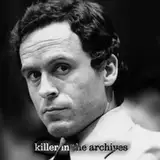
The hearing came to a sudden halt when Hinckley's hospital psychologist revealed on the stand that his patient had been corresponding with the serial killer Ted Bundy. As news media splashed the salacious revelation of the two criminals' pen-pal friendship in their headlines, government lawyers insisted that Hinckley was clearly still delusional and engaged in another unhealthy obsession. Hinckley's attorneys quickly withdrew the furlough application due to the outcry and "hysteria" resulting from the Bundy exchange.
Meanwhile, the Florida State Prison brought its own charges against Ted Bundy for "corresponding with another inmate without authorization.” He was able to beat that one, by arguing that John Hinckley was technically not an inmate, but a patient in a hospital (albeit for the criminally insane).
Later that year, Ted received another citation when he attempted to smuggle out a letter to John Hinckley's parents under the guise of "legal mail." He'd addressed the envelope to his friend John Tanner, who was a lawyer, but not Ted's lawyer, and therefore their communications were not protected by privilege. The letters never reached their target audience, but instead were confiscated by prison officials.
In this excerpt, Bundy seems insulted and indignant that the court and public would deem him a dangerous subject for correspondence.
.
.
June 2, 1987
Dear Mrs. and Mr. Hinckley,
I meant to write back in April, when the controversy over the brief correspondence between your son and me surfaced. Please excuse the delay.
I don’t need to tell you how absurd the controversy was. Mr. Hinckley, you were quoted as saying that the letters were innocuous and that about sums it up. But I would go further. John, in his letters to me, evidenced a friendliness and compassion that were anything but sinister. I received hundreds of letters from decent concerned people around the same time John wrote because they, like John, heard the publicity surrounding my situation. The government would like to create the false impression that the only reason someone would write the notorious Ted Bundy involves an unhealthy interest. This is not true...
I pray that the furor will die down and that the government will not again use John’s writing me against him. If there is anything either I or my attorneys can do, please don’t hesitate to ask. For instance, I am forwarding this letter to you through a close friend of mine, John Tanner. John and his wife, Marsha, both wrote to me around the same time your son did. They can verify to the widespread outpouring of love and prayers I received from “strangers” last year.
You and your son are in my prayers. Through suffering comes great wisdom and in time, peace. God is with you.
peace, ted
Tiffany J.
2023-02-22 05:00:20 +0000 UTCCarey
2023-02-20 15:09:02 +0000 UTCAnne Catherine
2023-01-20 13:48:02 +0000 UTCTiffany J.
2023-01-18 20:01:27 +0000 UTCBruce Harry
2023-01-18 19:55:05 +0000 UTCTiffany J.
2023-01-18 06:09:50 +0000 UTC