SamSuka
American Exception
American Exception

patreon


Episode 34: JFK Assassination Debate

This episode features a debate on the JFK assassination between Robert Buzzanco and James DiEugenio. Buzzanco is a professor of history at the University of Houston. He is also the author of Masters of War: Military Dissent and Politics in the Vietnam Era, as well as cohost of the Green and Red Podcast. James DiEugenio is the screenwriter and co-creator of Oliver Stone’s JFK Revisited: Through the Looking Glass as well as JFK: Destiny Betrayed—the four-hour cut of the film which is now available for digital purchase. Jim also runs the fantastic Kennedys and King website and is the author of Destiny Betrayed: JFK, Cuba, and the Garrison Case as well as The JFK Assassination: The Evidence Today.

Future episodes of American Exception will follow-up on the material covered in this debate!

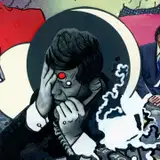
Special thanks to Casey Moore for the episode art and Dana Chavarria for the sound engineering!

Music: "Too Good Your Dreams Don't Come True" by Mock Orange

Episode 34: JFK Assassination Debate

Comments

This was a good guide to the different perspectives towards the assassination. Buzzanco is absolutely right that the question of motive is probably the weakest element of the Conspiracy case. Having said that, like a lot of historians he perhaps avoids grappling with the nature of 'deep politics' in the context of the administrative state. If JFK was trying to become the next Henry Wallace, wrestling with the bureaucracy would in fact produce the kind of documentary record we have in any case. Brinkley's book on the failure of the New Deal is illuminating in this regard, as he shows how personnel shifts are the best clue to FDR's own views of what was possible. JFK had to say different things to different people to succeed in politics, so the documentary record is never going to be explicit about what was really happening until it happened. The most plausible motives are either to avenge something or to stop him from doing something. The Bay of Pigs fits the first; the whole subject of foreign policy directions fits the second. (There is also the LBJ factor, which goes relatively unexplored in these debates.) There are problems with each of these, which is why I find my interest focusing more on what Buzzanco dismisses: the events in Dallas itself. The fact that Oswald seems to have been 'fitted-up' implies an existence of some kind of conspiracy. It's not hard to imagine that, whoever was behind it, the government at all levels might want the most convenient solution at hand, even if the conspiracy was limited to 'bad elements' in the CIA or army intelligence. The outrage would probably lead to wholesale restructuring of such institutions at least. At the extreme, it would be outright abolition.Such disruption to careers would be grave, and people might prefer to look the other way. Especially if their own reputations were vulnerable to things spies and police might have known. Buzzanco's lack of interest in the events around the assassination itself permits him to discard the best evidence for a conspiracy. It really is a case of what my old PhD supervisor would say, 'always answer the question you want to answer, regardless of what you are asked'.

Paul Brewer

I’m going to give him credit for being anti-war, that’s the fundament of any decent politics. He’s kind of an interesting character, new Twitter follow.

William Stearns

I’m not really familiar with this guy, but I note that he considers himself an “agitator,” at least per his Twitter bio. His politics doesn’t seem that bad on a brief review, but his disdain for James (and you? Not sure if the plural was meant to include you or not) and rationalization of his avoidance of unpleasant facts while imputing psychological motives to those who see things differently makes him seem very questionable.

William Stearns

Buzzanco had nothing but insults. Very telling.

Jennifer Stroh

It's an almost religious thing for the Cult of the Lone Nutz.

Aaron Good

What system is Buzzanco talking about? Doesn't he know that elites use all sorts of conspiracies to maintain their power? How does the system work if not through class war from the elites against working people which uses different tools including war, assassination, and all sort of other horrible crimes. What is most astonishing is that he would not have a problem to think that Lumumba was assassinated by the CIA but why would this not also happen in the US?

Caterina Strambio De Castillia

Buzzanco is really arrogant, continually attacks DiEugenio personally (you are lying, you are trying to make money, you are ignorant etc.) and pushes his book (I have written 300 pages, if you would have read them, you would know etc.). This is really disturbing. Just on the face of the personal behavior during this debate I like and trust DiEugenio much more. Does Buzzanco accept the official story? Does he believe in the bouncing around bullet? How does he explain it? Does he know that conspiracies are a common occurrence in History?

Caterina Strambio De Castillia

That escalated quickly

Strangely Enough

Yeah, that aspect was ridiculous. Jim has gone through a crazy amount of AARB releases and these make up much of the new film. RB talks lots of trash about how he has looked at all these documents on Vietnam, ignoring that Jim draws from archival historians like Newman and Jones and Rakove and Simpson...and then by his his own admission RB admits he's not looked at any evidence related to Dallas.

Aaron Good

What I heard in this debate from Dr. Buzzanco: “Only historians who read the documents know the truth but I haven’t looked at the documents relative to the assassination therefore I know there wasn’t a conspiracy.”

Chris Collins

I see a lot of irony in 2 Italians arguing over an Irish guy.

Gay Eel

A transcript of this debate would be great.

Dogface Reilly

I'd really recommend that you watch the 4 hour cut of JFK: Destiny Betrayed and that you check out the Destiny Betrayed series of episodes on this podcast. Basically, the argument is that while JFK espoused Cold War rhetoric, he was really a throwback to the progressive internationalism of FDR and Henry Wallace. He realized that the Cold War was the structural constraint that limited his freedom to act as US and international statesman, and that is why he tried to end the Cold War. So right after he died, RFK and Jackie sent a messenger to Moscow to tell the Soviets that they knew JFK was killed by a right-wing US plot and the the quest for peace would have to wait until RFK could get into the White House. ..

Aaron Good

I was unaware that JFK was seen as a hero figure among the American left. I’m an Irish catholic so I like the guy more than most but I know he was an ideological cold-warrior. And that fact has been part of the left wing narrative of the assassination and coverup. It’s just seems like Robert is a fan of “the official story” which is a bold position to take without addressing any of the forensics and details re: Oswald, the warren commission etc.

Aidan powell


More Creators