Hey everyone,
Last week, in the article about How to Practice! I shared ideas on how to optimize rendering, which led to the practice of values. I didn't delve more into it due to its complexity and its ties to the artist's personal experience and exploration. The smart use of values is one of the most effective ways to catch people's eye. This is fundamentally useful for an artist, especially today with so much competition for attention. In this article, I want to expand on some ideas I currently use that I've learned over the years.
In art, 'values' refer to the range of bright to dark tones used in a painting. They are essential for creating contrast, defining light and shadows, volume, depth, and texture. Values help in shaping colors and forms, making the visual information engaging and realistic for the viewer. Whatever the viewer finds realistic or familiar becomes more attractive than what's not.
What we call "realism" in art, visually speaking, is just a piece with a very similar number of values in relation to its subject of reference in reality. If you, as an artist, can capture reality under a certain number of values, people will find it fascinating, regardless of your years of experience.
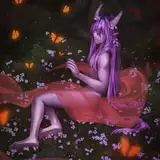
You might ask, what about stylized art?. As evidence suggests, people are attracted to this as well. This type of art tends to rely more on symbolism. It's still a depiction of the real world but lacks the amount of information several values provide to convey a "realistic perspective", in other words, fewer values. Symbolic or stylized art, in this context, tends to rely more on other ways to catch attention through color, contrast, or context. By 'context', I mean association with existing styles or narratives that the viewer can find familiar and therefore interesting.
While this article isn't solely about realism, my style has evolved from experimenting with values and monitoring how audiences react on social media, leading me to a simplified yet effective approach to values, grounded in real feedback and practical experience. When it comes to making my pieces attractive, I don't aim to capture every single value in an object. Instead, I focus on three key elements: Contrast, Edges, and Texture.
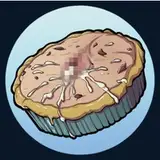
Contrast can be created by using a mix of different values, often opposite to each other, the more opposite the more contrast. These can come from the base tones of your shapes or the light and shadow you add. For instance, take painting an apple. You start with a red base tone for the shape – that's your 'base value.' Without lights and shadows, the apple looks flat. But when you add these, you create a three-dimensional effect and introduce new 'light and shadow values.

Does this mean that images with no contrast – like all white, all grey, or all black – are not good? Not at all. In my experience, while trying different combinations, I've found that there's usually a perfectly balanced mix of these three. The most effective one? It depends on the context of the piece. There isn't a one-size-fits-all combination. The key is to keep these value elements in mind, to some degree, no matter the mix.
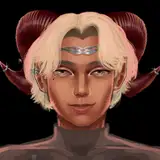
Edges are how we use light and shadow shapes to create the illusion of volume on a flat surface. My approach often involves cell shading popular in 2D animation, where I use hard-edged strokes for darker tones. Sometimes, I soften these edges to make a smoother transition between light and shadow, which helps convey a more three-dimensional surface.

The ideal brushes for this are 'Limberto - Hard Shapes' for hard edges and 'Soft Shapes' for, well, soft edges. These help me achieve a balance of realism and style in the values.
I don't focus much on textures, but they're really helpful, especially for highlights. I believe we're naturally drawn to bright values, like the small white reflections on surfaces. You'd be surprised how much this little detail enhances the final look of a piece.

For highlights, I recommend using a textured brush, it's a great way to grab extra attention.
Conclusion
I've talked about values before, but never with this level of detail or by sharing my current technical approaches, which I believe are more refined and sophisticated than ever. If you're having trouble understanding some of the tips shared today, I encourage you to check out my PSD files. In them, you can dissect my pieces and see these principles in action. These files are available for those in the Mastering Maestro tier. Consider upgrading if you're intrigued by this topic.
For more on this subject, check out the 'value' tab under collections
Thanks so much for your support!
Ramon Nuñez
2024-01-08 06:21:49 +0000 UTCLin H.
2024-01-07 13:32:51 +0000 UTCRamon Nuñez
2024-01-06 08:28:51 +0000 UTCdivergenceking
2024-01-06 08:22:39 +0000 UTC