This was an actual request from one of you through our last survey: "Learning how to design things from an anthropomorphic angle. I feel that design is shown a lot without actually being talked about online."
Creating anthropomorphic versions of objects or animals, in simple terms, is understanding what their function is, their visual characteristics, and their most commonly known facts across society. For instance, let's pick up a tool like a pencil and apply this logic.
In order to make non-living things feel alive, you simply need to think about the function or characteristics of the subject, object, tool, etc. Based on that, try to think of a situation where a character is performing a certain characteristic in relation to the subject. For instance, if it's a "pencil," you have several things to draw inspiration from and create a composition, like the ones previously mentioned.
From that train of thought, you can slowly build up a character's background, similar to what I do in the Mastering Maestro post in the "Concept" section. Imagine a simple situation or a casual story where your character can perform the characteristic that they share with the object. In that sense, if the pencil character is a student, he would be actually using the pencil or performing an action that relates to the pencil shape, color, or context.
Maybe you want to go a bit abstract and choose a totally different subject to mix with the pencil, like a soldier in a war shooting graphite against a paper sheet, but keep in mind that regardless of the situation you are trying to portray, at some degree there must be some kind of relation with the points previously addressed about the pencil itself. Maintaining this key connection will ensure your audience understands your intention, as it might be very easy to lose them with details.
If the concept is interesting to you, your next step is drawing. This can be through imagination or through references. If you don't have the capacity to build it all up from memory (like many beginner artists strive for), simply search for a series of references that match your initial idea and use them to build up your overall concept. You will find this process applied to every single one of my latest illustrations, described in the Process Video posts along with the PSD File.
Example
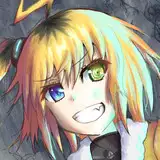
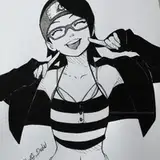
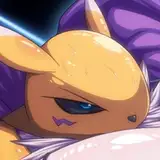
This is a very rough example of idea development, as you can see I started with a pencil, and that opened the door to more ideas in relation to the research conducted and character development.
Creating things like this is a skill. I'm sharing with you the way I approach this subject, but it's through these simple practices where you can slowly develop these processes more intuitively. In the meantime, please share with me your thoughts. I'm more than eager to guide you so you can make your own ideas real.
Let's brainstorm!
Ramon Nuñez
2024-02-21 07:06:58 +0000 UTCMari
2024-02-20 20:50:50 +0000 UTC