Hey everyone!
Continuing from our last article about Concept Art Portfolio Direction! in today's post, I want to share some strategies for portfolio building after proper research has been conducted.
Concept artists, especially those starting out, often face the challenge of creating new, original designs within the limitations of a client or project. The most common issues are leaning too much into something safe or clichéd, or delving too far into concepts that aren't practical or coherent within the project's/client's needs.
Dedicating time to break down existing ideas, understanding the underlying principles, and then applying those principles to personal designs can help you create new, original concepts for your portfolio that meet job expectations.
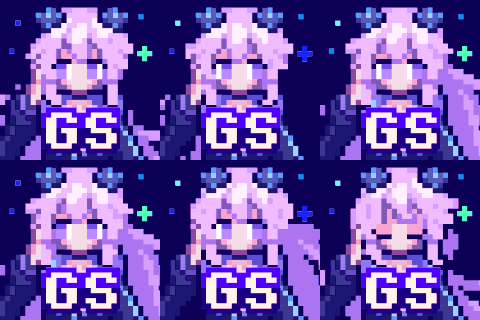
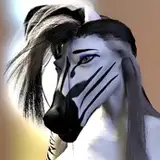
The goal of today's article is to help you create a piece of art inspired by an existing idea, perhaps a franchise or a project you like. You might consider this approach similar to creating fan art, but we will act as fans of the fundamental ideas behind the "X" subject, not the end "X" subject itself. Here’s an example:
Imagine we take inspiration from a popular anime series like Dragon Ball, focusing on the main character, "Goku." Instead of making fan art of Goku, you will create a "Goku-like" character. This character should meet the fundamental principles that make a character like Goku interesting for a story. Then, we will integrate ideas we like on top of those principles to bring something authentic to the table. Makes sense? Let's dive in!
GOAL: To create an original piece of art inspired by a functional idea for portfolio building.
In this phase, it's important to have some kind of direction for your portfolio in terms of industry expectations. If you don't have one, take a look at this article: Concept Art Portfolio Direction! A Guide for Lost Artists and pick one. You don't need to be 100% sure; just pick one.
Choose a well-regarded product in the specific industry where you aim to land a job. It can be a game or movie within the genre you're aiming to design for. Spend one day diving deep into the keys of art direction based on narrative, such as:
Document these points in a notebook, and please feel free to ask more questions about the subjects previously mentioned. The purpose of asking questions is to understand why things are done in a certain way and how this can be improved or adapted to your ideas. For example, let's take Goku from Dragon Ball Z, a first manga and then after anime character, and ask questions like:
Having thoroughly studied your chosen subject in Step 1, this phase is crucial for synthesizing your findings and making decisive choices on the visual characteristics you will incorporate in your design. This is not a research step, but a decision-making phase where you prioritize and decide which characteristics are fundamentally important to represent in your portfolio piece.
This extensive explanation does not mean you need to sit and write for hours about what you will do; it is more about me providing context so you have options when trying to capture what you like and then represent it in your own concepts. Keep in mind that this process might also develop while executing your ideas
Using the points you've noted, create a new piece of concept art for a fictional product like a game, series, or movie. You can choose among character design, environment design, or prop design.
This phase is about execution. Keep in mind that possessing all the necessary information doesn’t mean the art will roll out of your hands quickly; it signifies that there are some essential points to consider to meet your goal. However, in the beginning, I recommend doing whatever you feel comfortable with to bootstrap your process.
In my personal experience, I don’t create while juggling many thoughts at once; I focus on one step and gradually integrate what I deem important into my character. If you face a blank canvas with all the information in hand and still don’t know where to start, consider quickly reading one of my posts in which I describe the process from beginning to end. It’s very intuitive and straightforward often, details aren’t part of the initial stages, but shape suggestions and gesture explorations are, which might help you take that first step.
If you're not particularly adept at time management (considering this is a skill some of us are still developing), here is a simple timeframe structure on how you can approach this challenge:
One Week Challenge:
These times and order are just suggestions. If you have ways to become more efficient, then go ahead! The goal is to complete one idea in no more than seven days; it does not need to be perfect. This exercise is about completing the task and slowly discovering the most efficient way for you to come up with interesting ideas.
Feedback Loop
You are not alone in trying this! Motivation is key. Share your daily progress in our Discord group. If you are not on Discord, feel free to share it on social media and tag me so I can check. I'm not very active lately, but I definitely check Discord daily.
Long-Term Goal
If you manage to accomplish this challenge weekly and try it at least once a month, by the end of this year, you will have at least four art pieces for your portfolio—maybe more if you are highly competitive. Among the many positive consequences of this challenge is developing a form of analysis and execution that will help you create functional ideas that can be used for the companies/studios you aim to work for. Even better, they can be used by yourself when creating your own world.
Conclusion
Building a portfolio for concept art is not easy; half of the job is thinking, and the other half is execution. Many artists worry about the execution since it's what attracts them, but the key component in concept art is your ideas. Good ideas, often accompanied by an execution that effectively conveys the intended concepts, are more attractive than ill-defined ideas represented by intricate or hyperrealistic artwork. Put some extra thought into both phases of your process and meet those job expectations.
Tomorrow, I'll be sharing the process video of this piece along with the files and insights. They will be available for Mastering Maestro tier and above. Feel free to upgrade if you want more insights about my work.
Welcome to all new patrons!. Drop any questions here in the comments, via DMs here on Patreon, or in our Discord group. I'll be more than happy to answer and track your progress.
If you found this article useful, please drop a like or a comment! I appreciate the feedback and criticism as well, as I strive to improve and provide you with the best.
For more information, check out our Patreon FAQ: https://ramonn90.myportfolio.com/faq and Patreon Catalogue: https://ramonn90.myportfolio.com/work
Your support makes this content possible! Thank you.