Hey everyone,
I've spent time discussing strategies to tackle common artist problems, but haven't shared much about my 'style development' journey before turning professional. Today, I want to share strategies that guided me. Stay tuned because at the end of this article, I'll reveal the dark secret that pushed me to acquire these skills and stay popular.
Realistic Anatomy and Values (2015)
At the beginning of my process, I chose references with female anatomy, statues, and movie scenes. Why? I wanted to improve my skills in realistic shapes through body rendering. I noticed these topics served better as points of reference. However, not all studies generated the same reaction; some were more engaging than others. I've noticed that strongly contrasted pictures were more engaging than those without black and white.
The technique I mostly used for these studies was a mix of hard and soft edges. Hard edges to define shapes with strokes and soft edges to smooth and blend the values of those strokes. Here's how it went:
- I used a brush called "Farba," which you can find in Maciej Kuciara's brush set. This brush is particularly interesting because it creates a defined line and also a degradation on one side of this line, useful for creating the illusion of 'volume.' For the soft brush, you can use the 'Soft Shapes' brush from my set. I also used the 'Smudge Tool' from Sam Nielson called Jason's Nice Brush. With this tool, I created smooth gradients, perfect for realistic rendering.
During this time, I also improved how I spotted colors from the references. Instead of using the 'Eyedropper Tool,' I tried to guess the color from the reference. It's worth noting that I did studies like these for the entirety of 2015, so it was not just a few days or weeks.
Here you will see a video process of my approach back then, in case you are interested Practice #7 Video Process

Stylized Anatomy and Values (2016)
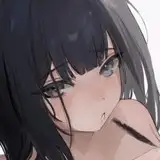
After understanding the basics of realistic rendering, I started to push my shapes into more stylized anatomy to seek authenticity, rather than just copying real pictures. Back then, I was influenced by artists like Wangjie Li and Ayran Oberto exceptional in capturing volume through values and textures, and I highly recommend them.
My technique was similar to the previously mentioned combination of hard and soft edges to convey three-dimensional forms. I still used references, but my concepts were insufficient, in my opinion, just pretty faces. I wasn't particularly conscious or educated enough to set well-founded original ideas. The pretty render helped me get illustration gigs but not concept art ones.

Lines (2016)
Although I could emulate decent renders, I still felt insufficient when creating original and dynamic ideas. What did "original ideas" mean to me back then? Essentially, ideas that didn't require realistic render and colors to be interesting, just lines as a sketch for clear understanding. Lines also helped me push perspective and movement in curve line choices, something I found particularly interesting to learn from artists like Joe Madureira, Even Amundsen and Suke, among many others.
This "quick" technical approach had me obsessed for a while, as I thought it would be easy to create fast. It wasn't; the idea you want to convey with lines must be clear in your head or at least in references, something I wasn't aware of back then. This lack of awareness led to characters with interesting perspectives, facial expressions, and gestures but without an original concept behind them. Good for illustration gigs, not so much for concept art jobs.

At the end of 2016, I tried different ways to integrate color and values into my line art. I found one technique particularly popular, especially when exploring "fan arts." Among all fan arts, this technique was the most engaging on social media.

I'm particularly proud of this technique because it quickly and simply summarizes what I consider necessary in one composition (lines, values, and colors). The "Walking Dead" fan art, a 30-min sketch shared in a 30-min Art group, is an example where I pushed myself to cover the information necessary for a "finalized piece" look.
During this phase, I got my job at Riot, where I explored more in-depth concept art related requests, finally nailing a bit more the thinking behind my intuitive technical choices and execution. To this day, this is the technique I use.
2017 Up to Now
Through the next years, I kept exploring the same structure developed in 2016:
I didn't invent this technique; it turns out it's an efficient way of working, established a long time ago. I just discovered how to do it myself, in a way I like. What followed was a combination of that technique with different goals in mind. Here's a brief summary:
Fan Art Cinematic Key Frames
I aimed to create popular topics as animated shots, which brought a lot of engagement on social media.

Original Cinematic Key Frames
I applied my knowledge to cinematic-like compositions with original narratives and backgrounds. These were highly popular and combined several visual keys, visible in my current process videos and PSD files.

Animation Phase
Since 2020, I've documented my development in this phase on Patreon. I explored the work of great artists like Katsuhiro Otomo and Hayao Miyazaki aiming to create a more powerful connection with viewers through animation. This phase was useful for understanding the production process of such complex art and products. I learned to manage my time, set goals, and be thoughtful about where to put my energy, as animation and comics demand high effort.
The engagement was very high, showcasing the power of a story told not by one image but a sequence, accompanied by audio.

My Universe
This marked the beginning of my project initially called "Memories," which has evolved into what's currently "Afterorder." Afterorder aims to become a game where all the characters I've created over the years interact with players. I have a sense of the type of game I want to create but am still working towards that end. My goal is not just to create a strong connection with the audience through my art but also to bring fun and novelty to players.

Please keep in mind that the pictures I'm currently sharing from my first years of learning were my best out of thousands of attempts. It took me a while to achieve that level of render or detail, and eventually, those are the ones that still remain in my Portfolio. This context is important because I want you to understand that the real value is in the determination to try over and over, and the key to that is choosing challenges you can achieve quickly, sharing them in search of some kind of feedback, and moving on. Habits and socials are key, in my opinion. Try the 30min challenge and share some of those attempts with us on Discord; this might be a good start.
Conclusion
You might be asking, "What is my dark secret?" Well, it turns out my biggest motivation through all these years, especially at the beginning, is "seeking approval." The reason? I don't really know; I have some theories, but this might be one of my biggest weaknesses and it transformed into a constant need to prove that I'm capable.
This need for external approval is one of the reasons for my determination. Back at the beginning of my career, I was mainly focused on this; now, I'm aware and relate to other goals besides approvals from others, as I understand others don't really know or even care who I am, and that's fine. After a while, you understand there are greater things than that, but I'll keep that for a future post. I hope this post helped you understand a little about me and maybe about you.
.
If you enjoyed this article, consider subscribing for $3 monthly to access content like this twice per week. For $5 monthly, you can access my carefully selected references for inspiration and brush set! With a $10 monthly subscription, unlock process videos and files in which you will dive into the subjects I've just discussed in this post. Also, regardless of the tier you choose, you will have access to our Discord group, where I personally give feedback and share daily topics you can try out along with our other artist community members. What are you waiting for?
For those already subscribed, always remember this content is possible thanks to your support. Thank you!
Ramon Nuñez
2024-06-02 08:51:36 +0000 UTCYaine
2023-12-19 03:58:09 +0000 UTCRamon Nuñez
2023-12-15 22:15:54 +0000 UTCDelinda Arts
2023-12-15 22:08:35 +0000 UTC