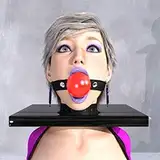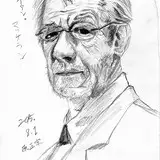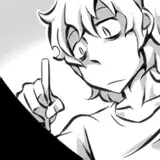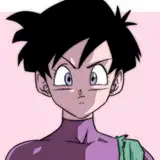
The goal of today's practice is to allow you to focus on aspects of character design that might be blocked by a lack of confidence when building gesture, anatomy, or costume shape drawings from scratch. By using a reference to address the previously mentioned steps, you will not only slightly practice these elements but also put most of your energy towards character design stylization, adding extra details in terms of shapes, colors, and values, like props, animals, or costume. Let's dive in.
I chose a series of references with very simple clothing combinations yet interesting fold patterns for practicing rendering. Keeping simple yet unconventional combinations leaves room for innovation or experimentation depending on what you would like to design. What does interesting mean? I guess it depends on personal taste, but for me, it consists of:
A combination of casual gestures (eating, walking, touching)
Contrast in fabric folds
Different clothing types or combinations

I've simplified the amount of information in terms of shapes, using few lines to suggest silhouettes or surfaces evoked by anatomy or costume. Think of this as a way to simplify or synthesize real complex folds or small anatomical details. A quick way to do this is by making quick and long strokes that aim to summarize a series of very small silhouette details. This is something that, once developed, allows you to digest information from reality more effectively.

I chose a few distinctive aspects of the shapes' silhouettes (anatomy or costume) and pushed them beyond the original reference. This raises an interesting question: what to push and what not? This will depend on the reference or goal, but I often like to adjust the size of things like heads, hands, and feet. As for costumes, I choose one or two clothing pieces to break the character silhouette, such as shoes or jackets. However, if the reference suggests a better option, go ahead.

Lastly, I searched for an animal or object I could attach to the current character study to provide some kind of context for extra information in terms of additional shapes, different color choices, or even values. This is often the first step of my process when creating original characters, but I figure it will be quicker for this process if you already build up almost 50% of the character from a reference.

Conclusion
Is this kind of practice useful for portfolio purposes? I'd say kind of, as you are showing your skills not only technically but conceptually. However, it will depend on the type of work you are aiming to get. I do it just for the sake of fun and practice, as it takes some stress out of getting the right gesture or costume design during the first phase of the process.
I hope this helps! Expect the process video and more insights about this approach in the next few days. Thank you for reading and supporting my work!
Ben LaCasse
2024-07-08 18:37:13 +0000 UTCRamon Nuñez
2024-07-05 09:18:17 +0000 UTCScia.nera
2024-06-26 13:41:07 +0000 UTC