Hi there!
Following this series of tutorials on drawing, today I want to share a very simple approach to torso shape building. This is a subject I've discussed in the past, but mostly with a focus on gesture rather than anatomy. Keep in mind that although the step-by-step process I've drawn makes the approach seem very straightforward, it is in the actual text explanation below where you might fully grasp the meaning behind those technical decisions. Without further ado, let's dive in.

The composition of the torso can make its understanding difficult at a shape-drawing level. So, we will focus on a very simple structure as a base, and then on not making it look stiff.
The torso is the central part of the body between the neck and pelvis, defined by the ribcage, spine, and pelvis. It forms the core structure and is shaped by the chest, abdomen, and back muscles.
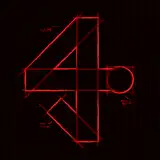
For this particular tutorial, when drawing a torso out of geometric shapes, its composition will consist of three sections, all of them being rectangles with different sizes and lateral proportions.
These sizes and proportions are defined by the bone structure, which varies between characters, but in this example, we will focus on a variation between male and female anatomy.
The first rectangle, which is at the top, is wider at the shoulder level and narrower at the bottom, where the ribs end.
From that point, another rectangle starts, with concave lateral lines. This part aims to define the beginning of the abdomen, from the waist to the belly.
The last rectangle has a structure where the top is wider and the bottom is narrow to the point that it almost looks like a triangle.
Finally, a straight line that symbolizes the backbone.
Let's dissect the image!
1. In the example, you can see how this very basic structure is translated from geometric shapes to a more refined, organic version, performing a standard gesture where the weight of the body rests on the right leg.
2. In step two, rotate both the upper and lower rectangles using two rotation points centered on the line that symbolizes the backbone. For the upper rectangle, the point would be positioned at the bottom, and for the lower rectangle, at the top. Tilt them towards the character's right (viewer’s left), narrowing the middle rectangle on the character’s left side to align with the supporting leg.
3. In step three, I define the center with a curved line since the ribs and belly share this particular form. Out of the curved centerline, I draw other curves to define the positions of the pecs and ribs.
4. Finally, I refine the silhouette with curves instead of the initial straight lines to create an organic look.
You might ask, what makes the gesture of the torso less stiff? As you saw in the example, simply changing the center of gravity of the torso, along with its flexion and inclination, creates a sense of realism.
This, combined with replacing straight lines with curved ones, concave and convex, to capture that muscular shape, will contribute to a more flexible appearance.
I hope this brief yet technical article helped you when practicing anatomy. If you are enjoying this type of content, please leave a comment below, and I'll continue making them!
Thank you for your support.
adrian soriano
2024-10-06 14:11:10 +0000 UTCRamon Nuñez
2024-09-03 19:38:48 +0000 UTCEmilio
2024-09-03 17:34:38 +0000 UTC