Hello there!
Through these recent practices, I've noticed how my process has become very intuitive, without the need to look at other artists' work for inspiration—something I used to do during my beginner years. Back in those times, I think I was aiming to learn the authentic way artists I loved shaped reality—in other words, to learn their style. Of course, my version or my 'copy' was pale compared to the artwork of these artists. I was drunk on details—irrelevant details that I assume were the consequences of playful, intuitive strokes. Why do I assume that Because that's what I'm doing now, playful strokes, and I can see the resemblance. It’s not that my art looks like theirs, but that the amount of details I’m not consciously creating in these practices (happy accidents) are very easy to mistake for intentional choices.
I do have a thoughtful way of painting and drawing, but this is mostly focused on how the big picture looks (if you’ve seen my process lately). I work on a very small canvas, and once you zoom in, you see a total mess that somehow makes sense. My older self, analyzing these sketches as if I were another artist, would assume all these small details had a intricated carefully crafted technique—but I’d be wrong.
What is there to take from this realization? When studying other artists' work, consider their years of experience and intuitive approach, where their vision allows them to capture reality through a series of steps, focusing on one, two, or maybe three key aspects.
But you don’t actually know what those aspects are. You're guessing—drawn to certain elements that stand out to you, following an exploration that might lead somewhere entirely different from what the artist intended. And that’s not necessarily a bad thing. Sometimes, what looks like a key feature of their work was never a conscious choice in the first place, just a byproduct of their process. If you fixate on replicating something accidental, you risk misinterpreting their intent. Yet, through that very misinterpretation, you might stumble upon your own way of seeing and capturing reality.
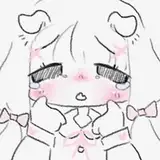
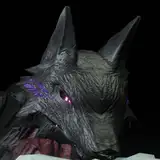
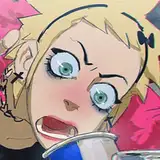
So, don’t get lost in small details—yes, they exist in many artists’ works, but they often emerge later, once the foundation is in place. Try to see the big picture—look at the image from a distance, zoom out, make it a thumbnail. This wide perspective will help you stay focused on what matters.
As for how to achieve this? The approach can be the same as analyzing. Instead of just looking, try painting or drawing in a smaller size so your brain is forced to guess what’s most important or recognizable from a distance. Work on your thumbnail practices with landscapes and characters, and have patience. These ways of drawing and painting develop slowly, not through overthinking, but through doing.
Does this makes sense? here are the references I use for these practices:
https://www.pinterest.com/pin/369365606965862074/
https://www.pinterest.com/pin/369365606965887067/
https://www.pinterest.com/pin/369365606965996049/
https://www.pinterest.com/pin/369365606965925218/
https://www.pinterest.com/pin/369365606965925228/
https://www.pinterest.com/pin/369365606965842320/
https://www.pinterest.com/pin/369365606965994870/
https://www.pinterest.com/pin/369365606965841583/
Thank you so much for your support.
Tyler
2025-03-02 04:23:07 +0000 UTCAlex Hernandez
2025-02-25 04:15:08 +0000 UTC