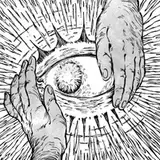
There’s something about Alison Brie’s enormous Betty Boop eyes that’s always read as slightly upsetting to me. There’s just so much area; the idea of something touching their wet, glistening surfaces is too immediate. In Horse Girl, which she co-wrote with director Jeff Baena, they’re so tremblingly wide and lost that the rest of her seems almost childlike, her head a toddler’s bobbling oversized cranium. Her childish appearance only serves to heighten the agony of watching the world around her let her down again and again. As her mental state deteriorates there’s a sense of terrible inevitability, a feeling that in no possible version of this story does this young woman — her development arrested by repeated and brutal childhood trauma — stand a chance of getting what she needs. The roommate whose mild interest swiftly curdles into uncomprehending loathing, the stepfather who hands her an envelope full of money for her birthday, the social worker who says “I’m rooting for you” in the most crushingly lukewarm tone imaginable while she babbles about time loops on the day she’s due to be discharged from the mental ward. It’s not just that no one cares, it’s that no one even knows how.
This failure is Horse Girl’s central source of tension, producing a constant sense of dread and cringing wrongness kept survivable only by Brie and Baena’s shockingly funny script and the film’s absurdly funny cast. But if the humor leavens Horse Girl’s crushing central story, it never undercuts it. There’s no sense of snarky irreverence here, no feeling that anyone is being laughed at. When Brie’s character, Sarah, descends into raving psychosis the laughs stop so suddenly it’s like running full-tilt into a brick wall. Baena and the cast effortlessly communicate this wild tonal shift through delivery, cuts, and a general shift in timing as things move into a more suspenseful, dreamlike mode. Much of the first act is driven by deadpan cringe humor (love interest Darren’s (John Reynolds) delivery of “it really made me feel like shit” after a minute-long recitation of abusive things his ex-girlfriend did to him deserves a special mention), but the transition is surprisingly natural and seamless, aided by Under the Skin-esque dream imagery and an understated but deeply affecting score.
Last week I wrote about St. Maud, which also follows an unwanted and deeply mentally ill woman, and as in that film, Horse Girl is preoccupied with the question of what happens to the people nobody wants. In one scene Sarah says of her grandmother, “Reagan closed all the hospitals and she died on the street as just, like, a street person.” There’s no contempt in how she says it. Nor is there any real fear of suffering the same fate herself; she’s too far gone inside her own delusions for that. It’s a simple statement of fact: there is no place for people who can’t function in a world both passively and actively hostile to their wellbeing. When people break in this country, we throw them away and pretend they don’t exist. The man to whom she recounts this heartbreaking story will do the same to her within a scant few days. “I’m rooting for you,” said in that milquetoast tone of vague, unenthusiastic optimism as he flicks her away like a booger. Rooting for her? Go to hell.
Sarah F.
2021-02-05 13:38:11 +0000 UTC