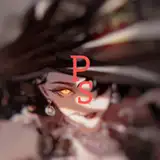
To paraphrase my dear friend the game designer Jeeyon Shim, William Finley understands that acting is a profession totally devoid of dignity. As Winslow Leach, the film’s titular phantom, Finley has a gangly, wild-eyed physical sincerity teetering on the verge of cartoonishiness, a larger than life vibe De Palma’s camera teases and twists into moments of tragic absurdity and inhuman attenuation. Even before his maiming and his adoption of the “Phantom” persona, Winslow plays as a combination of Bugs Bunny and Tom Hulce’s Mozart in Amadeus, a hapless, pop-eyed genius with a body made of rubber and pipe cleaners. In motion he’s completely abject, committing fully to every gesture and tic, hurling himself through every fall and sprint. Even behind the iconic mask (the inspiration for Griffith’s demonic appearance in Kentaro Miura’s ultra-violent manga BERSERK), which somehow only amplifies his wild stare, the convulsions through which Finley puts his face play out with incredible clarity.
Behind the camera, De Palma emulates this same loose-limbed and free-ranging sense of movement. When we look up a flight of stairs it’s from the point of view of someone hunching forward. When we dash through an office it’s from slightly above and at a sharp and slightly crooked downward angle, making the actors look as though they’re risking slipping right off the face of the world as they tumble about. In extreme close-ups Finley’s mobile features are contrasted with the small, tight expressions of Paul Williams as diabolical label owner and producer Swan, just as the environments defined by Leach/the Phantom tend toward clutter and excess (the bizarre recording studio in which he composes his cantata after his accident especially) and those defined by Swan (his studio’s outer offices, for example) tend toward monolithic colors and patterns. The mirroring between the two actors and their relationships to their own art and images as artists is further complicated by the fact that Williams provides Leach’s singing voice.
Phantom of the Paradise proceeds from strange bodies and odd appearances, from hidden faces and giallo-esque secret passages hidden behind mirrors. It’s a Gothic slasher of sorts which opens with a saccharine pop ballad about a child musician offing himself to raise money for his sick sister’s treatment, an adaptation of The Picture of Dorian Gray in which the Phantom of the Opera has a mechanical voice box and got his head caught in a record press, a clear Rocky Horror Picture Show antecedent in which the legend of Dr. Faust is adapted onscreen into a rock opera helmed by a hard-rocking guitarist named “Beef” (Gerrit Graham, singing voice provided by Raymond Louis Kennedy) who transitions immediately into a catty and limp-wristed queen the minute his act is over. In short, it’s something at once profoundly tapped into the history and future of pop culture and completely, bizarrely its own.
Gillian Daniels
2021-09-10 15:15:48 +0000 UTCArt of COOP
2021-09-10 13:42:23 +0000 UTC