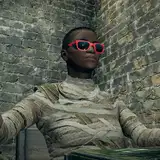
Shōgun is something special, the kind of adaptational success you hope against hope to see at least once in a blue moon. A difficult and problematic piece of source material reworked by talented artists and technicians into something smart enough to see and exploit its own fault lines in order to enrich the text, the show stands as an early contender for the best of 2024. It works in traditional visual language for a historical epic— encamped armies, stately courts, natural beauty, exquisite costumes — but reserves much of its attention for things typically eschewed by similar work. Relationships between women. The small details of domestic life. Language. Sex work. Poetry. There’s no climactic battle between the armies of the calculating, enigmatic Toranaga (Hiroyuki Sanada) and that of his rival, the perpetually frustrated Ishido (Takehiro Hira), but we get to see an aging madam (Yuko Miyamoto) outfox the former and seize a labor victory and lifelong aspiration in the process. We get to watch as abusive husband Buntaro (Shinnosuke Abe) conducts a tea ceremony for his wife, Mariko (Anna Sawai), in an attempt to convince her to commit ritual suicide alongside him, and listen as she tells him with incredible poise and precision to go sit on a hatpin.
In short, the show is concerned with the stuff of life, the adult realm of survival and confusion, mistakes and lust, perspective and beauty. Its poems alone, from Mariko’s haunting stanza about a bare branch in springtime to the wily Yabushige’s (Tadanobu Asano) shocking death poem about being left out in a field to fill the bellies of stray dogs, represent an admirable depth of focus on the creativity and outlooks of its characters, little gems of multifaceted development cunningly cut and worked by people as complex and contradictory as any we know in our own lives. And what a cast! Sanada brings Toranaga to life as a man of such tangible greatness that it makes you want his approval and attention even as you start to realize the disturbing things of which he’s capable. Sawai’s outwardly perfect and inwardly tumultuous Mariko. Cosmo Jarvis’s outrageous period accent and wild, oscillating energy as stranded English pilot John Blackthorne. Takehiro Hira’s Ishido, who looks like he’s constantly on the verge of a cluster headache. I could sit here all day singling out talented actors who enriched and expanded on their roles. The ambitious and insightful Omi (Hiroto Kanai) discovering he doesn’t have the stomach for scheming alone is the kind of work you’re lucky to see once or twice a year.
There are hitches, to be sure. The fisheye effect is applied perhaps a little too enthusiastically, especially in outdoor shots. Early morning lighting is so overexposed it can veer uncomfortably close to Hallmark Channel territory. An action scene in the third episode is limp and lifeless, a completely bungled sequence. But for every flub there are two dozen triumphs. If the cityscape CGI is sometimes a little shaky, my God, the effects for the earthquake sequence are the best I’ve ever seen in any piece of visual media, bar none, so immersive that I cringed in sympathetic terror as soil swirled and flowed like water. If Yabushige’s thing for boiling guys alive in pots plays as a little broad, his madness and death are elegiac. The decrepit Erasmus gliding wraithlike out of the fog like the opening act of a horror movie, the tense, pounding rhythm of the rowing scene in which Blackthorne seizes control of a Japanese galley and breaks Ishido’s blockade, the sudden nightmarish violence of the cannon massacre, the heartbreaking smallness of the grief and personal hurt at the heart of the show’s central conflict — it’s a feast. It’s a gift.
Death hangs over Shōgun like a pall, as Mariko tells Blackthorne it lingers in the soil and wind and water of Japan. It lurks in Ohno’s (Takeshi Kurokawa) rotting flesh. It stalks the garden at Blackthorne’s little house, and chases acts of foolish bravery back up the boughs and leaves of families, leaving only ashes in its wake. It leaves stones slick with water and snatches sailors over rails. We see the brutality and cruelty of the Samurai caste again and again, a reminder that Japan’s colonial ambitions drowned its neighbors in blood for centuries, that when the Dutch and Portuguese arrive on Japan’s shores they are not colonizers but supplicants to a vastly more sophisticated and accomplished civilization with its own dreadful capacity for making nightmares. It’s what Vajra Chandrasekera calls “the traitor’s narrative”, a self-aware and unromantic unpicking of the colonial setting told with full awareness of the humanity of all involved and the horrors underpinning their intersection. Feudal Japan is neither exoticized nor rendered monstrous, but dissected and posed in all its bloodstained finery.
What a gutsy move, too, to keep depictions of violence small and personal. No Game of Thrones battles here, no clashes between armies or protracted sieges. After spending episodes on end building up the nightmarishly violent Crimson Sky plan, a single vicious stroke to seize Osaka castle and form a new government, the episode actually titled ‘Crimson Skies’ refers instead to the time of day at which Mariko determines to commit seppuku in order to break Ishido’s hold over the realm via his keeping the major families hostage in his castle. Whole regimes turn on these sharp-edged matters of etiquette and truth reframed. Toranaga averts a war by sacrificing Mariko, and the blow is so sharp and so painful that we’re left to ponder whether or not it was worth it, whether someone capable of bucking tradition by such intimately violent means is truly capable of building or preserving peace. We expect war. We’re given deep and aching sorrow in its place. Shōgun i a show with a profound level of trust in its audience, a bet on curiosity and viewer sophistication which appears, like Toranaga’s jaw-dropping gamble for the title which gives Shōgun its name, to have paid off.