SamSuka
Primitive Technology

patreon


Primitive Technology: Geopolymer Cement (Ash and Clay)

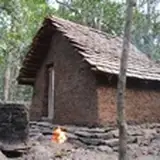
I previously made wood ash cement under the possibly false assumption that it was the calcium in the ash that gave it its cementitious properties. However, as some have pointed out, it may be more due to the material acting like a geopolymer. Alumina and silica are activated by sodium and it forms polymers of aluminosilicates. The video shows ways of producing it and experiments into ratios of clay to ash. My aim is to investigate the possibility of making structures from the material in layers rather than making bricks. This is because the process used to make the cement is simpler and requires potentially less labor than making bricks and stoking a kiln. Much appreciated.

Primitive Technology: Geopolymer Cement (Ash and Clay)

Comments

I've found the best way to dry bricks is to put them in the kiln and have a drying fire the day before firing them by putting the fire in the ash pit of the kiln rather than up on the grate. The slow burn dries out the brick without steam explosions. Also, it's good to make several batches of bricks at once and let them dry over a period, firing the oldest batch after making a fresh batch continuously. I did consider frames but it was getting complicated. I'm considering using waste heat from the kiln to preheat air for iron smelting though, this would be similar to a cowper stove in a blast furnace. Thanks for the picture.

Primitive Technology

Awesome video as always, you probably don't remember but I recently talked about using the heat from the furnace for something useful when it occurred to me that you could probably dry out your bricks faster and without turning them if you made a few frames/shelves that you lay over the ash and then have a shelf next to the fire. That way they'd have air circulating all around them from the start. My bad photoshop of the idea https://drive.google.com/file/d/1PjirAn1X_hzySDDhy053Ir3uNWV_c8rP/view?usp=drive_link

James Tyrrell

It'd be different but probably a relative. I haven't fed them by hand but if I swat a march fly and throw it to them they'll come close and eat it.

Primitive Technology

Is that your same lizard friend we've seen before? Will he take food from your hand?

Amy Tobol

The ash pellets are light when dry. I've considered dropping hot rocks in the water before mixing as I'm aware of the relationship between heat and curing speed and strength.

Primitive Technology

That's pretty much what these are I'd say minus the fired clay aggregate. I think I might try adding some clay slip to the ash to form clinkers to make a version of Portland cement. 80% ash : 20% clay would be my starting point. Then probably bulk it out with sand 1:4 ratio to form insitu structures.

Primitive Technology

This from Google AI: Fly ash bricks are lighter and stronger than clay bricks. Main ingredients include fly ash, water, quicklime or lime sludge, cement, aluminum powder and gypsum. Autoclaving increases the hardness of the block by promoting quick curing of the cement. Gypsum acts as a long term strength gainer.

Kenneth Crips

In the States into the early 1960's we used to have "cinder blocks" they were made with the ash from coal burning and steel production. They are now called fly ash bricks. What is now called a cinder block today is made totally out of concrete. You still occasionally run across them they are more porous and much lighter in weight they were developed during WW2.

Kenneth Crips

I think I'll build a model structure first from the cement and it will be made cast insitu instead of being made into blocks and laid. This will give me an idea about how to scale up production. If it doesn't work I'll go back to fired brick and use the cement as mortar. Stay tunned.

Primitive Technology

Are you planning to conduct any further testing with your samples? I noticed the creek where you source your clay in one of your recent videos, and it made me think about a waterwheel-blower combination for your furnace. I'm really excited to see what you're going to build with those 'cement' bricks

Dean M

No volcanic ash. I've heard people use blast furnace ash and ash from powerplants these days in geopolymer cement. They might to have a similar effect to volcanic ash. The term pozzolans comes from the name of a town where the Romans used to get the ash from, Pozzuoli.

Primitive Technology

Yes, everyone's heard of Minecraft. Glad you like it, much appreciated.

Primitive Technology

You don't have a source of volcanic ash in the area do you, it does not have to be a recent deposit. This is what the ancient Romans used to make concrete. Looking for an english translation of the Roman treatise of engineering. De Architectura, by Roman Engineer Vitruvius c.15 BC. The downloadable copies are in Latin. In this book is the recipe for Roman concrete.

Kenneth Crips

Not sure if you've heard of it but there's this video game called Minecraft where you can do all of this without getting your hands dirty. And that's why I'm watching your video instead! Fantastic and interesting experiments! I'd love to some day try some of this in my own backyard.

EJL


More Creators