Newsletter For the Week of 1/26/24, Now With Pictures!
Added 2024-01-26 17:01:06 +0000 UTCNews- Gave myself a couple of days off early in the week. Felt good, but then force of habit kicked in and I started writing again. Funny how a little break can be so refreshing. Less funny how it forces you to pay attention to all the household maintenance you have been letting slide. Such is life.
Weird Philosophy/Writing Thing- The Unlikely Connection Between Have Gun Will Travel, Star Trek: The Original Series, The Twilight Zone, Mr. Rodgers Neighborhood and Slumrat Rising.
I am going to go out on a limb and assume my readership does not watch a lot of 1950’s era TV westerns. If I am wrong, please, let me know in the comments. Really. It would be fascinating to find out. But for the rest of you, let me introduce Have Gun Will Travel (hereinafter “Gun.”)
Gun was a series about a man known as Paladin. It ran for six seasons of 30+ episodes each, from 1957-1962, with weekly viewerships running from a little over ten million to almost sixteen million. Fair to say it was a big hit.
The show is set at some point after the Civil War and before the 20th century, but it isn’t firmly fixed. Paladin is a mercenary who lives in the Carlton Hotel in San Francisco. Every week, a new problem comes up. He either reads something in the paper (delivered to him by the only other regular member of the cast, the Chinese bellhop Hey Boy, or someone sends him a telegram. He then changes out of his swanky city clothes, heads inland, and plot ensues.
Now, if that description sends up more red flags than May Day in Beijing, fair enough. It should. But you, my loyal readers, will be unsurprised to learn that there is more to this than my brief synopsis reveals. First of all, Paladin looks like this:
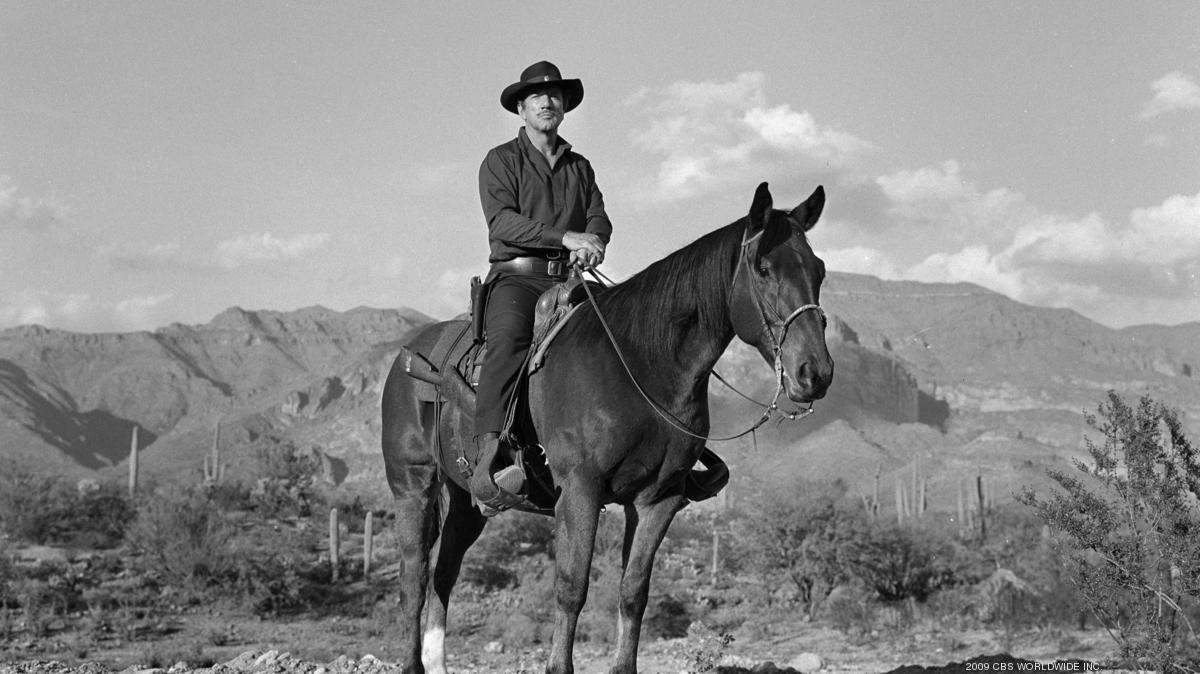
Note the black hat and black clothes. Any Westworld fans here? Remember when they had to pick a hat before entering the park?

Okay, so he’s not coded as the good guy visually. Interesting, for a 50’s era western, but what about the rest of the show? Is he an anti-hero?
Not… exactly. Definitely not some Gene Autry True Good type, for sure. If we were going to put him on a D&D alignment chart, more like True Neutral or Lawful Neutral, given his impressively strict adherence to contracts and willingness to work within the bounds of the laws and customs of the people he interacts with. Then shoots the bad guys, because Genre Conventions are a thing.
He is also what we would classify as a Garry Stu. He speaks several languages, can read classic Greek and Latin, has extensive familiarity with both statute and case law, an expert chess player, expert boxer, practices Kung Fu in the San Francisco Chinatown, is on friendly, or downright intimate, terms with seemingly every tribe of Native Americans he comes across, an expert gunfighter, was a Union officer in the Civil War and is, comparatively, rich.
Now, moving over to classic Star Trek, a show that needs no introduction. An anthology show about an ensemble, led by a handsome rogue of independent means who travels the universe, gets on with almost everyone, speaks every language, and is unafraid to solve problems with violence.
No, the two shows aren’t the same, of course not. But you know who wrote twenty four episodes of Gun? Gene Roddenberry, the guy who created Star Trek.
Ahah, I hear you think. Connection at last! But where is the link to Slumrat and the rest? The connection is subverting expectations, defying censorship and the importance of having a bigger point in story telling.
As “Problematic” (wretched word) as parts of Gun were, they also made a point of subverting a lot of the usual tropes in westerns. The ranchers were often villainous, murderous shits, the Mexicans were just trying to live, the Native Americans were understandably pissed off about their lands being stolen and even poor Hey Boy is swiftly revealed to be named Kim Chan (or Chang, more often Chang) and after his real name is used a few times, he is never again referred to as Hey Boy.
Ditto Star Trek. Entire volumes have been written on the many links between Star Trek and the western genre, so I’m not going to get into it too much, but you know what else the show had? The first interracial kiss on American TV-
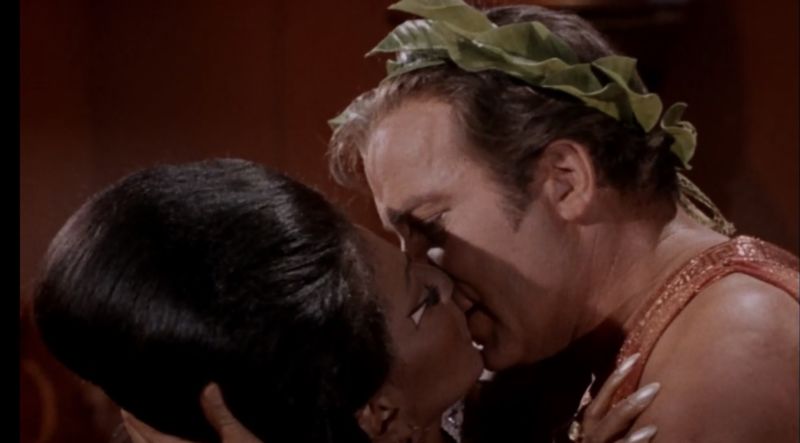
That episode got banned a lot of places.
Gene Roddenberry clearly had no time for racism. He also featured women in officer roles, put space nazis and gangsters in his sci-fi show (to get their asses kicked), and was generally a wild man. It made people mad. So, so mad. They came in expecting one thing, but got another. Nobody remembers the angry letter writers or pulpit pounders. Everyone remembers Star Trek. Turns out that while subverting expectations and having a point makes some people mad, it also makes for good TV.
Kirk blows up entire battle fleets- we cool. Bangs a green chick- SHOCKING! But we cool. Kisses Uhura? RIOT. Gene knew exactly what he was up to. So did William Shatner- the kiss was originally going to be Uhura and Spock. Shatner insisted he do it. The Captain leads the way.
I mean, people weren’t Mr. Rodgers Neighborhood level angry. You wouldn't believe how mad this made them:

This picture made people absolutely furious. Frothing at the mouth angry. More so when, later in this scene, Mr. Rogers (in the cardigan) washes his neighbor's feet. For a kids public broadcast show, this one scene was not just on the nose, it smashed those noses flat and knocked people on their ass. In the nicest, most soft spoken Ohio way possible.
For those not from the US, this scene was a response to this picture-
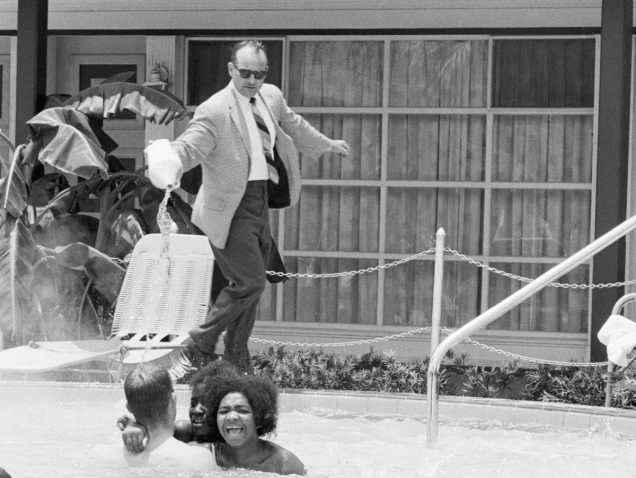
That’s acid. He’s dumping acid into the pool. He objected to the sit in at a white's only pool, and since he was the manager of the motel it was attached to, he decided to express his political opinion. Lyndon Johnson signed the Civil Rights Act the next day, but for once, the law had changed faster than people's minds.
Fred Rodgers saw that picture and said… well actually he wouldn’t have sworn. He would have used the strongest mild language at his disposal. Instead of seething, he filmed a segment with him and a black man (whom he knew to be gay, though it was never mentioned on the show) sharing a pool.
He put that scene on his kids TV show ASAP, because what was happening was wrong, and Fred Rodgers had a platform to teach and testify, fighting the evil he saw in the world. If it wasn’t what you expected from a kids TV show, so be it. Be mad. Christ washed his apostles feet, and if Christ could do it, so could the intensely religious, evangelical, Fred Rogers.
I have a lot of time for Mr. Rodgers. I thought the show was lethally boring when I was a kid. Still do, actually. But as an adult, you see what he was getting at, and how it changed lives. It just wasn’t what people expected from kids shows. There was nothing at all like it on TV. Nothing. It wasn’t about teaching kids to count or spell, or just keep them entertained while their parents screamed at eachother in the other room.
It was about teaching kids how to understand and regulate their emotions. About how to live kindly and decently in an unkind and indecent world. A show about how to be a complete human being. Not needing to medicate the pain away with valium and Jim Beam.
The guy looked and sounded like someone who avoided mayonnaise because it was too spicy, and he was the hardest guy on TV. He broke a senator during a congressional hearing. Way to subvert expectations for maximum impact. Way to have a fucking point.
Now, when we are talking about subverting expectations, we have to include a mention of Rod Serling, writer and creator of the Twilight Zone. A show now famous for its twist endings, but that grew out of Rod’s commitment to subverting expectations in the interest of telling good stories. It also evolved directly from his repeated, vicious fights with censors on other programs. Nobody wanted to put on TV shows and radio plays with a point. Everything should be soft, fun, and easy to sell washing powder next to.
On the other hand, Rod left World War Two with a Bronze Star, a Purple Heart, lifetime disability and zero fucks about your damn censorious, small minded nonsense. He saw a squadmate decaptiated by a falling supply crate while they were doing a stand-up routine. Just TRY your bullshit with him. He didn’t win all those fights, but he went down swinging every time.
One of the fights he did wind up losing was putting on a show about a fictionalized retelling of the Emmet Till murder. He had to rewrite it, repeatedly, until it bore no actual resemblance to any issues of race or racism. It led directly to the creation of the Twilight Zone, where he damn sure did tell those stories.

The Twilight Zone was never a ratings hit. It was too edgy, too experimental for mass appeal. Have Gun was popcorn, the Twilight Zone was some unidentifiable foam from El Bulli that looked like it washed up on the Jersy shore and tasted like a pine forest at dawn. But I bet most of you have heard of The Twilight Zone, and can even describe at least one episode of it. Its impact on television and story writing is still felt to this day. Meanwhile, Gun was largely forgotten.
Bringing it all back to Slumrat. Slumrat is a satire on a lot of things. It started with my desire to write a western Xianxia story. I have read, and enjoyed a lot of Xianxia, and they are often wildly inventive. They are also often wildly uninventive, ripping off other Xianxia writers and the same few tropes over and over again.
So I would subvert expectations. I would take a lot of the normal tropes from the genre, and put them in different contexts. It would be a book about how to live as a human being in a world that sees you, at best, as a human resource. At best a depreciating asset. And, rapidly, as an unfortunately still necessary liability. And by the Flying Spaghetti Monster, I would make it fun!
Thankfully (VERY THANKFULLY) people have generally liked it. The subversion of expectations, done right, is very satisfying. People want to be entertained, and if you see the same things over and over again, where you know how something will go before the first paragraph break, you will be bored.
Of course, this makes some people very mad. Truth is a black hat anti-hero. He should conform to certain genre requirements, as should the story generally! Go woke, go broke! Nobody ever made good art or entertaining content when they were worried about The Message!
Hahaha.
No.
Because that, to me, was the big lesson of the mid-twentieth century TV shows. The stories that lasted were the ones that could strike that balance between subverting expectations and delivering on the promise of the premise.
Other shows ran for longer, had bigger audiences… and were forgotten. Monster hits like Gunsmoke are mostly remembered by dying boomers, as are comedies like F-Troop or sitcoms like Bewitched or the earth shatteringly huge Lucille Ball Show. Because in addition to delivering on the promise of the premise and subverting expectations, the stories that lasted were about something. They had a point, and they made it vehemently.
Have Gun… didn’t really have a point. It was a weekly story about a badass and his adventures. It was mildly startling, compared to the shocks delivered by Twilight Zone or Star Trek, or even the blood-stoppingly-boring Mr. Rodgers Neighborhood. It pushed the envelope slightly, and honestly, I enjoy it. It's a good show. But the one they will be studying in Film School is the Twilight Zone, and the one they will read about in history books is Mr. Rodgers Neighborhood. And they will read it on the tablets and phones designed by people who had their minds blown by Star Trek.
Comments
We're working our way through John Wayne's 1930's movies with the kids, while I try and find the original Godzilla movies on DVD (my kids LOVE Godzilla). John Wayne's early movies are mostly the same - similar plot, characters, locations, and often cast. But it's fun for eating popcorn together. Enjoyed OG Star Trek, Twilight Zone, and was the right age for Mr. Rogers. On the novel side, from a similar era: LOTR, Starship Troopers (actually a lot of Heinlein), Ender's Game; Cities in Flight; 2001 - maybe it's my own political leanings, but I feel like the novels from 20th century literature I remember best have dramatically different political angles than the shows you mentioned. I remember a Rod Serling interview once about how Lassie giving birth to puppies - in his words, "this beautiful depiction of the miracle of life" was censored as dangerous. I don't think the opposition to that in particular would split evenly along party lines today. It will be interesting to see how the current political upheaval shakes out; I suspect the old party and ideological lines no longer hold.
Brett Peterson
2024-03-06 22:32:37 +0000 UTCYou can also add "Wanted Dead or Alive" -- very similar knock-off.
Daniel Sifrit
2024-01-26 22:27:08 +0000 UTC