LX - FURCAS
Added 2021-01-27 19:30:32 +0000 UTC60 - Furcas - Appears in The Book of Incantations, The Discoverie of Witchcraft, Pseudomonarchia Daemonum, and The Lesser Key of Solomon
FROM THE LESSER KEY
FURCAS. – The Fiftieth Spirit is Furcas. He is a Knight, and appeareth in the Form of a Cruel Old Man with a long Beard and a hoary Head, riding upon a pale-coloured Horse, with a Sharp Weapon in his hand. His Office is to teachthe Arts of Philosophy, Astrology, Rhetoric, Logic, Cheiromancy, and Pyromancy, in all their parts, and perfectly. He hath under his Power 20Legions of Spirits. His Seal, or Mark, is thus made, etc.
FROM PSEUDOMONARCHIA
Furcas is a knight and commeth foorth in the similitude of a cruell man, with a long beard and a hoarie head, he sitteth on a pale horsse, carrieng in his hand a sharpe weapon, he perfectlie teacheth practike philosophie, rhetorike, logike, astronomie, chiromancie, pyromancie, and their parts: there obeie him twentie legions.
FROM THE DICTIONAIRRE INFERNAL
Forcas, Forras or Furcas, knight, great president of Hell ; he appears in the shape of a vigorous man, with a long beard and white hair ; he mounts a great horse and holds a sharp javelin. He knows the virtues of herbs and gems ; he teaches logic, aesthetic, chiromancy, pryomancy and rhetoric. He makes man invisible, ingenious and smooth talking. He makes lost things be found again ; he discovers treasures and commands twenty-nine legions of demons.
Original Text : Forcas, Forras ou Furcas, chevalier, grandprésident des enfers ; il apparaît sous la formed’un homme vigoureux, avec une longue barbeet des cheveux blancs ; il est monté sur un grand cheval et tient un dard aigu. Il connaît les vertusdes herbes et des pierres précieuses; il enseignela logique, l’esthétique, la chiromancie, la pyromancieet la rhétorique. Il rend l’homme invisible,ingénieux et beau parleur. Il fait retrouverles choses perdues ; il découvre les trésors, et ila sous ses ordres vingt-neuf légions de démons.
Appearance: An old man with a beard riding a horse
Subrace: unknown
Abilities: Astrology/astronomy, philosophy, rhetoric, logic, palmistry, pyromancy
Legions: 20
Rank: Knight
Notes:
Across all of demonological history, the rank of Knight is unique to Furcas. I think it is safe to say that Furcas serves as captain of the guard. Although the deplancy illustration shows him carrying a spear, his name is likely derived from the latin furca meaning fork, referring to the iconic demonic pitchfork. He likely serves directly under Belial, acting as a sort of standard-bearer for the infernal royal guard.
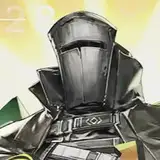
This brings up my theories on the demonic subtype of Ascendant Damned, i.e. a human of sufficient cruelty that they were given the opportunity to trade an eternity of suffering for an eternity of causing suffering. The multiple references to otherwise normal humans decked in scarlet armor lead me to believe that they form an explicit social or racial class within hell. More on this as we explore.
The research onto the imagery of the pitchfork sent me down a rabbit hole. On the origins of why the devil is depicted with a pitchfork, the historian Jeffery Burton Russel had this to say:
“Three of his characteristics have origins other than the bestial. Wings are an ancient symbol of divine power found on the shoulders of many Mesopotamian deities, and from Mesopotamia they passed over onto the shoulders of the Hebrew cherubim and seraphim. Ahura Mazda in Iran was represented borne aloft by mighty wings. Hermes, the messenger of the god, wore wings upon his ankles or legs. Horns to are ancient symbols of power and fertility. The Devils "pitchfork" derives in part from the ancient trident, such as that carrier by Poseidon, which symbolizes threefold power over earth, air, and sea, in part from symbols of death (such as the mallet of Charun), and in part from the instruments used in hell for the torment of the damned. [Russell, The Devil: Perceptions of Evil from Antiquity to Primitive Christianity, Cornell:1977, p254]”
But this doesn’t exactly track. The earliest depiction of the devil with a pitchfork can be found on on Muiredach's High Cross at the Irish monastery of Monasterboice. The carving is dated to the 10th century. It is not impossible that the imagery of poseidon's trident made it all the way from rome up to Ireland, but I believe there is a simpler answer here.
Roman pitchforks most often only had two prongs, and were only used for light work in the softer roman soil. However Irish pitchforks, built for the heavier clay-furrowed soil of northern europe, had three prongs. Additionally, tridents were chiefly used for fishing in rome, and archeological records show the fishing trident likely never made it to Ireland. When new monasteries like Monasterboice were constructed, small towns would spring up around them. Peasants would till earth and work fields with all the plowing and scything and pitching that required. The three-pronged pitchfork was a heavy tool, so heavy that peasant armed with one was a threat even to a mounted rider, something that would come in handy for the many celtic rebellions against roman rule.
The pitchfork was a common tool, immediately recognizable to the working people of the time, its image steeped in both honest labor and the blood of revolt. It would be the perfect tool for an army of demons rebelling against god, an infernal mirror image of the work of christ as presented here:
“His winnowing fork is in his hand, and he will clear his threshing floor, gathering his wheat into the barn and burning up the chaff with unquenchable fire. [Matthew 3:12, Luke 3:17]”
Brand of Winnowing - The marked is able to drain physical energy from anyone they touch, be it by hand or through the medium of a held instrument (though at reduced efficiency) Even the slightest touch can cause exhaustion in the target, only revitalizing the marked.