I haven’t been able to work on my comic recently but it wasn’t by laziness or disinterest. As you may have heard I was hired last month to draw a full seven-page comic in another artist’s style, which was a very interesting challenge to tackle so naturally I jumped on the opportunity. I had to draw a comic that evoked the visual style of Junji Ito’s work while also being about Homestuck trolls, a sentence I never imagined I’d ever write, so the concept of styles and what a style “means” has been thick on my mind lately. So this week, as a break from how-to style articles about the mechanics of art, I’d like to explore the idea of styles as an aesthetic component to our art.
An art style is a thing everybody has, regardless of education or experience. Like a snowflake or a fingerprint everyone’s is unique, but they’re not unchanging. Your style grows and evolved as you try new things, experience new ideas, see how other people solve creative problems and figure out what you don’t like about what you’re doing and how you can do it better. It’s your current understanding of the ideal toolset for solving artistic problems in a way that is most pleasing or most natural to you. These elements work to influence the growth of a style, but what all goes into actually defining one in the first place?
A few articles back I used quantum theory as an analogy for how the creative writing process works, and I’m excited to say the same analogy applies when it comes to art as well! When we want to render a subject- say, a person- the idea of that person exists in our head in a superposition of all possible iterations of the specific person we have in mind. As artists we often strive to capture something beyond photorealistic recreation of whatever we’re seeing; as a painter we will exaggerate posture, perspective and lighting to infuse the mundane with emotion, giving our subjects something more than simply their exterior. As cartoonists we speak in a language of symbols meant to represent abstract ideas in either more-expressive or easier-to-replicate ways without needing a specific reference: how we render a nose, how our concept of the eye fleshes out, the way we build a head or a hand and so on. In our head that nose exists in a superposition of all possible nose-symbol iterations and when we compress it to one nose in the act of rendering it to our medium we tend towards the iterations which are natural or pleasing to us. Our style, in a way, is the fingerprint we leave on the observation and subsequent condensation of a quantum superstate of aesthetic concepts into the symbols that come out of our hand. At least, that’s the way I like to think of it.
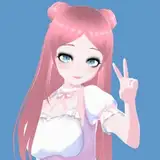
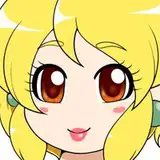
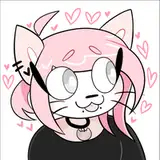
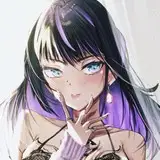
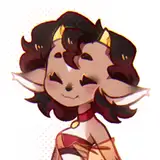
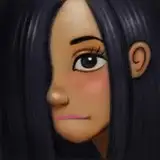
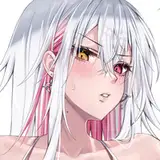
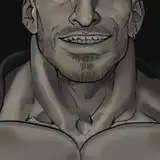
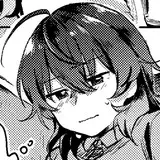
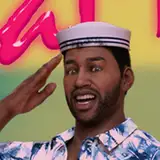
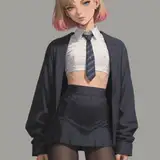
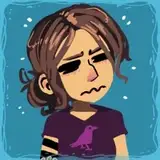
You’re not entirely at the mercy of external factors and your own sense of comfort influencing the ways in which your broad ideas of characters condense into drawn representations of the visions that live in your head, however! A skilled artist who can divorce themself from the comfortable and natural can impose the influence of their own willpower onto their quantum observation and produce results beyond what is expected of them. For example: when I was between highschool and college I really wanted to draw spot illustrations for tabletop roleplaying books, so I studied the near-realistic way their artists built their figures and I tried to get myself into the habit of drawing that way as well (this is the top row, second style from the left). It wasn’t photorealism, it wasn’t comicbook-realism, it was something in-between but it was completely unnatural for me and I tried and I tried and I couldn’t quite get it right. Later, when the illustration work didn’t pan out for me and I started a webcomic, I committed to let myself not worry about style and just let the art flow naturally and see what came out, and that is largely the style my comic has evolved into today (top row, first on the left). It felt to me like I had a natural style, and everything else I had to really spin my gears to make look how I wanted it to, and that’s where I first began experimenting with deconstructing other people’s styles.
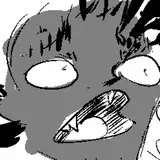
As mentioned earlier I’ve been spending a lot of time lately trying to draw comics like someone else, which has basically been an in-depth study into the specific decisions another artist made when creating something, and trying to find the reason behind and replicate those decisions myself so I could produce something that looks more like another person’s work than my own. So when studying something as ephemeral as “style”, what was it that I looked for, and what did I find? I spent a week pouring through Junji Ito’s work, looking for consistent design choices before I set to work trying to emulate his style. How did he build his figures? He liked to make tall, lanky figures who tended to lean forward in their posture. They had long legs and often had defined waists angling out into hips. His palms were drawn very quadrantly, and the fingers her rendered were long and slender, almost skeletal. The shapes he chose for his eyes were very similar to the natural eye, but he would downplay the creases of the eyelid and emphasize the pupil. He had a particular way of drawing noses, he would describe the nostrils and the septum in front and three-quarter perspective shots but rarely fuss with the bridge of the nose. His faces were often very simple, the taper of the lower jaw often starting just below the level the mouth sat on- his mouths tended towards common shapes as well, with a stack of two or three marks in a small-wide-small pattern- the shape of the mouth with a subtle indication of the lips. He chose to draw thicker necks; his faces in profile opted for long noses and very pronounced curves in the lip and chin. There’s a particular Y shape he sees in the curves of the cartilage of the inner ear which he likes to draw, and he tends to render feet as being long and slender. I opened a Photoshop page and I made notes, practicing eyes and faces and silhouettes in his style, to try and get inside his head and understand the choices he made. To capture his style I had to recognize his decisions and how they fit together, consciously making sure I did not substitute my own symbols, schemas and shortcuts for his- and very often I found myself doing this and having to erase and try again. It was a very fun exercise and it’s entirely why “style” is on my mind this week.
It isn’t just in our aesthetic construction of our figures that our style lives, however; all the trappings of how we build our worlds are influenced by the forces that contribute to our styles, and they too can be studied and replicated. In my own work I use a lot of Dutch-angle cameras to fit more horizontal space into a rectangular panel, and use lots of bending fish-eye perspective tricks or draw scenes from very abstract camera angles; Junji Ito kept his cameras largely parallel with the ground, tilting them up and down when needed but didn’t tend towards perspective abstraction as much as I found myself inclined towards. On a number of occasions I had to catch myself trying to twist or bend the camera in a way the artist I was emulating wouldn’t and do it over. I’m not much for inking but when I ink a page I tend towards intersecting black hash lines and thick black outlines to help things stand out; the way Junji Ito works feels almost entirely in thin little pens, his linework is very thin, outlines and everything. He doesn’t hash his lines perpendicularly to shade either, he uses patches of brushstroke, often in a uniform direction and occasionally with a little overlap. I’ll tend to twist and bend my figures in their postures, he chooses much more subdued postures, giving his compositions a stillness that lends itself strongly to the horror he writes. Everything about what I was drawing I had to defer to someone else’s choices, so I looked at how everything was built and bolted together.
Style is an abstract concept with no right or wrong answers- everyone’s style is unique and they’re all valid ways of sharing the pictures in your head. We tend towards a natural voice in our work but if we teach ourselves to step back we can make conscious choices about shape, line, tone and perspective to hide our footprints or mimic another artist’s call. It’s tricky but it’s very fun, and exploring not just how you put your work together but how other people do as well is a great way to expand the depth and breadth of your work, and who knows? You might find something that comes back and influences your natural style in someone else’s work, and you can grow to inspire the same in someone else.