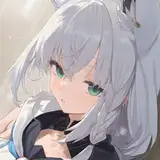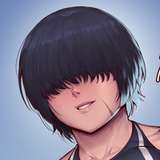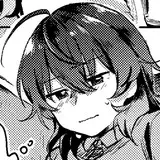
Our faces tell a lot about us. We can convey whole ideas with just a turn of our brow or the pull of our smile, and the look on our face can mean the difference between “I’m fine!” and “I’m fine…”. The expressions we wear are a window to a deeper condition of our soul, so in comics having good expressions is a fantastic way to amplify an emotion or hint at a deeper subtext. The trick of it, however, is knowing what detail convey the specific expressions you’re looking for and what combination of details not only make sense, but say what you want them to say.
If you want to know how something works, the best way to master it is to actually go under the hood and see how the parts fit together. In order to facilitate the wide variety of expressions we’re capable of our faces are home to a dense collection of muscles, denser than in any other part of the body. There are whole classes to be taught on facial muscles but for my purposes here I’m going to simplify them and share the abstract way I like to think of them whenever I’m drawing an expression.
One of the unifying principles of living creatures is that we recognize symmetry as being alive, especially when it comes to the eyes. This is why it’s so common to see faces in everyday things and why many smaller animals can successfully mimic the faces of larger animals by creating patterns that read as symmetrical eyes. Likewise, our facial muscles are made up of symmetrical pairs of muscles connected around our major features- our brow, eyes, nose and lips- and by either pulling them taut or letting them slack we can create different shapes with our face, which translates into expressions. It’s important to remember that muscles don’t push, they only ever pull or relax, and in other parts of our bodies another muscle will pull while the opposite is relaxing, but since a lot of our face meets in the middle our muscles will either pull or relax.
The very tops of our heads have no muscles, interesting fact! It’s all just skin, bone and subcutaneous fat. In our foreheads, however, we have two large spans of muscle that merge between our eyes with a third- this whole area is what I like to call the brow-waggle region. Normally our brow sits in a neutral state, but depending on our emotion we can raise or lower it by pulling it in that direction. There are a few major details I try to keep in mind when I’m detailing a brow expression. The first is how the face will wrinkle; on top of our muscles is a whole bunch of skin and fat, so when we pull it one way or another it’s going to either get tense or bunch up. When we’re raising our eyebrows a lot of the skin on our forehead will wrinkle over- this mostly happens around the outside edges of our forehead since lifting our brow means the muscles on our forehead are contracting, and since they connect at the outer sides of our skull this is typically where our brows will pinch, but the center of our forehead will share those wrinkles since the skin that connects those two moving points is also affected by their movement.
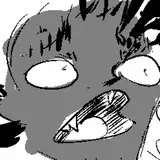
When we want to pull our brow down, however, it’s the muscle at the middle of our brow in between our eyes that does the pulling. This is typically why when you make a mean face your eyebrows take on that V-shape, because that muscle in the middle is the one doing the pulling. When I pull this muscle in my expressions I like to exaggerate the bunchiness of that little nub of skin between the eyebrows- you can see this a lot in my comics. This central muscle isn’t strictly rooted to our brows, however, it’s also connected to the bridge of our nose! When we scrunch our brow down we also pull up on the muscles on the sides of our nose, which in turn pulls the hoods of our nostrils upward! Like any other muscle in the body the movement of one feature is not isolated, it’s connected to features around it and its position affects the appearance of those other areas.
The next major feature down the face is probably one of the most underappreciated ones, it’s your cheek muscles! Our cheeks are usually areas with a lot of subcutaneous fat so when we pulls muscles connected to this region it pushes a lot of the surface geometry around in a very noticeable way. We can raise and lower our upper eyelids pretty freely, but often when we want to lift our lower eyelids to squint our eyes closed our cheeks will pull up with them, and when your cheeks pull up to squint your eyes your upper lip will come along for the ride!
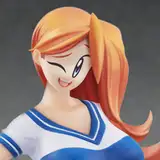
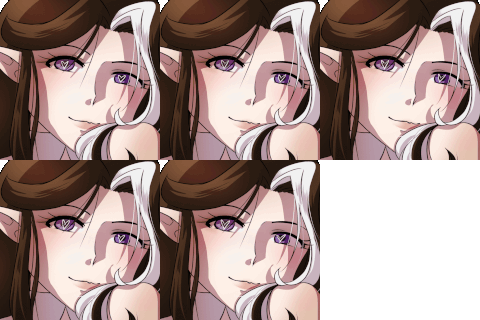
Our eyes and our mouth are actually more connected than we think, and when we’re showing expressions it’s important to let one affect the other appropriately. Our upper lip is unique in our body, since it’s the only place where muscle connects to other muscle and not to bone at both ends, and this leads to a lot of expressive shapemaking. When we smile the muscles in the tops of our lips pull taut, and we tend to see less of the front facet of the lips themselves (like pulling a piece of rubber taut). Whether you have a half-hearted smirk or a big smile, it’s useful to remember that the corners of the mouth pulling outward pushes the cheeks up under the eye on that side and sort of push the lower lid up as well. A smile with big wide eyes unaffected by the cheeks is an extreme emotion which has a more forced or untrustworthy subtext to it compared to a natural smile which squints the eyes a little bit.
When imagining the muscles of the mouth it’s useful to remember that when it comes to the corners of the mouth the top lip stretches across the lower lip. They don’t come to a perfect point, the bottom lip sort of tucks underneath the top, and this informs the way the lips make different shapes. The lids of the eyes work the same way- the bottom tucks under the top- and like the eyes the upper lip of our mouth has a bit more mobility than the lower. Our lower lip is sort of a supporting role on our mouth; we can pull it out or tuck it in but it’s largely there to support the expressions of our top lip and the corners of our mouth. And when we make shapes with our mouth, our lips either bunch up together or they tend to pull at the corners- its hard to really push up the center of your upper lip, it’s all rooted in the four muscles connecting the corners of our mouths.
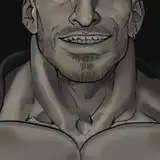
Our lower lip doesn’t just work all by itself, however. Everything is interconnected, which is important to remember. When we flex our lower lip, whether we’re frowning or in pain or we’re really mad, what will happen is the muscles in the sides of our neck will flex as well and become more visible. These are actually my favorite muscle names, so I’ll tell you they are the sternocleidomastic muscles (since they connect to your sternum, clavicles and your mastic jawbone area). These muscles are largely responsible for turning our heads, and they’re the big ropey things we see on action heroes. When we tense our lower lip the skin of our neck often gets taut and we see more of these muscles as well.
Every part of the body is connected to every other part of the body, and nothing moves without influencing something else around it. These ideas translate well into exaggerated cartoon styles but it’s useful to learn the fundamentals and how they apply in a semi-realistic sense. The best way to capture a real relatable expression- whether its subtle or exaggerated- is to know how all the pieces of the face move in relation to one another. Practice that and you can convey all kinds of meaning and emotion in your artwork!