Side-Write: Player and Character
Added 2021-09-01 07:19:03 +0000 UTCProject Voice doesn't have a lot of deep lore behind it to delve into for these pieces, so this leaves me with space for getting a little more open-ended with these side-writes. I was thinking about topics related to the story and realized that I'm trying some new stuff with the player character in Project Voice that maybe deserves exploration.
Like a couple months ago, I'm hoping this will both offer up some insight for you guys into how the games come together and help me straighten out my thoughts and work out some new ideas. This did bring into focus some things I'd started developing half without thinking, and has given me some fresh leads for tackling other problems in the future, so overall I'm pretty happy with it.
It's definitely a long, rather directionless and rambly read though, so you may want to grab a snack or something before you dive in. Hope you enjoy!
~~~
The basic concept for MVOL's player character started as a sort of compromise to cover for one of the biggest awkward gaps in video game narrative. For a lot of games, this sort of thing doesn't matter, but the more you try to get into an actual narrative where people have personalities and backgrounds, it becomes harder and harder to ignore.
The vast majority of video games give you a character to control, as if you "are that person." You make the big decisions for them and let them handle all the hard things like actually running for hours, risking their lives, and coming up with solutions that will conveniently solve their problems as long as you pick the right one. This lets you enjoy the rewards without the work or the danger, and that's a big part of what can make these games fun. You can direct the action just enough to feel like you're "the one doing it" without actually doing anything. This gives us immersion, arguably the most powerful element of video games over any other piece of media.
And as I've mentioned many times, immersion is all the more important to an erotic game. The closer you can get to feeling like "this person is me, I'm doing these things," the more rewarding it is, quite directly. This is why so many erotic games tend to make the protagonist absolutely as generic as possible, usually "a normal guy" that happens to be perhaps rather gifted in sexual matters, because every guy would like to be this, or believe that he could be this, on his best day. It's proven very effective to give the player lots of customization control and leave the character as ambiguous as possible to let the player fill in the gaps.
For most games, this works great-- the character runs around doing cool, fun, generic hero things and having lots of sex, and never really says anything interesting or notable so much as "what most people would say" or "what a good guy would say," or perhaps having a few options for being more kind or devious. And the game just kinda lets you screw around with what this person's personality is supposed to be, going hands off with it.
But that's not how people work, and other people wouldn't put up with that like most porn game NPCs do. You can't have a real conversation with the faceless, generic protagonist, and you can't make an actual emotional connection with chemistry if you're not willing to get specific with what the person is like. A person needs to have a background, and fears and flaws and goals. I put off that question with MVOL, by making it rather a plot point in its own right that the player character is painfully generic.
But I don't want to pull that trick twice, and that means it's time to challenge myself. Some games give you a player character with a full history and personality and let you roleplay as this specific person. Some people enjoy that, some not so much, but with an erotic game, that's not really an option. Granted, there might be a market for games like "play as this well-known sexual icon," and I could probably sell folks on the idea of "playing as Lith" easy enough, but it's not very appealing to try an erotic game where you're forced to be a new, very specific person-- body, gender, personality and all.
So I need to find a compromise. If I'm going to make games with a strong narrative and emotionally-driven focus, I need characters that are specific, that have personalities and flaws, opinions and pasts. But if I'm going to make games with strong immersion and strong sexual payoff, I need to minimize the chance of dissociation-- to have as few moments as possible where the player goes "what? I wouldn't do that" or "I'm not like that, I don't like being this person." So, what can I do to make a character specific and "real," without contradicting the player's self-image?
I experimented with this some in Project Matchmaker. I tried to give the player "control" over a fully realized character with a past and a personality, though generic and "normal" enough in many respects to hopefully not be too objectionable. I didn't try to claim that the player "is" that character, though, putting them more explicitly in the position of a partner or someone "along for the ride," so the character could still make decisions in a lot of things. Much as you can't defy a player's self-image, you can't have a "real" character run around doing things totally counteractive to their own personality. Games have to work around that awkwardness by disabling actions or adding fail states for when you do something "too wrong" to be this person anymore. But players still seemed to feel that detachment and lose some investment. "It's not me." How much of that came from the switch to first person narration, and how much from the character actually having a personality?
One thing I tried out a little in that project does warrant further thought, though. Whatever choices you make for the character, their background adjusts to allow for it. This was a quirk of time travel in-world, but something similar might work in some cases elsewhere. To what extent would a player be happy with playing a specific character, if they can "guide" what kind of character it is by retroactively creating the background that would lead them to act this way? But then the question would be, what happens later? If the player character suddenly contradicts their previous choices, is that an arc of changing personality, or a bout of insanity? It can be hard to justify in some cases, if not impossible.
What if your choices are limited later by the choices you made earlier? There was some measure of that in MVOL, of course. Once you've established you'd do certain things, you start acting in a specific way afterward, and you can't do some things because you're not that kind of person. Again, that's deliberate in MVOL, but what if we shuffled around an established character's background and personality enough to say "this is how they've always been," or "this is the natural conclusion of what they've been through"? Of course, the deeper the variants reach, the more problems it creates, and it's easy to fall into the trap of either making the differences in personality so insultingly small and trite that the character's still generic 95% of the time and choices feel meaningless, or else creating vast wells of content that people feel frustrated to miss out on, and struggling to balance between different options when, for example, a certain kind of personality creates a much more interesting and involved scenario than another would? Do you restrict one, or try to overinflate the others to keep up, or just accept that one arbitrary variant character will get a much better scene than the others?
I'm more than familiar with writing variants at this point, but it's true that they're always far more costly in time and effort than their length would suggest. Let's say I have a scene that starts and ends roughly the same way, but the middle 50% of the content can go three different ways. Purely in text length, that's enough for two scenes, but the drain it puts on me to write all these variants so they match together well, to all flow from the same start and into the same end, repeating the same ideas but in new ways, is probably equivalent to writing five to ten scenes straight out of the same length, depending. And the quality would probably be higher on the five to ten scenes, for that matter. Players want more content, and they don't want to miss out on anything, and that would be guaranteed with absolutely zero variants. But... then it wouldn't be a game.
Would it be better, then, to just accept that even a small difference makes for a completely different situation and add a bunch of unique scenes, written straight out with few or no variants, to just blast out content unique to every choice? But there'd probably still be some repetition dragging things down, and it'd also mean players would miss out on a *lot* of content. Any really good scenes unique to a variant some players would never choose will be lost to a large section of the playerbase. Is it good to offer each player such a unique experience, or is it bad to "force" players to make a bunch of decisions they don't like just to avoid missing out on more content? Maybe it works out okay if the unique scenes are only really appealing to those that make the choices, but it doesn't always work out that way. Sometimes characters surprise me, and that can be magical. In that case, is hiding that content away where people that might like it probably won't find it cruel? Should it be celebrated as a way to tempt a player into trying something they normally wouldn't?
Goodness knows I already tend to have more variants than I can deal with in these games, especially in the sex. We included some personality variants in MVOL while still keeping things pretty generic, but how vast must the changes need to be to let your character be a strong presence while also matching your desires and expectations throughout? It makes me question how important personality really is to the player, to take up so much work and detract from the resources going into actual sex and the like. But of course, this isn't really about figuring out what I can get away with, what players will accept. This is about making the characters "real" enough that I can work with them to do what I do best. So, where can we compromise on that to keep the player immersed, without changing the character too much?
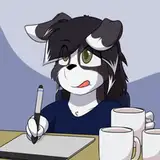
With Project Voice, I'm trying a new spin on that. I'm giving the character some pretty specific traits and features, going less for "the vast majority of players can be convinced 'this is you'", and more for a mix of "you've probably been this person" and "you've fantasized about being this person", for a healthy portion of the player base that aren't immediately turned off by the immutable constants of the game anyway. I'm still keeping a lot of things generic, tip-toeing around the idea of the character's name and leaving a lot of the specifics of the character's past loudly ambiguous. You've been through some hard things and feel like life isn't going super well right now. You could really use someone dependable and supportive right now. These things seem to be true for an awful lot of my audience to begin with, and are more common than ever these days in particular. You have a hard time believing in yourself, and you've gotten flustered when it comes to actually doing sexual things. If you're not like this now, you probably have been and know what it feels like. You're a cute, femmy furry. Most players will probably see the appeal in that.
The biggest sticking point is something I'm experimenting with-- a rather blatant rehash of one of Lith's main personality features, which may earn some forgiveness, but also a plot mechanic for giving this narrative, and the gameplay at its core, a reason to exist. But on top of all of that, it's a trick I'm interested to try: as much as it may frustrate you as a player, it frustrates the player character just as much, if not more. While the player may hold no such compulsion to avoid talking about sex directly, the player and the character can share and relate in the frustration of it, feeling like this is forced on them and they just want to be done with it already, wishing they could bash it down and move past it already.
Can prominent personality points work as a sort of shared foil? Whether or not you can relate to it directly, whether or not you've ever had the same problem, it's a burden brought starkly into focus in the events of this game, as an obstacle to overcome that gives the game its main challenge. Can a player character's self-loathing serve to up the immersion of a player faced with distinct traits they don't "agree" with, or will it simply throw off any enjoyment of the plot and the action? I can't say for certain, so I'm glad I'm getting the chance to really test it out, in this smaller project.
If so, this may work to some extent for some of the challenges and restrictions in Project Wild One: the mechanics make basic communication and "being a person" more difficult, and the story concept as it's developing has a strong emphasis on being more of a wild creature that remembers once being a normal person. A character that "has lost theirself" or is struggling to recover their true self after some serious change allows space for specific action and character development that's relatable for the player without actually being specific to the player's own past. Hell, a person in that sort of situation could arguably be the perfect representation of a player character: a being only guided at key junctures by their "true self" hidden within, sometimes acting contrary to their own desires out of some necessity or failure of control. Indeed, the sense of self-contradiction and gradual coruption common to the player experience play into that sort of character archetype well.
So maybe that's one answer. Compromise by making characters that themselves don't quite feel in control, so that the player agrees with what's happening even when they wouldn't do it, because the character dislikes it just as much as they do. Or making characters that somehow represent the feel of being a player more directly, that emotionally resonate less with the details of your background and more with who and what you are, right now. I'll have to think on this.
There may be no easy answer, but we're still learning a lot about what a game can actually be, and where its true emotional resonance lies. It's far too soon to assume we already know what a player character can or should be.