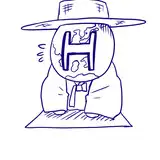
"The United States believes any Palestinian government must renounce violence,” a U.S. official told Ha'aretz. When it comes to nonviolence, writes Barbara Reynolds in The Washington Post, “Black Lives Matter seems intent on rejecting the proven methods." "Violence Is Never the Answer," New York Times columnist Charles Blow insists.
We are told endlessly that violence is inherently and unequivocally bad, something - when it comes to advocating for social justice or against military occupation and fascism - that’s always to be avoided, condemned and renounced. It must be rejected, our press and politicians declare, in favor of non-violence, so-called "peaceful protests" and the democratic process.
But in popular discourse, discussions of violence aren’t really about violence; rather, they’re about sanctioned versus unsanctioned violence. The routine violence of poverty, racist policing, militarism is never called "violence"–––it's just the way things are, a law of nature, the price of "stability". But unsanctioned violence, namely that carried out by activists, non or sub-state actors, and those generally distant from the halls of power, causes outrage without any coherent criteria for this indignation.
On this episode, we discuss how what is and isn't deemed "violence" by our media is largely a function of proximity to power and whether those actions challenge or serve the interests of the status quo.
We are joined by journalist and author Natasha Lennard.
**
Natasha Lennard is a journalist, author and contributing writer for The Intercept. Her work has appeared in The New York Times, Esquire, Vice, The New Inquiry, The Nation and elsewhere. She teaches critical journalism at the New School for Social Research and, with philosopher Brad Evans, co-authored Violence: Humans in Dark Times (City Lights, 2018). Her latest book is Being Numerous: Essays on Non-Fascist Life (Verso Books, 2019).
***
‘Renouncing Violence’ Is a Demand Made Almost Exclusively of Muslims
Adam Johnson | March 29, 2019 | FAIR
Tuomas Kaila | February 8, 2017 | Limited Hangout
Why Won't Mandela Renounce Violence?
David G. Sanders | June 21, 1990 | The New York Times
Mandela and the Question of Violence
Ta-Nehisi Coates | December 11, 2013 | The Atlantic
Vicky Osterweil | August 21, 2014 | The New Inquiry
Let's Not Get Hung Up on Property Damage When We Talk About Protests
Rick Paulas | December 8, 2014 | Vice
Researchers Link Deaths to Social Ills
Nicholas Bakalar | July 4, 2011 | The New York Times
Iranians are paying for US sanctions with their health
Tamara Qiblawi, Frederik Pleitgen and Claudia Otto | February 22, 2019 | CNN
The Role of the Behavioral Scientist in the Civil Rights Movement
Martin Luther King, Jr. | September 1, 1967 | American Psychological Association
Nelson Mandela | April 20, 1964
****
For a full transcript of this episode, go here.
*****
Citations Needed
2019-04-26 17:23:04 +0000 UTCSimon
2019-04-26 17:21:12 +0000 UTCDumbDumDumbDumb
2019-04-25 21:03:52 +0000 UTC