Dream Daddy (and queer representation) - MAKE IT GAY!
Added 2019-06-12 10:16:46 +0000 UTCSection 1: Dream Daddy
Hi, I’m Eric and I’m bisexual which means I’m attracted to non-binary people, men, and women. I’m super queer. I’m queer as hell. I know what you’re wondering, and yes, I have held hands with a man. I’ve held hands with a woman. I’ve held hands with a man, and a woman, at the same time. Scandalous.
Today I’ve decided I want to talk about being gay in video games. Specifically, one gay little game: Dream Daddy: A Dad Dating Simulator. I want to dive right into this game and give you the most thorough analysis possible - I want to talk about the good, the bad, and the Robert! But more than that I want to have a think about the ways this game fits in with the secret sinister gay agenda the wider scope of LGBT representation, and maybe along the way, we might even learn somethin’!
In Dream Daddy you are a dad who just moved to a new neighbourhood with your daughter, when you gradually discover oh no! The whole cul de sac is populated by hot dads! What a disaster!
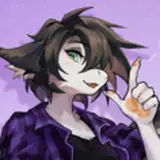
There’s Craig, your sporty college friend, Brian the hyper-competitive bear, Mat the cool Barista, Hugo the pretentious teacher, Joseph the youth-minister - real talk though Joseph is bad news, and not just because his family are creepy christians… called the Christiansens… his wife is called Mary - look it’s a dad dating simulator it doesn’t have to be subtle or clever. It doesn’t owe you that.
Then there’s Damian, goth-dad, vampire-man. To best understand Damian, I suggest you read the article by Hana Michels titled Sword Guys Are A Thing And I’ve Had Sex With All Of Them because, as she says, Sword Guys are a real thing and we should be talking about them, especially in a romantic context.
Excerpt: “I spent three years of my life with a man who owns a Klingon Bat’leth. And a cane sword. And a Freddy Glove. And several daggers. In fact, if you encounter a sword guy in a big coastal city, you should know that I have had sex with him.
I genuinely think there’s no better demonstration of sexism in our society than the fact that we talk about cat ladies but not sword guys (and I do not mean to disparage either). This is despite the fact that the transition into the sword-guy lifestyle is swifter: A woman has to have, let’s say, more than three cats before her cat ownership becomes a lifestyle statement and people deem her a “cat lady.” But if a guy just mounts a single katana on his wall he is saying, “That’s it, this is me now.” Yet we never talk about sword guys?”
Last of course there’s Robert, just creepily lurking in the shadows, waiting, watching you while you and the others dads happily barbecue.
We’ll get back to you, Robert.
Dream Daddy of course is a gay dating sim and I’m talking about it for Pride month, but it isn’t Pride oriented specifically. A dating sim set at Pride would suck, just trying to figure out if you’re technically on a date with this person and whether they actually like you while they wonder the exact same things and explain how horoscopes work until you both get tired and go home.
I think it’s great that we have Pride, as a thing, even if there are problems with it (and there are problems with it) because with all the crazy stuff going on it’s too easy to forget to just celebrate who you are. The march itself isn’t super for me - I find it really hard to be in big crowds. It really stresses me out…
Happy Pride Month!
Section 2: LGBT Representation
Let’s look a little bit at how good this dating sim is, as a dating sim, and also how it does what it does.
There are a few things they couldn’t really do in a dating sim. It's not gonna be super fun to get rejected by a guy you totally thought was gay but it turns out just likes wearing bowties. It's not going to be that engaging or romantic to talk about what a piece of shit Trump is, and how you're totally baffled at any LGBT folks who support his fascism, and a realistic date with me definitely involves an hour of talking about arguments I've had with TERFs on twitter, and I really cannot see someone seriously putting that in a dating game.
So putting those things aside which just wouldn’t make for fun dates, how does the game construct the dating experience? I think game analysis sometimes shies away from visual novels like this because the consensus seems to be that the only thing to this game is the writing - the storytelling and characterisation - and that it’s barely a game, that mechanics and design aren’t worth considering, but I don’t think that’s fair in the slightest. If you look at the conversational scenes in Night In The Woods there are small moments where the game uses the game mechanics to tell you something - you’re drunk so the dialogue option you suggest is not what comes out of your character’s mouth, or when the dialogue choices you have are so similar that the choice between them feels pointless.
So similarly in Dream Daddy there are game mechanics that break away from simple A/B/C dialogue choices and really give flavour to the story. Take for example the early game Pokemon battle you have to engage in - while comparing your daughter with Brian’s daughter in a sort of “proud-dad-off” the game actually simulates an old school Pokemon battle, which is a fantastic tonesetter for your interactions with Brian throughout the game: Brian is defined by his competitiveness.

There are mini-games like this for all the dads, be it a frogger-like game trying to get back from the bathroom at a concert or literally playing games like mini-golf. Is mini-golf a real life mini-game?
These mini-games do, in my opinion, an excellent job of really taking you into the scenes you’re playing through, which, considering their application in a dating sim, is a really good way to make you feel like you’re sharing an experience with a character, drawing you closer to your various suitors.
Then there’s the actual main mechanic of just talking to characters. Dream Daddy isn’t going to let you get away with just clicking through until you reach the dialogue options and then picking the smoochiest one, it has a real sense of building up characters and requiring you, the player, to actually understand those characters, and remember things about them, which is why you get a letter-grade-rating at the end of each of your three possible dates with each dad, contributing to whether you get a good ending or bad ending with him.
Even very early on in the game, your daughter Amanda will prime you for this, talking about her two best friends Emma P and Emma R, who have practically no helpful distinguishing features to remember which is which, and you feel a bit like a bad dad if you can’t remember who’s who, so you know you’d better pay attention!
And I know you’re all wondering, and yes, the Adam Driver Creator is actually very good, but I’ll need a second to explain that. See, you can create your character to look just like you… within a certain cartoony reality… but ultimately because you’re assembled from incongruent parts from a really narrow set you’re not going to actually look like you unless you look like Greg from the record store with Goku’s hair...

But because the dadsona you can make for yourself is slightly uncanny and the dads you’re dating are all purposely designed characters, they’re basically just all a lot prettier than you, which is a remarkably effective way of simulating the actual insecurities of dating.
That said, even if you do feel wholly inadequate next to these beautiful dads, it does give some good fashion tips for different body types that are very encouraging. There’s no analytical point to this part I just wanted to let you know I felt good about buying a hawaiian shirt because of this game.
I will say this, though: for all the excellent character designs of Dream Daddy you can really only have a skinny small man in the game if that’s the dadsona you design for yourself. There are by default, no twinks. Where are the twinks? #WhereAreTheTwinks
The romance storylines of this game are intriguing and fun, but also nicely varied. You have a very different experience with each character.
Playing through the story dating Robert, the “Bad Dad”, bad as in rulebreaking and rebellious, not as in incompetent at parenting… although he is an absentee father… does the game describe him as a bad dad because he’s just bad at being a dad?
Playing through the story dating Robert, I felt pretty uncomfortable. I felt like the game was perpetuating ideas of the “bad boy”, the “dangerous cool guy”, except that Robert isn’t cool. Categorically, he’s just awful. He jokes by telling stories of personal trauma that he then claims aren’t real, which isn’t an okay thing to do, it just makes people not want to be around you. He constantly pulls of this same maneuver, veering towards something very upsetting and then being light and breezy and saying it was all just a joke, like pulling out a knife on your date to a dark secluded part of the woods at night, and then revealing it’s so he can teach you how to whittle. The problem is he still made you think he might actually just be planning to stab you. Similarly he threatens a teenager who is upset after Robert talked over a movie he was enjoying, and the teenager and his friends back off and then run away. Robert then assures you he never would have actually fought with a child, but like… it’s not okay for a grown man to physically threaten a child with violence. It’s just straightforwardly not an okay thing to do. Not at all. Intent doesn’t matter.
So I felt pretty grossed out by the idea that this game was sanctioning Robert as a potential romantic partner, but then at the end of the story with Robert the game actually shows self-awareness on this. You don’t get to have an ending with Robert, because his story is all about convincing him to get his shit together and go back to take care of his daughter. There isn’t an ending where you get together and I think that’s the game pretty clearly telling you that you aren’t really supposed to be with someone like Robert.
And if that wasn’t enough, the game tells you this pretty explicitly. Your character accuses Robert of being a bad person, and Robert tells you that you’re a bad person for pursuing him, and that your interest in him encouraged his shittiness. Wow. Um. Cancelled.
Then there’s Joseph, the youth minister. Joseph is also bad news, and he’ll mess you around, but with Joseph it’s much more obvious from the start. He’s already married and your romantic options with him are getting him to cheat on his wife as he tells you his marriage is falling apart and promises he’ll divorce her soon and be with you, and yeah this storyline is so obviously terrible I didn’t have the bad feelings about it I did with Robert. Joseph is just not an okay guy and it’s there from the start, but if you needed to be sure, the endings for Joseph are either he gets back with his wife and ends your love affair, or he gets back with his wife and wants to keep you as his bit on the side. Yikes.
This, ladies, is why we have our motto: never trust a man in a polo shirt

And I probably shouldn’t let Joseph go without mentioning the Cult Ending. The developers of Dream Daddy, all big horror fans, put in a secret ending where Joseph runs a satanic cult and wants to sacrifice you, and has also been killing off all the spouses of the dads in the neighbourhood which is why they’re all single. This isn’t a joke! It’s really in there! But it’s also not actually canon. The developers left it in the games data files and it was found by keen fans who were intrigued that the game was advertised to have “secrets”, but it comes with a note that you shouldn’t understand this ending to be a real actual thing that happens, it is totally non-canonical.
I am aware I keep focusing on the sad romance paths in the game that don’t have happy endings, but I think they are a really interesting thing to look at. It takes a certain amount of confidence, not to mention competence, to include deliberately bad romance options in a dating sim, knowing that it adds something, and that people have other strong options for happy endings with the other characters.
For what it’s worth, my favourite endings are probably either with Craig or Mat. Mat is a really sweet and wholesome guy and he kind of had me won over since the start because he loves puns, and a strong pun game is the easiest way to impress me quickly. Craig being a character that you’ve been friends with a long time adds a lot for me, because dating often kinda sucks, but a relationship growing into something different is really exciting. Plus, when you get together you still call each other “bro”, so you get to be two buff dudes totally gay and in love who call each other “bro” and that is literally the dream.
I also didn’t want to talk too much about the happier endings of the game because while I want to evaluate it thoroughly I also just had a delightful time with these characters, and I’d love for anyone who’s interested to be able to go discover the game for themselves a little bit.
But let’s talk about this subtle detail. On your first date with Damian the vampire man, while explaining the everyday struggles of pretending time stopped moving 160 years ago but only for fashion and architecture and without any racist implications, he says:
"To be able to wake up in the morning, pick from my closet a variety of cloaks, top hats, and even binders that are period appropriate feels amazing..."
Damian is trans, and you’ll only know from this one line of dialogue if you’re really paying attention. He mentions binders while listing all the types of clothing he had to buy to be sufficiently goth, and if you know that binders are something that trans men and some enbies wear to flatten their chests, then it might make that lightbulb go off. There’s nothing else to confirm it, though, and it went unconfirmed until someone just outright asked one of the game developers on twitter.
I think this is really kinda cool, for a few reasons. First off, because this means Damian just gets to be an average person and being transgender isn’t front and center of his character. If anything, being a goth, a dad and a big nerd are way higher on his list of primary defining features.
It matters that people can get represented in media so that the general public can see that they are just normal human beings. There is a colloquial idea of what a gay person looks like, and until that idea is “just like anyone else, you fucking donkey” it’s gonna lead to various problems.
Another reason I like the way that Damian is portrayed - that simple line about picking out a binder in the morning - is that it’s there for curious people who don’t know much yet about trans people, who want to learn, maybe because they just like to learn but maybe because they’re trans themselves and they haven’t realised yet.
I think that’s a really important part of looking at representation:
Can representation make you realise things about yourself? Yes, yes it absolutely can, but I’m setting up a future video so just pretend like this isn’t an obvious question please thank you.
All that to say the representation in Dream Daddy is complex, and uplifting, and nuanced, not to mention varied. Even if there are no twinks (#WhereAreTheTwinks) we have a range of body types, and different personalities to all the romantic partners resulting in unique, interesting stories with each of them.
It’s all totally positive, and there are absolutely no downsides.
Section 3: The Downsides
So I’m in the cinema, about to see, I don’t know, Avengers maybe, and with the lights half-dimmed and all eyes on the screen, this ad appears, 30 feet tall. An empty spray bottle is floating in the ocean. Suddenly, a man, maybe in his late twenties, is washing the bottle and then refilling it using a Dettol refill pack. You see, the ad says, if we would only use Dettol’s new refill packs then… well, then… just “see what it triggers”...
Now, I’m not so fervently anti this ad. I’m pretty turned off by it, I had a small visceral reaction to it in the cinema where I first saw it, which is based on the fact that 70% of the greenhouse gas emissions in the world are being done by 100 companies, and we know the names and addresses of the top executives at those companies. But, Greenhouse gas emissions and plastic waste are interlinked but separate issues, and Dettol is taking responsibility for its plastic packaging here in one of the best ways it can, and it’s not actually bad for us to do our individual best to help tackle household waste, is it?
No, no it’s not.
My issue with this ad above the “personal responsibility” angle is that it shows the person doing the recycling as clean, carefree and happy, and living in a pristine, and spacious environment. The kitchen is new and stylish, he has a little french press coffee thing on the side there.

The ad is constructing a combined identity of middle class and environmentalist. Environmentalist becomes an aspirational identity. The ad is effectively selling “being a good person” to its customers.
Now, “Woke Brands” is something that has already been examined from various angles by various people. My issue isn’t with the brand signalling its allegiance with environmentalist causes, my issue is with what we could call gentrification of identities.
Media, and particularly advertising, has a tendency to recuperate subversive identities and show the way that those groups can succeed in the class system rather than representing their realities, and when working class people do get represented, it tends to be thought of as something I’d call Gritty Realism (read: misery porn).
I went around the various sites of Exctinction Rebellion London only the other day. The people there - the environmentalists - were overwhelmingly anti-capitalist. Presenting the consumer, and in particular a consumer living in moderate luxury, as an environmentalist, is gentrifying the identity of environmentalist.
Again, I’m not saying an environmentalist wouldn’t be happy to see Dettol retooling their packaging systems to waste less plastic. However, the ad doesn’t show the waste that Dettol produces as dirty, as bad, even. It relies on your understanding of what is wrong with pollution.

Even when the bottle is the problem, it is beautiful, and Dettol doesn’t own up to how much waste they actually produce. They don’t end by saying if you use the refill packets it will result in fewer tonnes of plastics being wasted per year, they end the ad by saying if you use the refill packets, you might “see what it triggers”.
So here’s my issue with Dream Daddy: The entire cul de sac of dads is, unavoidably, a bunch of middle class homeowners. What I’m trying to say is, the biggest problem character isn’t Robert, it’s Joseph! Even before the creepy cult ending! Joseph and his huge christian middle class family don't have any of my #relatableproblems like crushing fear of not knowing whether I'll be able to pay next months rent hahahahaha #relatable
Elise Favis, writing for game informer, said:
“While Dream Daddy is undeniably a queer game, the topic of queer culture is never directly addressed. Datable characters don’t ever speak of sexual identities, which can feel strange at times, but it is also appropriate; since Dream Daddy is about fulfilling fantasies rather than mirroring reality, I got the sense that this world is removed from those social issues.”
And yeah, I’ve got to agree, if there’s anyone who talks about LGBT people more than Steven Crowder, it’s LGBT people themselves. It would, in fact, be pretty unusual to know this many gay dads and even be socialising or romancing with like, all of them and to have none of them talk about being gay. The only conclusion I can draw is that they live in a utopia where the disease that is heterosexuality has almost entirely been destroyed.
Now to some degree, obviously, this is part of the appeal of this particular dating sim: the ideal is to find the perfect partner and instantly settle down into this idyllic suburban life. However, when the reality for so many queer people, disproportionately to the average population, is lower incomes, violence, and for LGBT youth shocking rates of homelessness, it can be ever so slightly jarring.
But on the other, other hand, there are still very really people out there who deeply hate queer people. So, on some level, it is just nice to have this ideal world where nothing is wrong - as escapism.
I mean incidence of homophobia and especially transphobia hasn’t gone down recently. You don’t have to look hard for the statistics that show hate crimes in general are on the rise, and hey: the Westboro Baptist Church? Those bigots who were all over the news ten years ago? Well they didn’t, like, go away…
Actually, what are the Westboro Baptist Church up to nowadays? Oh my god they just updated their website, ooh fancy. Although they maybe could have updated to a catchier URL than “god hates f*gs dot com”...
And they’ve been… how would I even explain this? They’ve been making parody versions of popular music, usually to make versions that contain homomphobic, transphobic or racist slurs.. Or in the case of Thunder by Imagine Dragons they’ve rewritten the song to explain how school shootings are because of sin, and are really God’s Wrath™.
Some of these parodies really make it apparent how incredibly catchy the original songs were, when even through the terrible lyrics and atrocious singing of Westboro’s finest citizens you still kind of have to admit the song slaps? Perfect example, American Sodomite, their parody of American Idiot by Green Day.
I… could easily write an entire separate essay on this song alone. They’ve taken a song which is pretty explicitly about them, like literally them, like they are the original “American idiots” of the song “American Idiot”, a song about mass panic media driven by conservative moralising and in particular, homophobia. Like, they’ve just turned this song around and gone “No, YOU!”
Some choice lyrics:
“And you will hear the sound of hysteria when your creator destroys you, America” like, America’s creator? Like Benjamin Franklin? How?
“Soon there will be no more tomorrow, only darkness, wailing and sorrow” wow, mood.
“Welcome to the last generation of the human experimentation because you all say it’s okay to be gay”
Okay, as fun as it is to laugh at these shitty songs - and it is, and they are - I feel like it would be remiss of me to let this go past without saying: it is okay to be gay. I hope you don’t need me to tell you, and I hope that if you’re someone who regularly engages with my content (#influencer) you already feel safe in this space, but that doesn’t mean it isn’t worth saying. It is okay to be gay, it is okay to be trans, it is cool as hell to be who you are, whoever that is, unless who that is is a Westboro Baptist Church bigot, in which case you’re a loser, and I hope you go live in a cave and leave my friends alone.
I just want you to know that it is okay to be who you are, and it is okay to realise who you are at any point, whether you’re a teenager, or 23 (my age), or 43 or 63. It’s always okay and it’s never too late.
Wow this got really serious all of a sudden.
Section 4: Make it gayer
The Problem with Apu is a film by Hari Kondabolu about the Simpsons character Apu Nahasapeemapetilon and the cultural impact of him as simultaneously a blatant racist stereotype and also the only reference point for south asians for many white Americans. The problem, pretty straightforwardly, is that when there is only one character representing a group at all, that character completely becomes the stereotype for that group. At one point in Kondabolu’s documentary he asks a group of south-asian american friends of his who of them has been racially abused by being called “Apu” and yeah, all of them have.
So this kind of ties back, in my opinion, to this nonsense we hear sometimes: why isn’t there a straight pride month. Well, because the LGBT community is a group of people being told over and over that they’re invalid, and Pride is a counter-attack, a move to reclaim a sense of validity, but it ends up being something inherently tied to being queer: we love to party, we love to parade, we love to protest. Don’t get me wrong, I do love to protest, but loud parties and parades super aren’t my thing.
In her standup, Nanette, Hannah Gadsby says:
“The Mardi Gras was my first introduction to my people. I watched it on my TV in my little living room in my small town. That was my first introduction to my people. The Mardi Gras. My people! Flaunting their lifestyle in a parade! I used to watch it going There they are, my people. They’re busy aren’t they? Gosh. Don’t they love to dance and party? I used to sit there and watch it and go where do the quiet gays go? Where are the quiet gays supposed to go? I still do. The pressure on my people to express our identity and pride through the metaphor of party is very intense.”
And I find it hard to express how seen those words make me feel, because my first attempt to go to the London Pride Parade I had a panic attack and had to go home. It sucked.
Like I said earlier, there is a colloquial idea of what a gay person looks like, and until that idea is “just like anyone else, you fucking donkey” it’s gonna lead to various problems.
The solution is to make it more gay, always. Get gayer you cowards.
This is already what Dream Daddy does well - showing a variety of gay people - but it’s also what it could do better.
You kind of just have to keep diversifying media. We just sort of need to keep showing more gay people, and not just that, but more gay people who are people of colour, more gay people who are disabled, who are dealing with problems real people deal with, more gay people who are low-income, working class, twinks #WhereAreTheTwinks
People, I think, write in gay characters and keep their numbers down for fear of attracting too much heat from homophobes, but that just doesn’t really work. Nobody comes into a stream where people are playing Dream Daddy and tries to be homophobic, because there’s just no point. It’s just so gay, it’s pointless and embarrassing to bring that shit to it.
This idea of the one gay friend, I think, kind of just exists in media, or maybe in environments where people don’t have total choice over who they spend time with, like socialising among work colleagues. In general though, when queer people can choose who to be friends with they choose to be friends with other queer people - they, after all, understand each others issues, and there’s strength and safety in numbers.
The same thing - safety in numbers - applies to representing queer people in media. If you’re going to put a gay character in your story, it’s not going to protect you or your work to limit it to just one, in fact it’ll just make that character a vulnerable target for weird internet angerymen to start talking about forced diversity. If you’re going to include queer characters, include them true to life - with a whole community of queer characters around them.
If you’re going to make it gay, make it gayer.