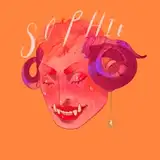
Log off? Can't be done.
Added 2021-09-28 17:27:21 +0000 UTCNote: I was invited to submit a book proposal which has now been rejected, and this was the speculative first chapter that I submitted for a book about being trans online and where I think the internet is going. This first essay is about the different identities that people experience online and in the physical world, and it's called Log Off? Can't Be Done.
This is going to start out messy and try to wind in towards a center.
There was a short story called I sexually identify as an attack helicopter in which author Isabel Fall explores a future where gendered socialisation is utilised by the state to employ helicopter pilots who identify utterly and completely with the helicopters that they operate. The premise of the story, philosophically, takes for granted that gender is a socially constructed phenomenon responsive to our societal attitudes, behaviours and beliefs.
On this assumption the story allows us to look at a future where the United States Military is cultivating a “helicopter gender” to get better pilots. Engaging with the story on these terms, one can think about the ways that the US Military does a lot for hegemonic recuperation by offering the working class opportunities they are systematically denied elsewhere, or how it is doing this with gender identity specifically already by offering poor trans folk access to healthcare and transition in exchange for military service. Alternatively one could use the abstracted “helicopter gender” to examine how we feel about more familiar gender identities, what gender dysphoria and social transition are like before and after “coming out” and how societal context affects that.
It is also legitimate to critique the premise either for its approach to gender or to the recuperation of subversive elements into the hegemony, or criticise the story’s writing style, the depth to which it explores its own intended themes or any other artistic element. Another worthwhile criticism concerns the title: “I identify as an attack helicopter” is a transphobic meme used to belittle and deride trans identities as absurd, and one could argue that the story can neither be significantly divorced from the original bigoted context, nor does enough to comment on that context to justify the title.
The internet, of course, had a different reaction to the story. To think that the premise of the story itself is transphobic is to willfully ignore most everything about it, but to assume that discourse around controversial media online takes into account something as irrelevant as what a story is actually about is pretty foolish.
That is not to say that there was no aforementioned legitimate criticism in the response to the story, but rather to focus on how the internet reacts to things and how online spaces are designed to make users react to things. In one sense the bulk of online discourse was reacting not to the story but to the event of its publication “did you hear that someone published a story called…?” and the event of it being nominated for a Hugo Award “did you hear that that transphobic story is nominated for an award?”. In another sense, many people online react to a lot of things based on incredibly superficial and cursory impressions - we will explore this more later - and because of that were reacting more to the title than anything else, with many people engaged in a conversation about a story they hadn’t even read. In fact, one prominent critic of the story admitted to not having read it even while celebrating it being taken down.
For the author’s part, Fall was harassed to the point that she had to retreat out of her female identity - essentially forced to detransition by the reaction online because, as she put it “Most of all, I wanted people to say, ‘This story was written by a woman who understands being a woman.’ I obviously failed horribly.” Fall had to check herself into a psychiatric ward to avoid suicide because of how bad the online harassment got.
Rather than lingering on the original fiction story or the true story of Isabel Fall, I’m trying to get to a point where we can talk about a fiction story that someone wrote about the true story. Another trans woman called June Martin wrote a short story which she titled I Sexually Identify As The “I Sexually Identify As An Attack Helicopter” Controversy. See? I said we were going to start off messy. In I Sexually Identify As The “I Sexually Identify As An Attack Helicopter” Controversy, Martin writes from the perspective of a character whose identity is completely subsumed by the specific online controversy around Isabel Fall’s short story. The protagonist is not given a name, since controversies, after all, do not have names.
June uses this framing to explore the social identity online completely wrapped up in posts and discourses and controversies that many people experience today, a topic which I think is fascinating, not often discussed well or in any depth or by the people who actually have the most experience of it, and I hope to talk about a lot more here.
June, as her narrator character, the “I Identify As An Attack Helicopter” controversy, says: “Every time I touch something with my fingers, I know they’re wrong. Tactile sensation should be alien to me because my hands should be posts calling Isabel Fall a nazi. She’s not, of course. I know that. But the thought of her not getting called one makes me so dysphoric I have to go cry in the bathroom, and then crying makes me feel more dysphoric because a controversy shouldn’t be able to cry.”
“A therapist knows who a boy is, or who a girl is, and will pretend well enough to know who a non-binary person is in a pinch, but I’ve been through five in eleven months. I’m trying my best with number six. She’ll ask me how I’m feeling today, and I’ll tell her that one of the writers who called Fall a cis man said that being a genre writer made her a marginalized person. When she asks how I feel about that, I won’t know how to make sense of the question, so I’ll say, “I feel like that happened,” and we’ll lull into silence for a second.”
“My friend Tyler, one of the few who’s trying to “get it,” asked me which side I agreed with. I knew he didn’t mean anything bad by it, but that didn’t stop me from sobbing in the middle of the park. Between gasps for air—as if I wasn’t dysphoric enough before my breathing became inescapable—I tried to explain to him that I am the sides. I don’t have any more opinion on them than he has on the neurons in his brain.”
It’s a very well written short story and I can’t recommend it enough. The title of this essay comes from its very first paragraph, which starts “Log off? Can’t be done. Some people are online, but I am online.”
I think about the distinction that the protagonist is making there a lot, which is to say that I think about it both often and at length. The story does two really interesting things that intersect well with things that I spend a lot of time thinking about: firstly, it presents someone’s online identity as more prominent than their physical, material reality; secondly, it represents a controversy or discourse as a kind of large, complex living organism. These two elements make up a representation of internet life more accurate and poignant than nearly anything I’ve seen before - and the framing of social & medical transition adds a compelling element as we will discuss later in this essay.
That sentence “some people are online, but I am online.” is a very interesting one. The emphasis of the verb ‘to be’ recontextualises the idea of ‘being online’ for the reader economically yet effectively. We aren’t just whole beings journeying into another, digital, realm when we log on - there are two selves. You are physically present in the world and you are online, but you aren’t the same person in both. There is a dissonance between your two selves, and for some the digital self is even the more developed identity.
When your digital self is the majority of your identity, in a very clear sense you are online more than you are physically. Log off? Can’t be done.
Parts of this are deeply generational. My mother is 40 years older than me and told me when I was 10 that my generation would be the first “digital natives” - the first people growing up with the internet, as opposed to “digital immigrants” who have had to adapt to the online space, migrating into the digital world from their physical lives.
A noticeable feature of this online dual-self is that people who have experienced some degree of success in real life sometimes have significant trouble “immigrating” onto the internet. These difficult integrations with personalities who are used to being in physical spaces where they are treated with deference and respect often lead to catastrophic meltdowns, public embarrassment and some degree of social collapse. The internet is, at least in part, a place where people are anonymised, humbled and thrown into a great equalising mixing pot. No matter how famous you are, you’re always going to be exposed to people who have never heard of you, and people who feel safe to insult and mock you from the safe distance that the internet provides, and if you are the kind of person who isn’t good at handling either of those things, what can I say? Log off.
Can’t be done.
One notorious example would be transphobe Graham Linehan, who back in the old world worked on comedy shows Father Ted and The IT Crowd. Over the space of several years, Linehan became increasingly obsessed with trans people, leading targeted harassment campaigns of transphobes against not just prominent figures in the trans community, but ordinary trans people with little or no platform who happened to catch Graham’s attention. I know two people in real life who have been the victims of targeted harassment campaigns from Graham Linehan - neither of them are activists, he simply happened to fixate on them on a whim.
Eventually, as his obsession became more apparent to everyone - the police were called to his house for his constant online harassment, and by all indications his divorce had a lot to do with his posting addiction - he drove away many people in his public, professional and personal lives. In a speech to a crowd of transphobes in Glasgow in August of 2021, he claimed that trans people had “taken his family”. By the time of writing this, even within the so-called “gender critical” community (a bigoted community of anti-trans obsessives using the language of outdated feminism for cover), many distance themselves from him for his toxic and embarrassing behaviour.
Linehan’s meltdowns and years-long spiral into transphobic rage-depression, unable to stop posting, unable to log off, has become pseudo-mythological. “Glinner’s life is a sad story. Yes - Graham, he was once called. Before twitter found him. Before it drove him mad.”
Many would look at Linehan’s story and attribute the cause to his bigotry: the so-called “gender critical” community, it has been observed many times, use cult tactics such as love-bombing to draw people into their cause and make them fight for transphobia to the detriment of their relationships and mental health. I think that this is inarguably a part of it, and I intend to write at length about the ways that the sociological design of the internet can serve to facilitate conspiratorial beliefs and cult-like behaviour, but I also think that an analysis of the situation is incomplete without considering Graham as a victim of difficult digital-immigration.
In an interview on Rick and Morty writer Dan Harmon’s podcast Harmontown back in 2014, Linehan spoke at length about how addictive he found online arguments to be. It’s truly an eerie and bizarre conversation to watch now, from a time before he had begun to harass and abuse trans people online. In fact, at the time, the people he was talking about arguing with online were themselves part of organised campaigns of harassment and abuse - the front lines of the “gamergate” movement. I think this interview is fascinating to consider not just because of how clearly Linehan defines his own problems with posting addiction, but because at that time he was on the progressive side of the internet culture war du jour. To me, this demonstrates the way that the internet can affect someone’s behaviours across boundaries of ideology, belief and demographic.
A less known example of celebrity posting addiction that is worth discussing is Bret Easton Ellis, writer of American Psycho, Less than Zero, and most recently, a book of personal essays titled White. I’m not looking to shame Bret for publishing personal essays about having arguments online - influencers who live in glass houses, etc. - but White is a bizarre and fascinating internal description of someone enraged by everything they see online, baffled by their own lack of agency and inability to do anything about it.
White is a book largely from the perspective of someone who sees the modern world - most particularly the online world - as a “machine” (this is the term Bret uses) working to control thought and discourse that must be stood up to and broken by brave individuals. It’s not that it’s bad to talk about your experiences online, but any narrative that paints yourself as the solitary hero fighting against the tyranny of tweets you don’t like is, to put it mildly, a biased one.
The book might have been best summarised by Anna Leszkiewicz in The Guardian:
For reasons clear only to himself, Bret Easton Ellis opens his new book with an image of himself hunched over a screen, pulsating with uncontrollable fury. Minor incidents with strangers on social media had meant an “overwhelming and irrational annoyance started tearing through me up to a dozen times a day”. Alongside this anger came “an oppression I felt whenever I ventured online”. Worst of all, these feelings “could become addictive to the point where I just gave up and sat there exhausted, mute with stress”. But, he adds darkly, “silence and submission were what the machine wanted”.
The great obsession of the book is Ellis’s adventures on Twitter. In telling the story of the GLAAD dinner, he writes: “Hey, it’s a Twitter account, guys, move on.” But he seems unable to do so himself: my stomach sank when, almost 200 pages in, I saw that the sixth essay of the collection was titled Tweeting. How had we not exhausted the topic already? He recounts in painstaking, mind-numbing detail the times he tweeted stupid comments about David Foster Wallace and Kathryn Bigelow.
Ellis, like Linehan, was in the throes of what lots of twitter users have come to call “posting sickness” (AKA: posting disease; poster’s brain; being terminally online; online brain; or, Kesvani’s plague). “Posting sickness” occupies a classic position as an internet phenomenon in that it is a very real thing, but it is only described in memes and jokes. As such, it is hard to talk about it with scientific precision.
I have started calling myself a cyberpunk. I do this not just because I am a pink haired anarchist who makes her living through the internet and is hacking her body using custom hormone therapy to grow big tits and destroy the patriarchy - although one has to admit, that’s pretty punk. I do this because I believe that cyberpunk is a good way to capture a core part of my worldview. I do believe that in a hundred years, the creation of the internet will be considered an enormous political tipping-point by historians, philosophers, political theorists and anthropologists, and I think there are lots of things about the internet and how we use it that are even now still emerging, that will evolve to realise its legitimately revolutionary potential. I also call myself a cyberpunk to acknowledge that I am not approaching this study through academia. I use terms like “posting brain” because that’s the language internet users have organically developed to describe a phenomenon they can see happening to themselves and one another.
One of the most commonly agreed facts about “posting sickness” is that it is caused by spending too long on social media, becoming too invested in posting. As far as symptoms go, it is generally agreed that a prominent early sign - the real tipping point between normal posting and full-on poster’s brain - is seeing yourself as a “heroic poster”. The first, most vital delusion of posting sickness is the belief that your posts can change the world and all your posting is part of a struggle for truth and justice. Defender of free-speech, Bret Easton Ellis. Noble paladin in the war against misogynistic transsexuals, Graham Linehan.
Posting sickness isn’t a condition unique to the middle aged and real-world famous, to be clear. I pointed out these examples because they are well known and useful cases to look at, but another widely agreed upon fact is that posting sickness is something that can happen to anyone. In fact, a part of the notorious “cancel culture” of the last few years is that without a direction to go in or strategies to organise, many online leftists are prone to Online Brain. Tweets are never going to change the world, but if you are acutely aware of systemic and social injustice, the temptation to see yourself as a heroic poster is strong.
I’m not writing this from an external perspective to be clear. I’m not saying this to chide or scold the online left or distance myself from these behaviours. I am a very online leftist, and I have struggled with posting sickness as much as anyone. I see these behaviours as toxic and a waste of time and effort not because I fear being cancelled, but because I’ve been part of the online “mob” enough times to definitively say: it doesn’t work.
Online harassment and shaming can harm a target’s mental health - even to the point of endangering them - but it can never create justice. At this point, it doesn’t even work particularly well for deplatforming dangerous people, because platforms and celebrities alike have learned that weathering the storm is easier than making any kind of permanent change.
So back to the point, everyone is susceptible to this nightmarish online psychology, because we’ve all had the internet for roughly the same amount of time. You are online, and online you are a different person to the person that you are in the physical world. That person has had less time to develop than you have, unless you were born with the internet, in which case odds are your online and offline identities are developing more-or-less equally. I don’t have the data, but my guess is that younger people have, as a trend, more hours logged in cyberspace than older people.
My partner is 4 years older than me and the generational distinction affects us in tiny little ways. She loves to learn things online, loves to go down endless rabbit-holes of useless knowledge, but she also grew up in the deep rural countryside and didn’t have internet access until she was 18. Among her favourite things to learn about are animals and plants she will never see, recipes she will never cook, crafts she will never make and exotic fruits she will never eat.
My favourite things to learn about are conspiracy theories and serial killers and horrible experiments institutions did on people and animals, historical figures who fucked up really really badly and best of all, all of those things at once: historical figures who fucked up really badly and killed a bunch of people in horrific science experiments and then had to conspire to cover it up. My enjoyment of learning is utterly divorced from reality. Where she is learning things that plausibly could apply to her physical world, I find myself gathering knowledge primarily as a form of entertainment.
So let’s try a scary statement about the internet:
W e h a v e n o e l d e r s
This goes for everyone: There is nobody who has been using the internet longer than 35 years, and nobody who has been using facebook or twitter for more than 20, because they didn’t exist before that. Nobody has existed online longer than that: Not the people making a living online, not even the people with huge audiences, not even the people running companies that control our mass platforms.
This sounds like a really bad situation, but it is my contention that our behaviours will evolve and change as we, as a culture, age and grow online. I think that we will, as a community, learn to be online better and in more mature and fulfilling ways. In 100 years’ time, 60 year olds will have been online for 60 years. Their online selves will not be significantly less developed than their physical selves, and they will act like it: I strongly suspect that we will never see a phenomenon quite like “minion memes” ever again. For those unfamiliar, in recent years, it has been popular among middle aged facebook users to share memes of the popular Illumination Entertainment characters originally from the Despicable Me franchise, known as “minions”. These memes are typically sarcastic, mean-spirited and edgy, and would seem to an outside observer to have been made by a 12 year old, not a 62 year old, but case-in-point, many boomers have only been developing their online identities for less than two decades.
I have an enormous amount of faith in the internet as a sociological and historical phenomenon. I think that the full effects of mass instant global communication have not yet played out - not by a long shot - and it is my pet theory that the ultimate effect of plugging everyone’s brains directly into everyone else’s will almost certainly be communism. However, that is something to dig into another time, because what I want to talk about here is the trans community online.
I have spent this much time talking about the dissonance between physical and digital identities because it is important to understand this broader context in order to understand the trans community online. At the same time, better understanding the trans community online may well reveal insights into how the whole internet functions. Many trans people experience a far more extreme version of this dissonance, as the internet serves as a space in which we can create the identity that we hope to also live as in the physical world.
It has been observed many times over that the trans community online is plagued by toxic discourses, the aforementioned “cancel culture” and enormous shit-storms centering around individual people who are being harassed by hundreds or thousands of angry social media users. I have experienced both sides of this more times than I can count, and at this point, I think the thing that I have come to tell myself, both to help me ignore harassment from people who are disproportionately angry at a tweet or an out-of-context line from a youtube video, and also to stop myself from perpetuating that harassment against others, is also the key to understanding: For many in the trans community online, they post as if their posting is life-or-death because in a sense, it is.
The invalidating of someone’s online identity doesn’t have to be a big deal to many people, but for some trans people who are unable to transition in the physical world for a variety of reasons, their digital identity is the one they prefer, and is their truer more authentic self, and when that dissonance is so extreme, invalidating the more authentic self is emotionally lethal.
In her Interview with Isabel Fall, Emily VanDerWerff of Vox writes:
Isabel Fall isn’t dead. There is a person who wrote under that name alive on the planet right now, someone who published a critically acclaimed, award-nominated short story. If she wanted to publish again, she surely could. Isabel Fall is a ghost nonetheless.
The truth of this statement will be especially striking to trans people who developed their authentic self online before being able to come out in real life, but this is also captured perfectly in the game Secret Little Haven by Hummingwarp Interactive. The game is played from the perspective of Alex, a troubled teenager in the 90s using the early internet to chat to their friends about anime. Alex is an egg - for those not hip to trans slang, an egg is a trans person who hasn’t “hatched” yet (realised they are trans) - and so for her, the forums where she can uncomplicatedly enjoy anime intended for girls, and indulge in typically feminine aesthetics is the titular “Secret Little Haven”. All of this is interacted with by the player through a 90s PC setup, in Alex’s personal login.
There is, however, a second login. On here, Alex has to talk to her dad, an abusive, toxic man who doesn’t want his “son” to show any interest in things for girls. The interactions between Alex and her dad, although framed as instant-messaging conversations, feel like they take place in a different kind of space: it feels like the game is representing real-world conversations as IMs, because both are equally real to Alex. If anything, the conversations with their dad, which contain the obviously non-diegetic elements such as Alex’s messages changing after she sends them into what her dad wants her to say, are less real. This game captures perfectly the experience of having one’s authentic self exist only as a tentative imaginary possibility in the digital realm, and it is very clear throughout the game how much of Alex would die if she didn’t have her friends on the forum.
Emily VanDerWerff continues:
Everybody I talked to in the course of reporting this story said some variation on “I hope Isabel is okay.” And she is. Sort of. In the months I’ve spent emailing Isabel Fall, she’s revealed herself to be witty and thoughtful and sardonic and wounded and angry and maybe a little paranoid. But who wouldn’t be all of those things? Yet I’m emailing with a ghost who exists only in this one email chain. The person who might have been Isabel has given up on actually building a life and career as Isabel Fall. And that is a kind of death.
I am speaking from personal experience when I say that I know for many trans people using the internet today, the digital world is a place where we can create our authentic selves in a low-stakes, easy, flexible way, and that from that, transition can be in some ways much emotionally safer. The physical world is a secondary stage, once your self is ready.
For me, my medical transition, my replacing of my entire wardrobe, growing my hair out, coming out to my family have been a process of bringing Sophie into the physical world. She already existed before I did any of those things, I’ve just been slowly changing my body into hers, introducing her to the people who didn’t already meet her online, wearing the things that she wants to wear, and now I am both online and offline. But before, I only was online. If you’d asked me to step away from social media you’d have been asking me to step into an offline identity that made me unhappy, didn’t reflect who I really am, and was suffocating me. If you’d asked me to log off, my response would have been simple: Log off? Can’t be done.
Comments
this essay is also *pretty punk*
bee_rat
2022-02-08 13:04:41 +0000 UTCFinally got around to reading this and loved it a ton! Also weirdly relevant to the Lauren Hissrich & The Quartering situation going on
Nghtfall
2022-01-16 03:17:51 +0000 UTCGosh this is incredible I really hope you release more from this
2021-12-28 17:37:04 +0000 UTCthis... there are words to be had about this but frankly, I don't think I'm clever enough to say them but... This impacted me. Thank you for writing it.
TangledLion
2021-12-02 03:15:08 +0000 UTCThis is a damn good essay.
George Michelle Catron
2021-12-01 22:39:08 +0000 UTCThis is genuinely one of the best essays I’ve ever read or listened to and resonated with me in so, so many ways. Absolutely fantastic work. If this becomes a book I would buy it instantly.
Bevibel Harvey
2021-12-01 16:23:39 +0000 UTCOh Sophie! This was great!
Emma Bowers
2021-12-01 14:54:21 +0000 UTCThis was really good. I look forward to being able to read the whole book.
Miranda Stoddard
2021-09-29 01:07:02 +0000 UTCAbsolutely love this. I'm looking forward to being able to buy the book it will be published in some day soon. I'm training to be a counsellor and am in the age range of Sophie's partner (with a disturbingly similar online knowledge base of recipies, craft projects, etc.), so this really helped me see more of how people even a bit younger than me experience the internet. (As I'm still, obviously, the don't use your real name or real pictures and hide yourself type.) Thank you for putting this up and sharing it with us.
ÆtherialTea
2021-09-28 20:25:26 +0000 UTCI too rarely read Patreon posts and I never read emails (this of course was kinda both), but I was immediately drawn into reading every word of this. You make a lot of good points, thank you for writing this.
Kathryn Gibes
2021-09-28 18:17:46 +0000 UTC