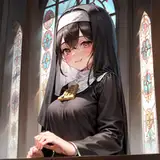
The Making of Episode 2
Added 2022-07-24 12:30:40 +0000 UTCWayfarer Episode 2 was a production, to say the least. While it’s not as long as Episode 1 (in terms of overall content), it is significantly more intricate: more variables, more paths, more lasting consequences.
When I began work on the episode in September 2021, I was fresh off Episode 1 and all the things I had learned from creating it. I had a much better understanding of the Twine/SugarCube engine and how to structure and code my most commonly used features (such as skill checks, dialogue loops, and choice/action/dialogue dependent outcomes within self-contained branches). I had been thinking about Episode 2 for months. Following the game’s beat chart, I drafted the overall episode outline so I could get a sense of the episode’s pace and trajectory.
I knew Episode 2 would be more complicated than Episode 1, albeit in different ways. Whereas Episode 1 was a self-contained prototype for the game as a whole, Episode 2 is when the main plot arrives. Major characters are introduced, important worldbuilding lore is dropped—this was the player’s true introduction to the world and their place in it.
Wayfarer’s opening three episodes are based on Dragon Age: Origin’s design: first, a self-contained story that explains how the main character had no choice but to accept their current circumstances; second, an introductory sequence that lays the groundwork for the main character’s role in the universe, the foundation for the main plot, and hints at future subplots; third, a sequence where everything falls and apart and nothing goes according to plan, springing the main plot into action.
The Original Outline
I originally only wanted to spend 3-4 months working on Episode 2, but as tends to be the trend with interactive fiction, I significantly underestimated how much time it would take. My constant struggle with IF outlines is that when I look them over, I still think of them in terms of regular novel or play outlines. I’m always underestimating how much time it actually takes because I never factor how long it takes to do dialogue tree branches or other little bits of variation that ensures the player always feels like they’re making a choice. Though novel is in the name, writing an interactive novel is fundamentally different from writing a novel. Even a couple years into this, I still have difficulty acknowledging that within my process.
The original outline consisted of five scenes:
- Scene 1: the MC and Aeran’s arrival in Velantis, Quirinus waylaying them at the port, and the journey to Mahanin Palace
- Scene 2: the gala scene, broken into five locations
- Scene 3: the Order of Lethalis scene
- Scene 4: the fight with Aeran and its aftermath (including sleeping with either Aeran or Mel)
- Scene 5: the Diradan Tower sequence
Scene 1 was written in a little over a month, between the end of September and the start of November. I remember being a little stressed when the content started taking me a long time to create as I wanted to get new material updated on the alpha build as soon as possible. The first 10,000 words had a whole scene with the captain of the Dareia that ended up going nowhere and getting scrapped (shame, because I liked what I was doing with Xanael, but oh well). Because this was the player’s first look at the game’s actual setting, I felt a lot of pressure to make it “right”: it needed the right imagery, the right descriptions, the right character interactions. There was a delicate balance between Zenaida and Quirinus—I didn’t want her to look stupid, but I also needed Quirinus to outmaneuver her.
EPISODE SECRET: Blade Names
I originally hadn’t planned for the player to name their MC’s sword. I can’t remember when exactly I got the idea (I think it was when I was working on Episode 1), but it felt like a natural extension of Alassar weapons being unique objects passed down to different Wayfarers through the years. Additionally, it was becoming more and more important to the plot that Aeran inherited his bow from Darius Avennor, so I wanted the MC to have something of similar significance. How do you make an inherited weapon your own? What’s it’s history? I really like this mechanic and while it won’t affect much outside of flavour text, I like the personalization it brings to each player’s MC.
At one point, I had planned for each history to give the player a different skill boost, but then I realized it didn’t make sense within the context of the game. How does a weapon increase a person’s skill, exactly—especially for something like Persuasion or Perception? While this is a super common mechanic in fantasy RPGs, it didn’t fit the continuity of my worldbuilding, so I axed it.
I began Scene 2 in November and it took me a month to write the lead-up to the gala. I knew I wanted the player to have some fun getting dressed up and I really wanted to have all those little personal details you would never achieve in a traditional video game (such as their hair getting longer, choosing to cut it, etc.). When I play games with a lot of character customization, I usually find myself going back to the CC after major story events to update or change my character’s appearance and I wanted to bring some of that energy into Scene 2.
Because the “party preparations” sequence took so long, I ended up splitting Scene 2 in half: Scene 2 was now the conversation with Aeran in the apartment and the preparations for the gala; Scene 3 would be the gala itself.
After reviewing the episode outline some more and discussing it with my partner and my editor, I realized I needed to cut “Scene 5” out of Episode 2 and make it its own thing. There were a few reasons for this, namely:
- Ending the episode on the night of the gala (regardless of who the MC ends up with or where they are) felt like a definitive end. An extra scene would make the episode feel like it was overstaying its welcome.
- I needed to get through the (slow and painful) era of getting the alpha build 1 chapter ahead of the public build as soon as possible. Episode 3 (which is now Episode 4) is a long episode with three separate paths. It was becoming more and more obvious that I needed a “breather” episode in-between so I could keep my public release schedule on track.
At this point, Scene 5 from the original outline (which deals with Diradan Tower) became Episode 3. Once I began writing the gala scene, I heavily revised the original outline, abandoning the old one in favour of the new.
EPISODE SECRET: Architectural Inspirations
Episode 2 was when I decided much of what Velantis looks like, especially in terms of architecture. Arathian architecture is primarily based on Byzantine architecture (specifically the Hagia Sophia in Istanbul), but there are also influences from Islamic art and architecture with the use of domes, arches, mosaic tiling, and outdoor elements. Mahanin Palace is from a completely different era of history from the rest of Velantis, so I wanted it to look and feel different. Lal Qila in Delhi was the main visual reference, although I also referenced the buildings in Meridian from Horizon: Zero Dawn. The inner courtyard gardens—especially those with pools—are inspired by Moroccan riads.

The Gala Scene
The original outline had sketched out a number of locations and events, but I had made it too complicated. My initial idea centered around using the action points to allow the player to visit different areas of the gala and get different bits and piece of information. I was conscious of some players roleplaying shy, stoic, or reserved characters and had previously been asked if there would be the option to not participate in the gala.
However, this made the sequence far too complicated. By letting the player opt out of content, I would later have to account for the player not getting certain information or meeting certain characters. This made the introduction of mandatory characters (Melchior, Phaedra, Sophia, and Sandro) far too complicated as I would have to write two different versions of their introduction based on whether the player did the gala events or not. Eventually, I had to ditch the idea entirely. Instead of opting out, players could “refuse” to go during their conversation with Rasmira in return for a “reluctant” flag that would change some flavour text. I also rearranged several of the planned areas:
- the “dining room” (where you would meet Phaedra) and “ballroom” (where you would meet Melchior) became the Pavilions.
- The “lake” became the Temple of Lyrana. Originally, this was an optional area where the player would overhear a covert conversation between Sabien Quirinus and Allegra Arantir. Skill checks would determine whether the player got caught. This became too complex in how it factored into the MC’s meeting with Allegra in the pavilions, so it was cut in favour of introducing Sophia.
EPISODE SECRET: Rasmira
Rasmira was originally referred to as “steward” or “Rep” (representative) in the outline. They have a name variable, $Ras, which controls whether the player refers to them by a nickname or not. This variable was created because of an unplanned line of dialogue where the MC could jokingly call them Ras. I like this so much, I ended up making it an actual choice for the sake of continuity. (If the player does not select this option, the variable is set to “Rasmira”).
Melchior’s Introduction
The Pavilions were the first location I wrote and by far the most complicated. Originally, I wanted the player to select which area of the pavilions they went to first (there’s three options: the western pavilions, the eastern pavilions, and the marquee). Because the player can encounter Allegra, Phaedra, and Mel, as well as potentially be looking for OR have potentially found Zenaida, I was struggling with the continuity here quite a bit. I axed the choice and forced the player to go western pavilions à eastern pavilions à marquee.
Melchior’s initial meeting with the MC happens outside the pavilions by a fountain because I drafted it when the pavilion location choice was in play. I removed him from the pavilions and made him the “exit” option so the player would always encounter him at the same time, on all paths. This eventually wasn’t necessary after I got rid of the pavilion location choice, but I like the sense of mystery and drama it creates with Phaedra. Most players know Melchior is a companion character, so I wanted to build the suspense of meeting him for a little bit after the player spots someone who suspiciously matches his description in the marquee.
Mel’s introduction scene was by far the most stressful gala scene to write. I felt a lot of pressure to make it “right” and I was worried I was going to mess it up. He was already a fan favourite character before he even made it into the game and I felt like there was a lot riding on this scene. I didn’t want to mess it up and have it be a disappointment.
The Status Effect System
When I finished Episode 1, I felt that all the systems were in place and I wasn’t going to fiddle with or add anything. And then I got to the end of the gala scene and the Drunk Route happened.
Drunk Route was originally not on the outline. I was tracking whether the MC was drinking or not with the intention of changing flavour text, but when I followed that through line, I felt I had to give the player the option to become drunk. Once I did that, I wanted some kind of notification to inform the player that they were inebriated. That got me thinking about status effects… and I felt that if I was going to make one for being drunk, I might as well make a full system.
It took me a while to design and implement it. The system had to be thoroughly tested before it was added to the game to ensure everything was working correctly. Because status effects increase or decrease player stats, I needed to make sure turning an effect on increase/decreased the right stat by the right amount, and turning it off returned the player to their original stats. A bug or error here would permanently ruin players’ skills and they would have to start over from the beginning after the bug was fixed.
I then had to design the status effect symbols for the Abilities page. I spent a lot of time researching different games and checking out their UIs for this kind of thing as I tried to get different design and naming inspirations (I think I primarily ended up looking at Pillars of Eternity and Wasteland 3—the former is a solid fantasy RPG and my partner was playing the latter at the time). The icons took a while to create. I wanted to design them purely through CSS, the same way the skill icons are (it makes it easier to change colours in the long run). I tried several different tutorials for making triangle-shaped badges through CSS and eventually ended up using a very simple triangle tutorial combined with the hexagon tutorial I used for the skill icon badges.
The Lethalis Scene
The meeting with the Order of Lethalis is by far the most complex section of Wayfarer so far. The initial dialogue tree (from the start of the meeting to the bottleneck where the MC gets the background lore on the Astrials, Solarath, and Diradan Tower) is over 50,000 words. An average playthrough of that dialogue tree is around 4,000 words. This is by far the most varied section of the game.
There are a few reasons why it ended up like this:
- After finishing the gala scene, I had a major case of writer’s block/creative slump. I was throwing ideas at the wall to see what stuck and… the ideas kept sticking.
- I wanted the scene to feel like a negotiation. It would have been much simpler to have the player walk into the meeting, receive all their nice, shiny lore, and then send them on their merry way. But to make the section so linear did not feel right. Everyone is suspicious of each other, everyone has ulterior motives and goals… A linear path like that did not serve the overall story or the gameplay.
- There needed to be consequences for the player’s previous actions. To have Quirinus give them a message for Umbria and not give the player the option to deliver it did not feel like it was within the spirit of the game. To have the player punch Quirinus and not have Lethalis comment on it was also not in the spirit of the game.
- I needed to set up Aeran’s through line for the fight scene and show him getting worse the longer you spend with Lethalis.
- I wanted there to be tangible consequences for how the player interacts with Lethalis, both positive and negative.
EPISODE SECRET: LEDA
Leda originally did not have a connection to Pava Kydilla (the woman you can optionally threaten when you bump into her in the pavilions). I had to go back and edit the text to say that the woman you threaten is accompanied by a dwarf. Because I wanted seven Lethalis members but did not have all of them fleshed out, I needed an easy reason for Leda to dislike the MC. I liked the idea of her being connected to Pava as a blink-and-you-miss-it consequence for a near forgettable action. On paths where you don’t threaten Pava, she is ambivalent to you.
The concept of “impression points” was also developed for this scene. I used a mechanic similar to it in the Viridian Lady’s villa (she has a hidden approval meter and the responses you get out of her depend on how much she approves of you) and in the Count’s opening scene in Episode 1 Route B, but this is a much more fleshed out version. I like using hidden approval meters for dialogue scenes with important characters because it fleshes out the dialogue and allows more flexibility to portray faction in-fighting and relations. If I only used Lethalis approval in this scene, it would treat all seven Lethalis members as a hive mind. With the impression points, it’s possible for your Lethalis approval to drop, but for you to still unlock “favour” with one of three key members. The reward is additional lore and plot hooks to significant events.
EPISODE SECRET: Veyer Krellion
Veyer did not exist as a character until I did the outline for the Lethalis scene. I knew how many Lethalis members I needed and roughly what the dynamic would be, but I didn’t know details. When I did the outline, I made a list of the Lethalis members and filled them in with filler names, descriptions, status, and motivations. “Veyer Krellion” is a placeholder name that stuck around. I steal a lot of my placeholder names from the Heroes of Might and Magic series. “Veyer” and “Krellion” are two different heroes from the fifth and third installments respectively (Veyer is a demon lord, Krellion is an ogre, and please do not look up Krellion’s portrait, once you See It you cannot Unsee It).
I don’t know how exactly Veyer ended up with the personality they did, they just… appeared on the page Like That. A couple lines of dialogue and I knew exactly who they were and what they were about.
Post-Lethalis Scenes
Since splitting the last scene of the original outline off, I knew Episode 2 would end with the Aeran fight and whatever romantic entanglements the player wanted to engage in. Originally, I had only planned for Aeran and Melchior to have intimacy scenes. Aeran’s was intended to be significantly more difficult to unlock (it originally needed the love confession from Episode 1), but I found that too limiting. At one point, I had considered adding an intimacy scene for Phaedra, but I got rid of that idea pretty quickly as it was not in character for her at all. I thought about creating a “friend” scene with her similar to Mel’s, but at this point in the story, she does not have enough of a reason to spend extra time with the player character, so her interaction was cut down to a short dialogue sequence.
Veyer’s intimacy was not on the original outline, but I planned for it while I was in the early stages of the Lethalis meeting scene. Their intimacy scene exists because of a single line of dialogue:
“You certainly have ingratiated yourself seamlessly into Velantian high society,” they say, twisting their ring around their index finger. “All you need is an inadvisable affair to close out the night and the archon might as well grant you a title. I’d offer, but I can do without the rumours.”
The more I thought about it, the more I liked the concept. I had always intended to allow the player to engage in casual sexual relationships if they wanted to, with characters that are divorced from the approval/romance point system. There’s a simplicity to the Veyer/MC scene that felt right for the moment.
Melchior’s scenes were not nearly as complex on the outline and the moments with the Lilac Company did not exist. However, I revised them after I realized that I didn’t like him taking the MC away to a private place. Because of the distance they travel and the clear power position Melchior is in, it felt strangely predatory in a way that wasn’t in character and that I didn’t like. I also knew I had to balance a friendship version and an asexual romance version of those scenes. The scene felt significantly better when I turned Mel’s invitation into an invite to a party rather than a invite to spend time alone. It meant I could also use this moment to introduce the Lilac Company early and use it to define an aspect of Mel’s personality that would otherwise be missing.
EPISODE SECRET: Mel’s Romance Scenes
There is no asexual version of Melchior’s romance scene in Episode 2. I tried drafting one, but the more I wrote, the more it didn’t feel right. Casual sex is important to him and at this point, he doesn’t know the player character well enough to broach that conversation. If Melchior has romance points and the player did not pursue the “friend” option of the scene, then he had ulterior motives in inviting the player character to the party. Selecting the ace romance options here will end in the player getting rejected and returning to their apartment.
Aeran’s apartment scenes, in contrast, had very little revision. I knew there were several versions of tackle:
- Allosexual romance
- Asexual romance
- Friend
- MC returns to the apartment too late
- Low approval
Some of these branches share material with others (for example, the MC returning to the apartment late shares the same starting passage as the low approval branch). I also knew I wanted to be specific about the locks for each branch so it was consistent with Aeran’s internal struggle and characterization.
- The romance branches need 60+ approval and 60+ romance, which is only possible if you get knocked unconscious in Episode 1. The logic here is that Aeran doesn’t know he is in love with the MC until they almost die. You also cannot have told Aeran about the letters (if you found them).
- The friendship branch requires 60+ approval and 0 romance. You also cannot have killed Rhodarth personally or told Aeran about the letters.
- Everything else gets routed down the late/low approval branch.
So, what happens if you have +60 approval and under 60 romance? The idea here is that some romantic feelings (but not enough) complicate the situation too much for the friendship branch. If you return to the apartment early and have +10 romance points, you will unlock an alt romance scene with Aeran if you choose to check on him. It does not cover the same material as the +60 romance branches, but there is a unique conversation that does not occur anywhere else.
EPISODE SECRET: Endings
There are 14 tracked endings for Episode 2, depending on where (or with whom) the player character ends up. They are, in order from my Excel spreadsheet:
1 – Slept with Veyer
2 – Got high with Kit
3 – Drank by yourself and passed out at Melchior’s party
4 – Drank with Mel and passed out
5 – Spent the night talking with Mel
6 – Slept with Mel
7 – Slept with Aeran
8 – Romanced Aeran (this is the asexual version)
9 – Forgave Aeran (this is the friend version)
10 – Discovered Aeran has disappeared from the apartment
11 – Went to bed restless (in your apartment)
12 – Went to bed well rested (in your apartment)
13 – Passed out drunk (drunk route)
14 – Passed out alone at Mel’s
All of these endings bottleneck at the start of Episode 3. They will change some conversations and dialogue options, but as the episode is a major bottleneck, everything will connect together on the same path.
My Personal Favourite Parts of Episode 2
- Quirinus showing up on the docks and throwing Zenaida’s plans completely off-course
- Rasmira being perpetually Too Old For This Shit
- The character creation options for the gala
- The conversation with Allegra in the pavilions
- The two councillors you can meet in the pavilions when you’re looking for Phaedra and the connection to Marshwall
- The impression point system in the Lethalis scene
- The fight with Aeran (and how much fun that was to write knowing his motivations and history)
- Veyer’s gallery scene
- Kythera and the Lilac Company
- All of the romance scenes
Comments
I love learning about your process. <3
Kar Rev
2024-12-23 22:27:17 +0000 UTC