Parafango (Charles Atlas, 1984)
Added 2023-03-24 02:44:22 +0000 UTC
Among the major video artists of the 80s and 90s, Charles Atlas doesn't have the reputation he deserves. This is probably because he works in a very narrow genre, one that he may not have invented but has certainly helped to define. Atlas specializes in making moving-image records of dance works. He is best known for his long association with Merce Cunningham, with whom he made seven films. He also got a fair amount of attention for his 2002 documentary The Legend of Leigh Bowery, a profile of the infamous performance artist and queer-culture doyen.
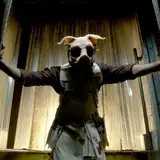
Parafango, which was featured in the 1985 Whitney Biennial, displays Atlas's unique flair for shooting and re-organizing movement for the camera. The key is his editing, which both conveys and extends the gestures of the bodies he's filming. Like many of his Cunningham pieces, Parafango occasionally breaks away from the studio-bound dance performance to interject material that more strictly belongs to the realm of video art, including both stages segments and found footage.

Parafango is Atlas's collaboration with postmodern dancer Karole Armitage. Sometimes called the "punk ballerina," Armitage's work in many ways exemplifies the rigorous chaos that characterized the post-minimalist New York dance scene. While her work clearly draws from the task-oriented anti-virtuosity of Yvonne Rainer and Steve Paxton, Armitage also drew on popular and folk traditions, as well as occasional quotations of both the classical and modern dance vernaculars. This is quite evident in Parafango, which at times seems like a movement-based variation on the radical mash-ups and cut-and-paste aesthetic that John Zorn was developing in jazz at about the same time.
The piece, as conceived along with Atlas, plays against the hard primary colors of Godard, while also adopting the smeary eye shadow and ripped-material trappings of 80s punk and new wave. Armitage combines repetitive gestures with the sorts of balance-shifting and inter-body leverage of Twyla Tharp. Then, she will suddenly introduce an Irish jig, or steps in waltz-time, but all offered through a veil of attitude and winking aggression. Atlas, for his part, keeps interrupting the proceedings with cuts to a French arthouse cinema, where the ticket-taker acts as a sort of televised seductress, her lips never syncing up with the French speech, a voice that may or may not even be hers.

In its impertinent cinéma du look style, Parafango is an evocative time capsule of the Downtown New York Eighties, where artists like Robert Longo, Cindy Sherman, and Barbara Kruger were gaining ascendancy. Like them, Armitage embodies a Baudrillardian skepticism about her medium and its connection to originality and creative genius. This is a fun, rollicking work of art that treats its two primary modes -- dance and video -- as two facets of the same gem, as it were. In all realms of inquiry, creation and quotation were one and the same process, and any medium that couldn't procreate with another adjacent medium was hopelessly passé.
You can view Parafango here.