2008 (Blake Williams, 2019)
Added 2019-11-23 21:09:01 +0000 UTC
It's always a bit awkward to write about the work of friends, but as I've no doubt mentioned before, it's an occupational hazard when it comes to the avant-garde, and there's no way around it. All the same, I do my best to evaluate the work as objectively as I can. In a sense, I don't think that judging a piece because (for example) "I know Jodie Mack" is all that different from judging a piece because "I know it's a Jodie Mack piece." Or if there is a difference, it is one of slight degree.
At any rate, I am very glad to have gotten the chance to see Blake's latest film. It answers a question that I suppose I had in the back of my mind, even if I hadn't articulated it to myself. How would he follow up PROTOTYPE? That film was so expansive and magisterial that it seemed to demand its maker to take a new direction afterward. Did he? 2008 indicates that in some ways yes, in others, no.
Like the previous film, 2008 is focused on images on monitors -- in this case, a single one. Almost everything we see in the film is processed through the scrim of CRT raster lines and varying degrees of vertical scanning. This lends 2008 more of a video-art feel than some of Williams' other work. Joan Jonas and Nam June Paik came to mind, although Blake's use of texture is significantly different. For lack of a better way to explain it, 2008 shifts and develops in time, whereas most "classic" video art has the singular, overall feel of painting.

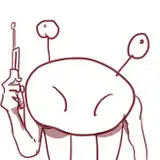
As for the use of 3D, there is one moment that stands out above the others. After seeing a seaside public binocular (the kind that is pole-mounted and often coin-operated) perched at the horizon, Blake shows us two parallelograms that gradually come together to form a window pane. This abstraction that resolves into the most basic signifier of vision -- transparency between interior and exterior -- seems to be the key to understanding 2008.
Many of the images in the film reflect nature, especially trees and flowers. But these images are fuzzy and degraded. We get a palpable sense of them through Williams' use of 3D, but they are formed of televisual dots and lines, several removes from their actual state. We are in a kind of formalized window-world, where the signs and duplications of things are the only reality we have access to. It's a fairly familiar 20th/21st century realm, the "prison-house of language." But seeing it staged, as Blake organizes it here -- shadows of shadows, given temporary "mass" -- is still quite jarring.
But then, a few images cut through the visual noise. A cat running through the yard, or, most forcefully, a portrait of Blake's partner, standing in a clearing looking through binoculars -- these personal moments reflect a reality that, while not directly accessible, is significantly less mediated, less obscure. These are Blake's "Winter Garden Photographs," to borrow Roland Barthes' term from Camera Lucida, the images that "prick" the soul and resonate through all the noise and clutter of the spectacular world. If 2008 is a kind of private photo album, Blake is showing just how difficult it is for sight to pierce us any longer. Only in moments of great love does the interference clear, making way for pure signal.