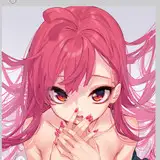
It's almost May, and it's time to jump into a new creative challenge—Mythic May! This challenge invites you to draw inspiration from the rich world of mythology. Dive into tales of gods, monsters, heroes, and tricksters to bring these stories to life in your own unique style! Create a piece of artwork based on a mythological story, diety, creature, or legend.
Feeling adventurous? You can even combine Mythic May with #Mermay, should you decide to dive into the ocean of mermaid-related myths.
🌟Create an artwork inspired by a myth of your choice
You can depict a scene or even just a character or creature from a myth
The myth can be from any mythology/culture
If you want to combine this challenge with Mermay, you can do MYTHIC MERMAY by depicting a mermaid related myth or character. I have listed a few mermaid related myths below!
🗓Official Deadline: End of May (though if you are reading this in the future, you can still feel free to participate and share)
💓You can Share your Works in Progress and your challenge results in the discord channels: #challenge-wip and #challenge-results (include your social media username if you'd like me to post your result to my stories!) Oh! And let us know what myth you are depicting!
💓If you post on social media, feel free to tag me if you'd like me to share in my Instagram stories! You can use the hashtags: #mythicmay and #mythicmermay
There are a lot of mermaid-related myths out there, and I am SURE that I wasn't able to list all of them here, so if you know of another one that inspires you, feel free to do that! Or, if mermaids aren't your thing (how dare you), feel free to choose any other mythology related story or character to depict for Mythic May!
Proceed below to our big list of mermaid related myths that I found!
Atargatis, first known mermaid
Atargatis was a great goddess for Northern Syria (ancient Assyria) 4000 years ago and the first mermaid. She fell in love with a shepherd called Hadad and bore him a daughter, who would later become a great queen and build the Hanging Gardens of Babylon. Unfortunately, Atargatis accidentally caused the death of her beloved and, in her sadness, drowned herself. The gods, however, would not let her great beauty disappear, so they did not let her die but instead transformed her into the first ever creature with the top half of a woman and the bottom half of a fish. She became the goddess of the moon, feminine power and all water. She was also known as a fertility goddess.
Amphirite, the soothing voice in the storm
Amphirite, the Greek goddess of calm seas and wife of Poseidon, is the most famous of the water nymphs, the nereids, often represented as riding dolphins or sea horses with perls in their silky watery hair. Poseidon had a bit of temper on him and when he got cross, he created great storms that often ended in many shipwrecks. Amphritrite was the only one who could soothe him and make the seas become calm again. She came to represent calm seas and safe passage through the storm. However, she occasionally got a bit angry herself and her great waves sometimes put sailors at risk. She also liked to breed sea monsters, so she is clearly not be messed with. She is the mother of Triton, the most famous merman.
Keto, goddess of sea monsters
Greek goddess of the dangers of the sea, sea monsters, whales and sharks, Keto consorted with her brother and, surprise, surprise, the offspring was a little scary. They produced a brood of fearsome monsters, including a she-dragon viper, a sailor devouring crab, a hundred-headed serpent, and the famous Gorgons , whose hair is made of snakes and whose gaze can turn a man to stone. Medusa, who came to fame for being decapitated by Perseus, was one of the three Gorgon sisters. What a family.
Lamia, the seductress and shark woman
Lamia, in ancient Greek mythology, seduced the sea god Poseidon, which really annoyed his wife Hera. The angered wife destroyed Lamia's children in an act of revenge. To soothe Lamia’s anguish, Poseidon turned her into a shark so she could eat other peoples’ children to make herself feel better (as one does) . Hera, who clearly was quite a bitch, also gave Lamia sleeplessness ( remember sharks never really sleep). Poseidon helped out by giving Lamia the ability to remove her own eyes (remember how (some) sharks’ eyes disappear when they bite) so she could still get some rest as she swam around. Lamia became a type a bogey man to frighten children to sleep and a cautionary tale for wanton women who might want to steal husbands…
Niads
In The Voyage of the Argo we get our first glimpse of mermaids as we know them today, as “naiads” or water spirits. When the Argo’s crew temporarily disembarks, Hylas, a young boy adopted by Hercules, sets off in search for water. He finds a spring, from which a naiad appears, kissing Hylas and pulling him into the spring in a kind of abduction.
“The naiad, like mermaids in the lore of mermaids a millennium later, is beautiful and mysterious, but impulsive, and at least from the point of view of the mariners, amoral,” writes Boria Sax in “The Mermaid and Her Sisters: From Archaic Goddess to Consumer Society
Aphrodite/Venus
In Hesiod’s Theogony, Sax points out, Aphrodite emerged from the ocean after it was fertilized from the sperm of the castrated Uranus.
Siren
There are the sirens—sometimes described as women who are half-bird rather than half-fish—in the Odyssey, who are cemented in English literary tradition as fishtailed by the seventh century. Their archetype is further solidified with the addition of long locks and a “sweet song” they sing to lure sailors into danger, usually a storm.
Mami Wata
In African lore, from Senegal to Tanzania, a water spirit called Mami Wata (Pidgin English for “Mother Water”)—linked to fertility, lust, wealth—is often depicted with long hair and a mirror to represent passage between both water and land, and the past and present.
Luristan
In Iran, a Luristan water-goddess dated between 3000 and 1000 B.C., with braided hair, breasts, and bisected fishtails evoked calls for fertility.
Rusalki
Water nymphs of Slavic mythology were initially regarded as benevolent spirits of fertility and agriculture, but then gained a more sinister description in the 1800s. They were believed to be the ghosts of women who died violent deaths by drowning. In their anger and sorrow, the Rusalki now lured men and children to their watery graves.
Merrows
In Ireland, female merrows, with their beauty and long green hair, resemble traditional mermaids. Their counterpart, the male merrow is considered grotesque, cruel and more fish than man. The ruthless nature of the male merrow is why the creatures were said to have relationships with humans.
Suvannamaccha
In Southeast Asian folklore, there is a story of a mermaid princess, Suvannamacca (meaning "golden fish"). In the Ramayana, the countries retellings of the Indian epic poem, one of the heroes, Hanuman attempts to build a bridge of stones across the sea.
His plans are hampered by Suvannamaccha who has been instructed to prevent the causeway's completion. The two meet and fall in love and Suvannamaccha ends up helping Hanuman finishing the path. The mermaid is now seen as a herald of good luck and her figure is depicted in charms, streamers and icons throughout Cambodia, Thailand and Lao.
Selkie
In Scottish legend, the selkie is a shape-shifting creature that lives as a seal in the sea and transforms into a human on land. In Gaelic stories, they are often described as "maighdean-mhara" meaning "maiden of the sea." In their stories, selkies are uncertain creatures. There are stories of them tempting people into the water, but others where they cast off their seal skins, marry humans and begin families.
These tales usually end in tragedy when the selkie returns to the oceans, with or without their loved ones.
Melusine
A feminine spirit found in many medieval European folktales, the Melusine has a serpent or fish's tail and sometimes has wings. Hungary, France and Germany all have different accounts of Melusine. The most famous legend describes her as a willful girl who tries to get revenge on her human father on behalf of her fairy mother, only to be punished by her mother with a tail.
Sedna, from fingers to seals
Sedna is the Inuit goddess of the sea and marine animals. Many versions of the story exist, all of them very gruesome. Sedna usually does something to anger her father. In every story, her father - or sometimes other men - take her out to sea to drown her, she then tries to cling on to the side of the boat and her angered manfolk chop off her fingers so she lets go. Her severed fingers turn into seals, walruses, and whales. She then slides into the sea, where she becomes the goddess.
Seal hunters and fishermen come to depend on her good will for a successful hunt/catch in a bitter twist of fate. She is generally considered a vengeful goddess (why, I cannot fathom), and hunters (men) must placate and pray to her to release the sea animals from the ocean depths for their hunt. She is sometimes represented with a fish tail.
Browse the TUTORIAL INDEX
I am SO DANG excited for this challenge and to see what you guys create! Happy drawing!!💗
ChrissaBug
2025-05-06 19:27:40 +0000 UTCLauren
2025-05-06 18:37:27 +0000 UTCChrissaBug
2025-04-28 22:25:22 +0000 UTCUlura
2025-04-28 03:27:31 +0000 UTCMaggie V.
2025-04-18 23:28:47 +0000 UTCChrissaBug
2025-04-18 23:27:38 +0000 UTCMaggie V.
2025-04-18 23:07:21 +0000 UTC