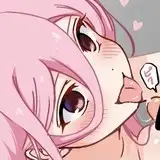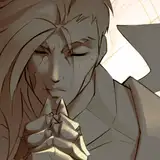
In this article, I'll be proposing five approaches that I use to help me explore, play and re-focus. These creative strategies are methods, exercises and good habits which help me to be efficient as well as adventurous in my creative practice and they are all things you can try yourself to stimulate new work. To help to create unique work, your will need to develop a light-hearted and open mindset for generating ideas, using your strengths to overcome creative blocks. It’s likely that you’ve already experienced those blocks and sitting at a desk with a blank piece of paper in front of will not always yield positive or encouraging results. When your motivation is low, or inspiration feels elusive, putting the suggestions in this article into practice will help you to make the most of the time you've set aside. Whether you have an hour a week or 8 hours a day to dedicate to your work, it’s good to make some plans and commitments which will help you to be making regularly.
Main image: Blue Boy by Laura Ryan
--
“It is not so much where my motivation comes from but rather how it manages to survive.” Louise Bourgeois
--
To warm up to making work, listen to something that inspires you. My illustration work requires me to be working with my hands and with tools most of the time, which leaves me free to absorb fresh ideas and creative knowledge through podcasts, music and audiobooks. Podcasts in particular are accessible ways to engage with contemporary culture and brushing up on your overall knowledge of art history. Interviews with practicing artists always provide a valuable insight into their work, from the kinds of sketchbooks they use to the times of day that they find most conducive to making work.
My recommendations:
Some other great art podcasts:

--
“Try Again. Fail Again. Fail Better.” Samuel Beckett
--
Absorb as much as you can through activities which you can easily incorporate into your spare time; visiting exhibitions, galleries and museums is a great way to take your creative practice outside of your usual working space. I am fortunate to live near London and to have attended incredible exhibitions showcasing the work of Sorolla, Egon Schiele, Klimt and Leonardo da Vinci; I’m always that person leaning over the rope barrier, with my nose up close to the painting, looking at a particular brush stroke or mark. While nothing beats the real thing, digital mood boards can help to organise reference material and I make separate boards for interiors, figurative poses, insects, sculpture, art moments and so on. Pinterest is a popular place to get started, and if you want to browse some well-researched mood boards, check out the Pinterest accounts of Draw’s visiting tutor Phil Tyler and illustrator Will Scobie.

--
“The worst enemy to creativity is self-doubt.” Sylvia Plath
--
Make a plan, work out what is important to you and create a mind-map of ideas. Clarifying your intentions will help you set goals, which in turn will start to give you more direction - aim for small and achievable targets.
--

--
“Painting is easy when you don’t know how, but very difficult when you do.” Edgar Degas
--
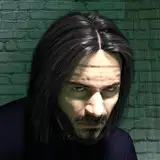
Drawing challenges and briefs are a great way to explore new ideas, connect with online communities and create an iterative series of drawings (drawings of the same thing, e.g a ‘head’ or ‘teacup’). They might be medium, date or subject-specific and often include social media hashtags if you wanted to share your work; following the hashtag for each challenge can give you new ideas and inspiration; you can always just work on the challenge without sharing any details. I took part in the ‘100 heads challenge’ and while I made 30 heads in 30 days 30 days and progressed very fast, I completed the final 70 over the next 1-2 years.

--
“If people only knew how hard I work to gain my mastery, it wouldn't seem so wonderful at all.” Michelangelo
--
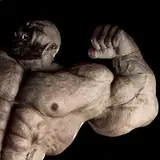
Regardless of whether your main strength is in sculpture, textiles or even photography, a fluency in the visual language of drawing will always be useful. Drawing helps us to understand the world around us and to notice an essence or strangeness in even the most mundane of things like teacups or the shape of a shadow on a wall. The best advice for any creative person or aspiring professional artist is to draw regularly, and to master any skill you will need to put in the hours. It is said that while the great Japanese artist Katsushika Hokusai lived until 80 years old, he was once found weeping at his workbench because he had not learnt enough about drawing. On his deathbed, he cried out, “If heaven would only grant me 10 more years, I might still become a great artist.” The more obsessive you can be about your drawing practice the better and for the best measurable progress, keep a range of sketchbooks and incorporate quick, gestural drawings as well as longer and more complex studies. Strive for an efficiency and economy of marks, and practice with a range of media: inks, watercolour, gouache, various pens, conte pastel, etc to work out what is best for you.

--
This article is the second in a series by illustrator Laura Ryan; you can follow Laura on Instagram here. You can always use the Patreon Navigator to look back over previous blogs HERE.
>> Read Developing Creative Practice Pt. 1: Surrealist Games HERE